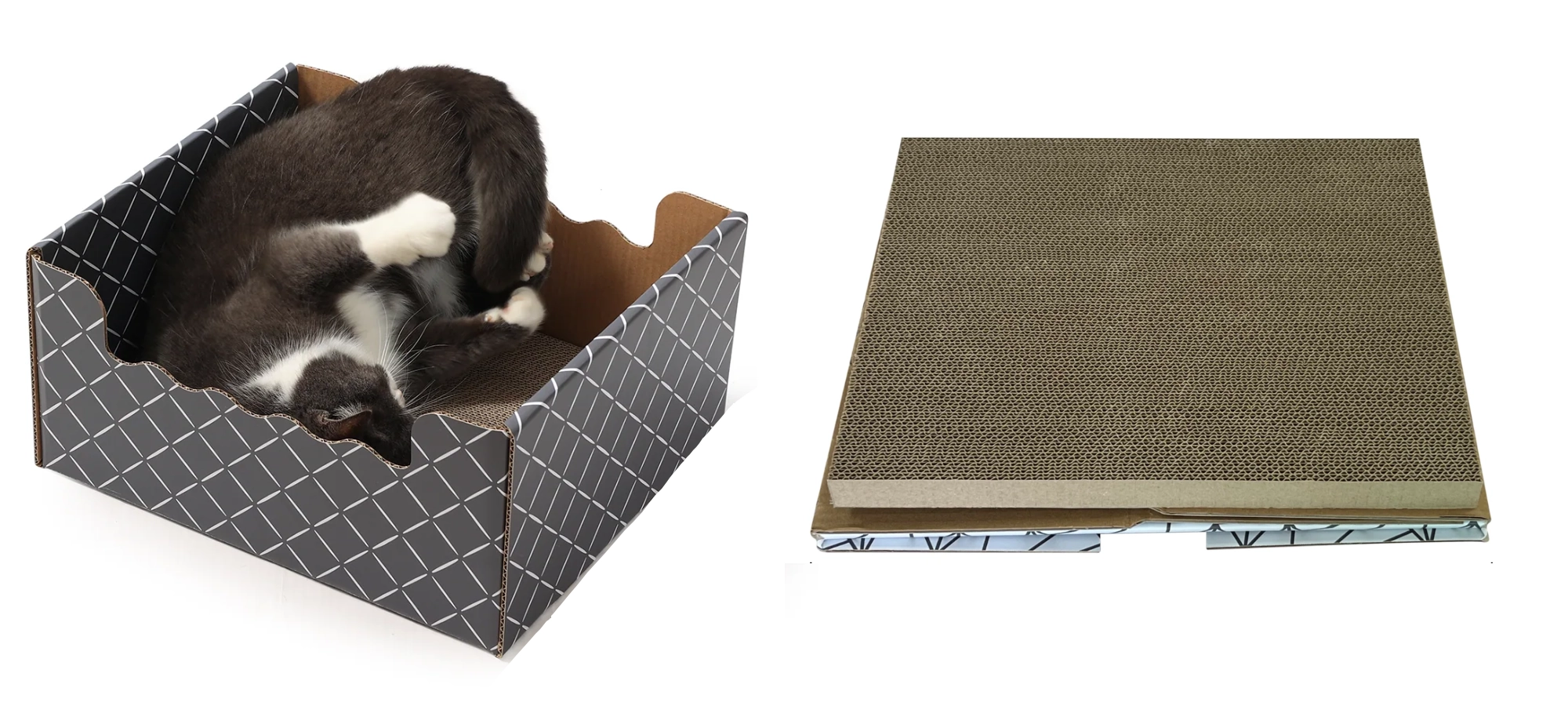
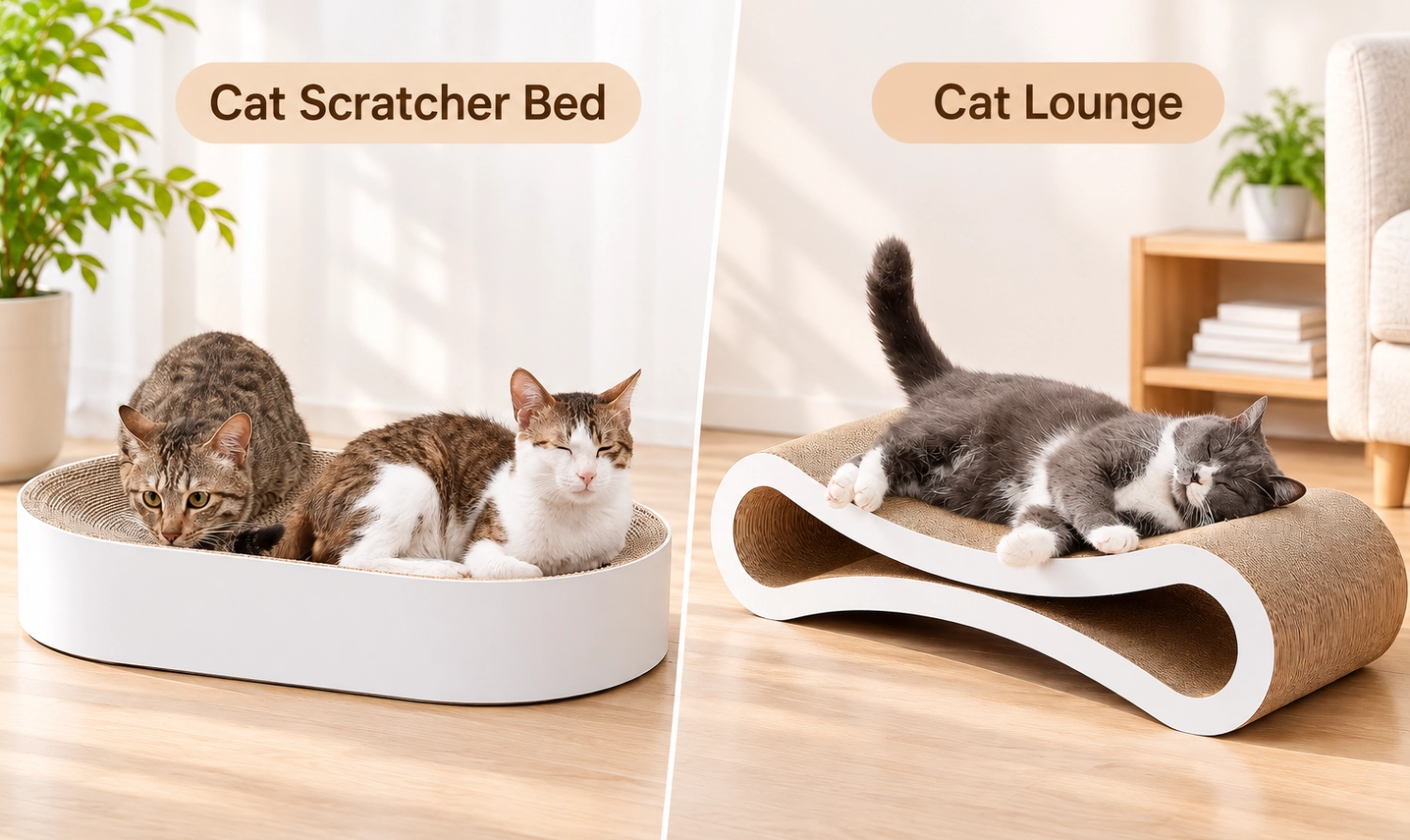
Choosing a Cardboard Cat Furniture Manufacturing Partner: The 7-Step Guide for Pet Brands
Launching a new line of corrugated cat scratchers or modular cat lounges looks easy on paper.
After all, it’s just cardboard and glue. Right?
Not quite.
If you’ve ever opened a pre-production carton only to get hit with a sharp chemical smell—or watched customer reviews tank because your "heavy-duty" cat sofa shredded into confetti within a week—you already know the truth.
Your product is only as good as the factory behind it.
With the global cat furniture and scratcher market surpassing $1.3 billion and growing at nearly 6% annually, pet parents are ditching cheap, disposable scratch pads. Instead, they’re paying premium prices for aesthetic, durable, eco-friendly cat furniture that blends into modern living rooms.
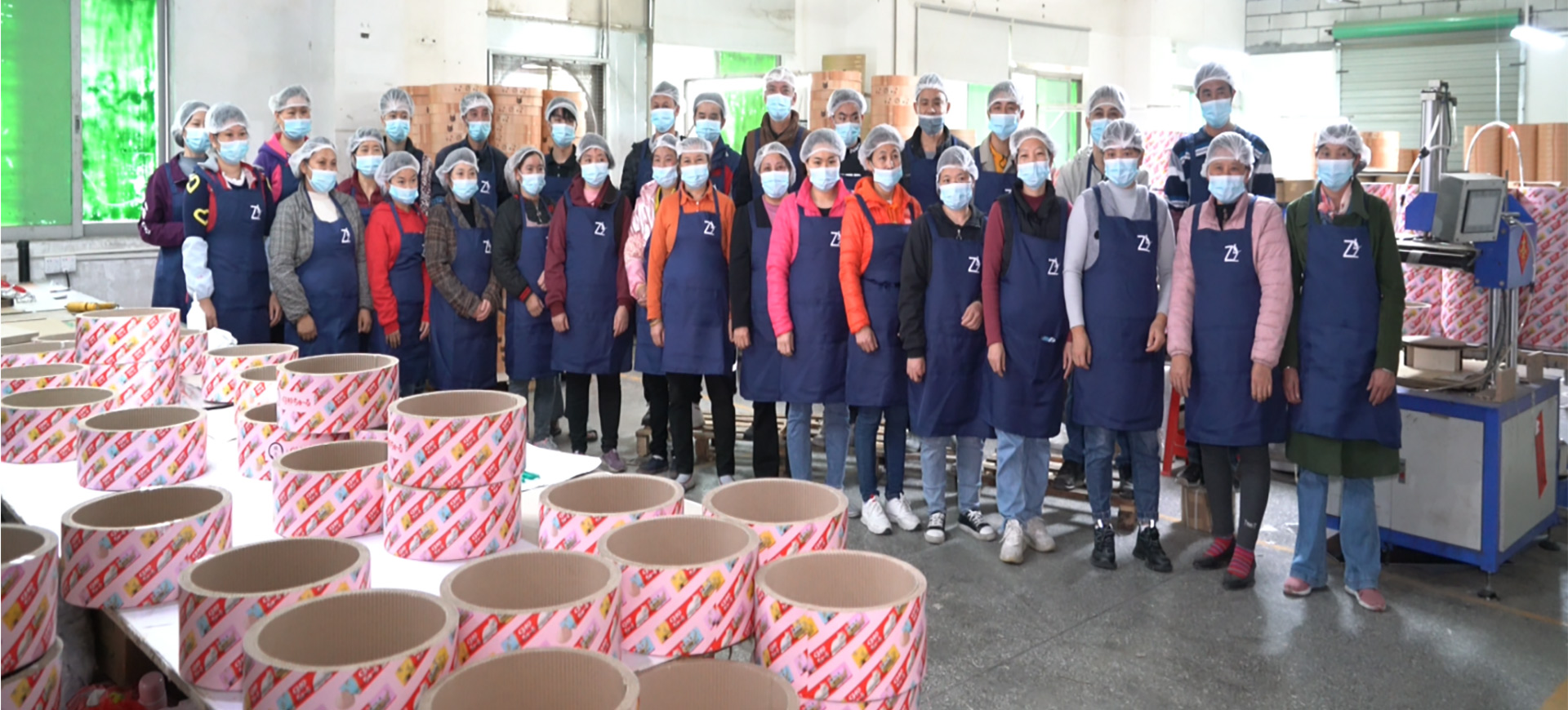
Here’s the catch: most general packaging factories aren’t built to manufacture pet furniture.
- Why Most Pet Brands Pick the Wrong Factory (And Pay Twice)
- Step #1: Audit Paper Grade, Flute Profile, and Core Density
- Step #2: Demand 100% Non-Toxic, Food-Grade Adhesives
- Step #3: Evaluate Structural Engineering and ODM Capabilities
- Step #4: Optimize for Flat-Pack Logistics and DIM Weight
- Step #5: Inspect Moisture Control and Anti-Mold Protocols
- Step #6: Verify Sustainability, Safety, and Retail Certifications
- Step #7: Test Communication Speed, MOQs, and Scalability
- Quick Comparison: Trading Company vs. Packaging Plant vs. Specialized Pet Factory
- Frequently Asked Questions (FAQs)
- What is a normal MOQ for custom cardboard cat furniture?
- How long does mass production take?
- Is virgin kraft paper better than recycled paper for cat scratchers?
- How can I verify a supplier is a real factory and not a middleman?
- Conclusion: Build Margin Into Your Supply Chain
In this guide, we are going to walk you through a proven, 7-step framework for choosing a cardboard cat furniture manufacturing partner—so you can protect your profit margins, pass retail compliance audits, and build a product cats (and their humans) actually love.
Key Takeaways
- Skip general carton plants: Packaging factories optimize for lightweight shipping boxes; cat furniture requires high-density, multi-layer laminating and heavy-duty flute profiles.
- Audit raw materials first: Insist on high-GSM virgin kraft or high-grade recycled core paper (B-flute or BC double-wall) paired with 100% food-grade cornstarch adhesive.
- Engineer for logistics: Flat-pack, interlocking structural designs can slash ocean freight and last-mile dimensional (DIM) weight fees by 30% to 50%.
- Verify retail compliance early: Look for active FSC, BSCI/SMETA, and third-party heavy-metal/formaldehyde test reports before paying a tooling deposit.
Why Most Pet Brands Pick the Wrong Factory (And Pay Twice)
When sourcing corrugated pet products, most buyers make one fatal mistake:
They sort quotes by unit price alone.
On Alibaba or at a trade show, two cat lounge samples might look identical in photos. Supplier A quotes $4.20 FOB, while Supplier B quotes $5.60 FOB.
Going with Supplier A feels like an instant win for your gross margin.
Until your first container lands.
To hit rock-bottom pricing, low-tier workshops cut corners where you can’t immediately see them in a photo:
- Using low-density recycled grey paper that collapses under a 12-pound cat.
- Mixing industrial PVA or urea-formaldehyde glues that off-gas inside sealed polybags.
- Skipping moisture-control curing, leading to warped boards—or worse, mold—after three weeks on the ocean.
One bad batch doesn’t just cost you inventory. On Amazon, Chewy, or big-box retail shelves, a spike in return rates can bury your listing for good.
Here is how to vet a manufacturer the right way from day one.
Step #1: Audit Paper Grade, Flute Profile, and Core Density
Not all corrugated board is created equal.
A standard shipping carton is engineered to stack in a warehouse. Cardboard cat furniture, on the other hand, has to survive vertical compression, horizontal shear force, and relentless clawing.
When interviewing a potential manufacturing partner, ask for their exact paper grammage (GSM) and flute specifications.
Here is how common flute profiles compare in pet furniture production:
| Flute Type | Approximate Thickness | Best Application | Durability & Scratch Feel |
|---|---|---|---|
| E-Flute | ~1.5 mm | Printed outer sleeves, intricate decorative accents | Ultra-fine surface; poor standalone scratch longevity unless heavily laminated |
| B-Flute | ~3.0 mm | High-density scratcher cores, replacement pads, curved lounges | Industry gold standard; tight, firm honeycomb density that resists rapid flaking |
| C-Flute | ~4.0 mm | Budget scratch blocks, standard shipping cartons | Wider air gaps; shreds faster and feels spongy under heavier cats |
| BC-Flute (Double-Wall) | ~6.0–6.5 mm | Multi-story cat houses, load-bearing modular walls | High Edge Crush Test (ECT) strength; supports cats up to 15–30 kg |
What to ask your supplier:
- "What is the GSM and virgin-to-recycled pulp ratio of your corrugated medium and kraft liner?" (Look for high-burst virgin kraft or reinforced A-grade recycled paper, not brittle post-consumer sludge.)
- "What is the weight of a finished scratch block per cubic decimeter?" Weight doesn't lie. Two identical-sized lounges with a 300-gram weight difference tell you everything you need to know about core density.
Step #2: Demand 100% Non-Toxic, Food-Grade Adhesives
Cats don’t just scratch cardboard.
They rub their faces on it, chew the corners, and lick their paws right after digging in.
If your manufacturer uses cheap industrial adhesives to laminate 60 to 100 layers of corrugated strips together, you’re putting pets at risk—and exposing your brand to massive liability.
Top-tier cat furniture manufacturers use 100% natural, food-grade cornstarch glue (or certified zero-VOC, formaldehyde-free adhesives for outer decorative wraps).
Beyond pet safety, adhesive chemistry directly impacts interlayer peel strength. If a factory’s glue ratios or hydraulic pressing times are inconsistent, the laminated block will delaminate—splitting apart down the middle the moment a customer unpacks it.
Pro Tip: Perform the "Sealed Bag Sniff Test" on every sample. Seal the sample inside an airtight plastic bag in a warm room for 48 hours, then open it. Any sour, vinegary, or chemical odor is an immediate red flag.
Step #3: Evaluate Structural Engineering and ODM Capabilities
If you want to stand out in a crowded market, generic rectangle scratch pads won’t cut it anymore.
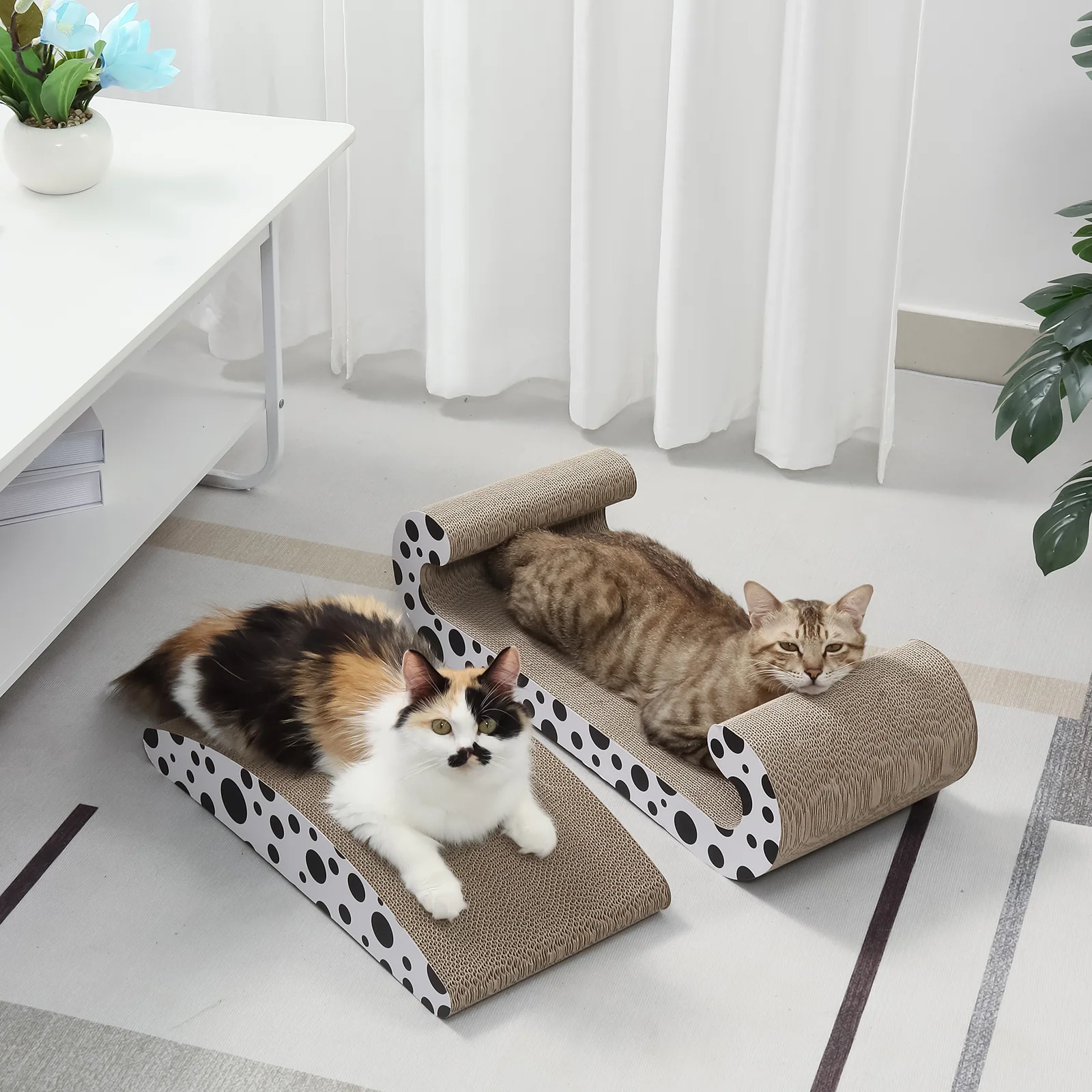
Today’s highest-converting SKUs are architectural pieces: infinity curves, Mid-Century Modern TV-shaped condos, wall-mounted scratchers, and modular castles.
That requires real ODM (Original Design Manufacturing) and structural engineering muscle—not just a saw and a glue roller.
Look for a manufacturing partner with:
- In-house CAD structural engineers who can turn a rough 2D sketch into a load-bearing 3D dieline within 72 hours.
- CNC digital sample cutters for rapid prototyping before you spend thousands on steel-rule dies.
- Precision rotary and flatbed die-cutting capable of holding ±0.2 mm tolerances on snap-fit joints and interlocking tabs.
Why do tolerances matter so much?
Because if interlocking slots on a DIY cat house are off by even a millimeter, the tabs will either tear during assembly or wobble until the whole structure collapses.
Step #4: Optimize for Flat-Pack Logistics and DIM Weight
Let’s talk unit economics.
Cardboard cat furniture is light in actual weight, but bulky in volume. If you ship pre-assembled infinity lounges across the ocean—and then ship them via UPS, FedEx, or FBA to your customers—dimensional (DIM) weight fees will eat 40% of your retail price.
A strategic manufacturing partner thinks like a supply chain engineer.
During product development, ask how they optimize container utilization and last-mile parcel tiers:
- Nested & Hollow-Core Designs: Can smaller scratch inserts nest inside the hollow cavity of a larger lounge, giving you a 2-in-1 SKU for zero extra freight cost?
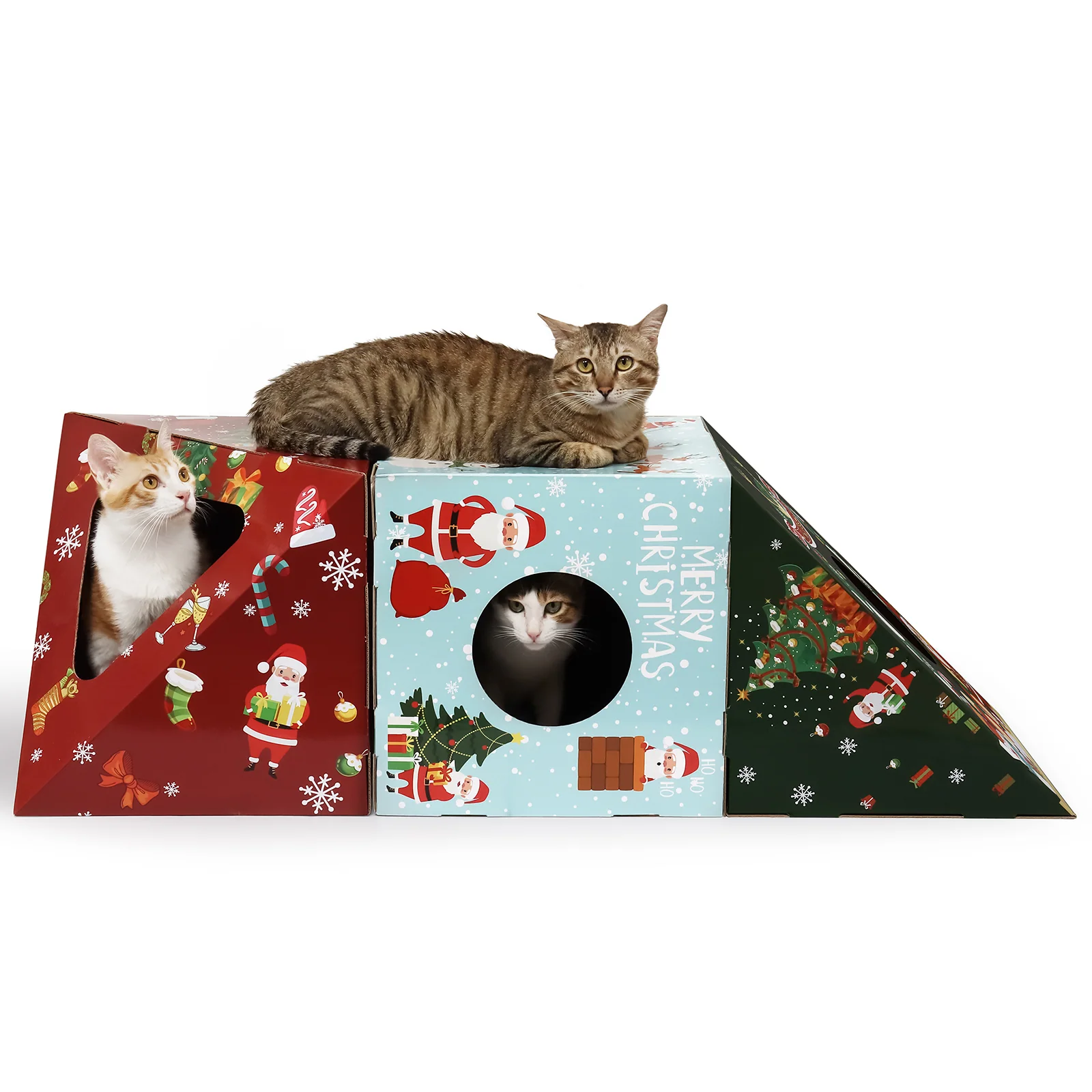
- Knock-Down (KD) Modular Construction: Can a bulky cat condo ship in a 2-inch-thick flat-pack mailer box that snaps together in 3 minutes without tools or screws?
- ISTA Drop-Test Packaging: Does the factory supply 200# / 32 ECT (or stronger) mail-order cartons engineered to survive e-commerce fulfillment without requiring secondary over-boxing?
Cutting 1.5 inches off a retail carton’s thickness can drop your FBA fulfillment fee by an entire size tier—adding $1.50 to $3.00 in pure net profit per unit sold.
Step #5: Inspect Moisture Control and Anti-Mold Protocols
Here is an operational detail that 90% of first-time importers overlook:
Corrugated paper + cornstarch glue + water = a buffet for mold if the product isn’t dried properly.
Laminating thick honeycomb scratcher blocks introduces significant moisture into the board. Amateur factories stack freshly glued blocks straight onto wooden pallets, wrap them in shrink film, and load them into 40HQ containers sitting in humid coastal ports.
Three weeks later, your shipment arrives covered in mildew spots.
When auditing a factory (either in person or via live video walkthrough), verify these three safeguards:
- Dedicated Drying & Curing Rooms: Temperature- and dehumidifier-controlled chambers where laminated blocks cure before cutting and shrink-wrapping.
- Moisture Meter Checks on the QC Line: Pre-packing moisture content should strictly measure below 10%–12% using a digital pin moisture meter.
- Mold-Free Packaging: Clay or silica-gel desiccants (pet-safe, non-DMF) and breathable or micro-perforated inner wrapping where climate routes require it.
Step #6: Verify Sustainability, Safety, and Retail Certifications
Whether you sell direct-to-consumer (DTC) today or plan to pitch Petco, PetSmart, Target, or Zooplus tomorrow, compliance isn’t optional.
Eco-conscious shoppers actively check packaging for sustainability proof—and retail buyers won’t even open your pitch deck without clean audit reports.
Before signing a manufacturing agreement, request verifiable copies (check certificate numbers in official databases, not just PDF screenshots) of:
- FSC® Certification (Forest Stewardship Council): Proves paper fibers come from responsibly managed forests—a massive conversion booster on product pages.
- BSCI, SMETA (Sedex), or ISO 9001 Audits: Essential social compliance and quality management standards required by major North American and European retailers.
- REACH / CPSIA / California Prop 65 Testing: Confirms inks, surface coatings, catnip packets, and adhesives are free from lead, phthalates, and banned heavy metals.
- USDA / Phytosanitary Compliance on Catnip: If your SKU includes a bonus pouch of organic catnip or silvervine, verify that the herb supplier meets customs import regulations for your destination market.
Step #7: Test Communication Speed, MOQs, and Scalability
Even the cleanest factory floor becomes a nightmare if your account manager takes four days to answer an email.
You don’t want a transactional vendor. You want a manufacturing partner that scales alongside your content marketing and sales velocity.
Before committing to a full production run, stress-test the relationship across four benchmarks:
- MOQ Flexibility for Market Testing: Will they support 300–500 units per SKU for an initial test launch, with tiered price breaks at 1,500 and 5,000+ units?
- Sampling Lead Time: Can they deliver unprinted white-board structural samples in 5–7 days, and full CMYK/Pantone printed pre-production samples in 10–14 days?
- Automated Capacity: Do they use automated slitting, glue-spreading, and CNC contour-cutting lines? Hand-glued workshops bottleneck fast during Q3/Q4 holiday surges (Black Friday and Q4 gifting).
- Clear Defect & AQL Standards: Will they sign off on a clear AQL 2.5 / 4.0 third-party inspection agreement—covering glue gaps, blade burn marks, frayed edges, and print color delta?
Quick Comparison: Trading Company vs. Packaging Plant vs. Specialized Pet Factory
Still weighing your shortlist? Use this cheat sheet to spot who you’re actually talking to:
| Criteria | Trading Company | General Carton Plant | Specialized Cat Furniture Manufacturer |
|---|---|---|---|
| Unit Pricing | Higher (10%–25% markup) | Competitive on outer boxes only | Direct factory pricing on dense cores + outer print |
| Contour Cutting (Curves/Lounges) | Outsourced | Rarely equipped | In-house CNC / band-saw / die-cutting lines |
| Moisture & Glue QC | Limited visibility | Built for thin single-wall boxes | Dedicated curing rooms & starch-glue presses |
| Custom Structural R&D | Slow relay to factory | Basic box templates | Direct access to pet-furniture CAD engineers |
Frequently Asked Questions (FAQs)
What is a normal MOQ for custom cardboard cat furniture?
For custom-shaped or custom-printed OEM cardboard cat scratchers and houses, standard MOQs typically range from 500 to 1,000 units per SKU due to offset printing plate and die-cutting setup costs. However, agile manufacturers often offer 300-unit trial MOQs using digital printing or stock kraft finishes so brands can validate market demand first.
How long does mass production take?
Once your pre-production sample (PPS) and artwork dielines are approved, standard mass production lead times run 25 to 35 days—including paper sourcing, laminating, kiln drying, contour cutting, and final QC inspection. Add an extra 7 to 10 days during peak Q3 retail prep seasons.
Is virgin kraft paper better than recycled paper for cat scratchers?
Yes—for durability and shedding control, long-fiber virgin kraft linerboard (or a high-virgin blend) significantly outperforms low-grade 100% post-consumer recycled paper. Longer wood fibers resist tearing cleanly, meaning the scratcher lasts up to 2x–3x longer and leaves far less cardboard dust on your customer’s floor.
How can I verify a supplier is a real factory and not a middleman?
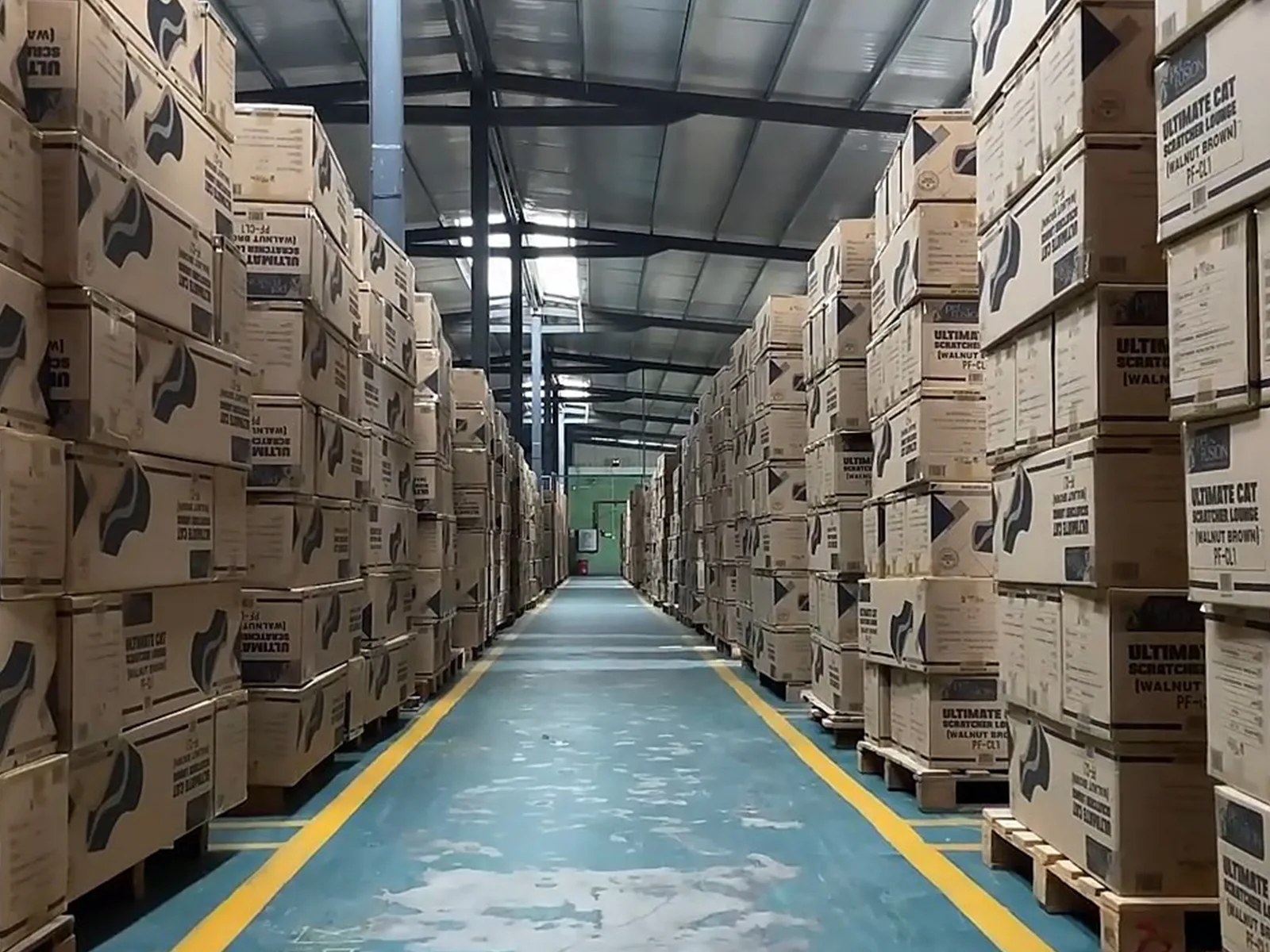
Ask for a live 15-minute video walkthrough of three specific zones: their raw paper roll warehouse, their multi-layer laminating press, and their dehumidifying drying room. Also cross-check the company name on their business license against the facility name listed on their FSC or BSCI audit report.
Conclusion: Build Margin Into Your Supply Chain
Choosing a cardboard cat furniture manufacturing partner isn’t about finding the cheapest per-kilogram paper quote.
It’s about protecting your brand equity.
When you partner with a manufacturer that pairs high-density B-flute kraft board, food-grade cornstarch adhesives, flat-pack structural engineering, and strict <12% moisture curing, two things happen:
Your return rates plummet. And your repeat purchase rate skyrockets.
Start small: shortlist three specialized manufacturers, send each the exact same technical spec sheet (GSM, flute type, finished block weight, and moisture target), and put their samples through a side-by-side stress test before placing your deposit.
Ready to source or upgrade your next bestseller? What’s been your biggest headache when sourcing custom corrugated pet products—freight costs, sample quality, or high MOQs? Drop your questions below, or reach out with your target dimensions to request a free structural dieline review and density sample kit.