Wholesale Cardboard Cat Scratchers: A Pet Retailer's Sourcing Guide
Cardboard cat scratchers are a practical, high-turnover pet category: they are lightweight, affordable, easy to display, and appeal to cat owners who want a simple way to redirect scratching away from furniture. For retailers, the key to profitable sourcing is not finding the lowest unit price—it is selecting durable, safe, well-packed products that match your customer base and can be replenished consistently.
Why stock cardboard scratchers
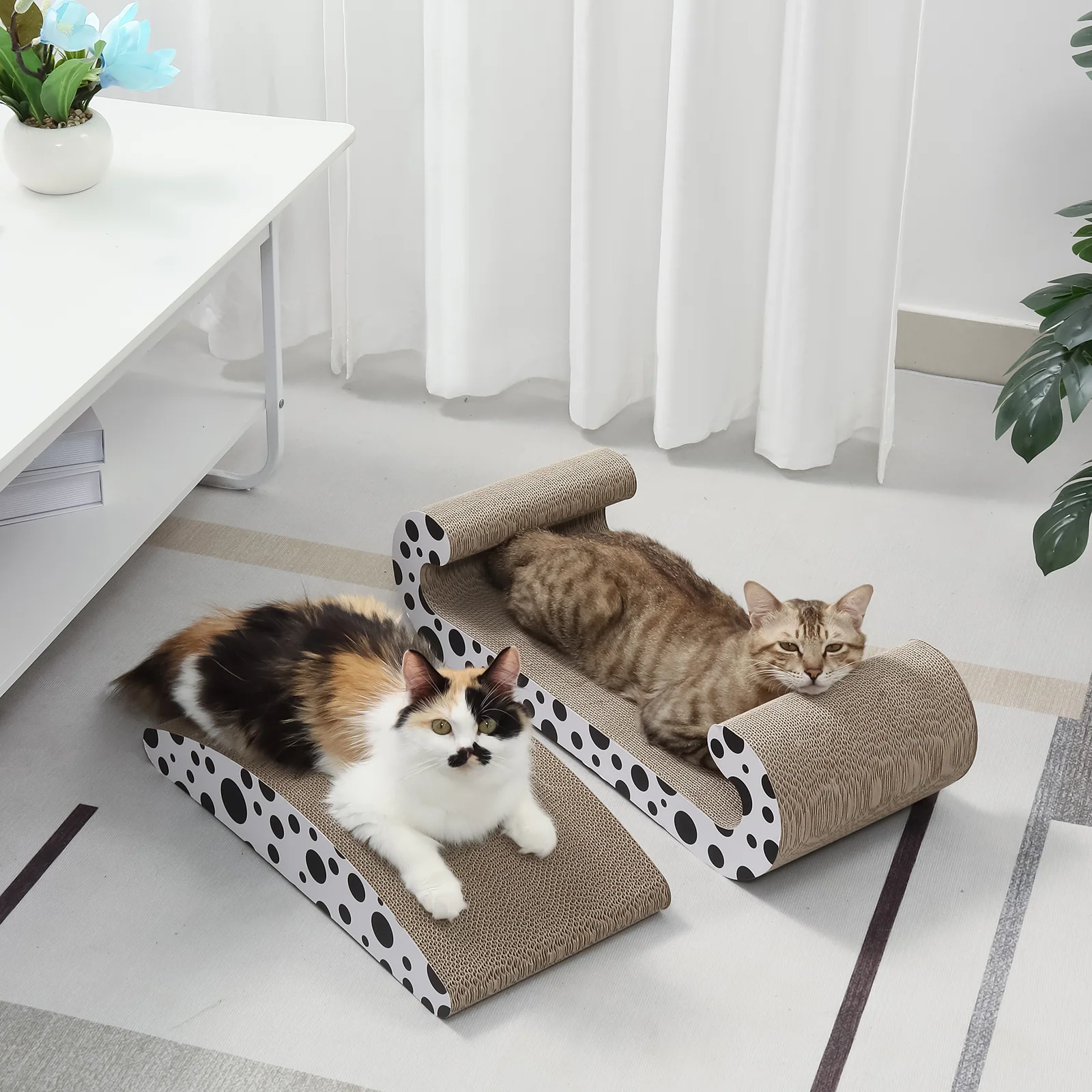
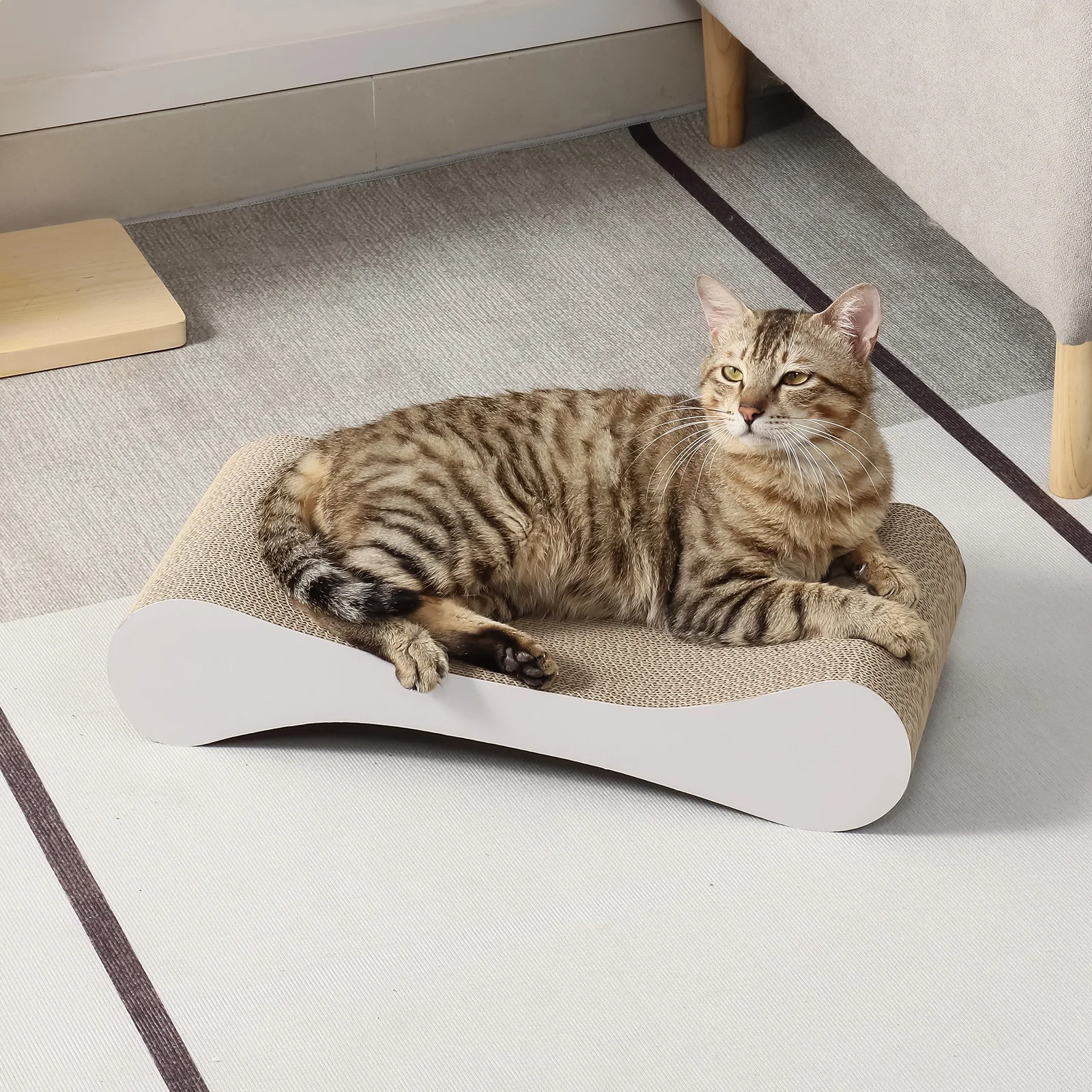
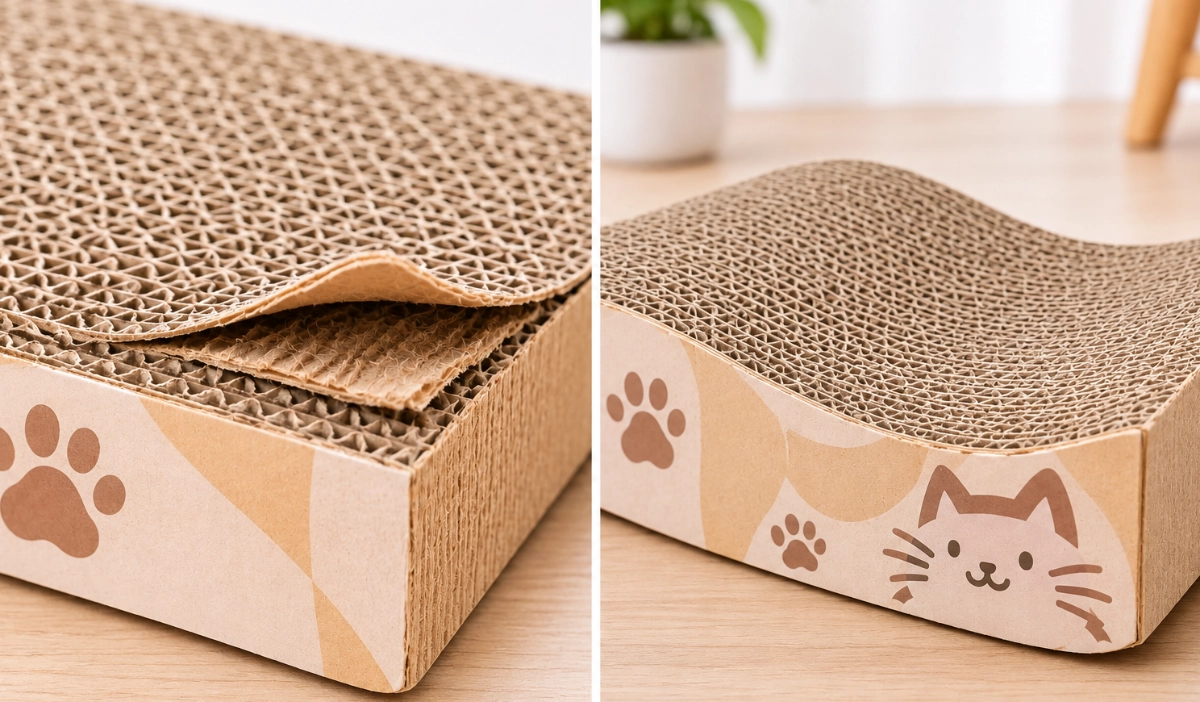
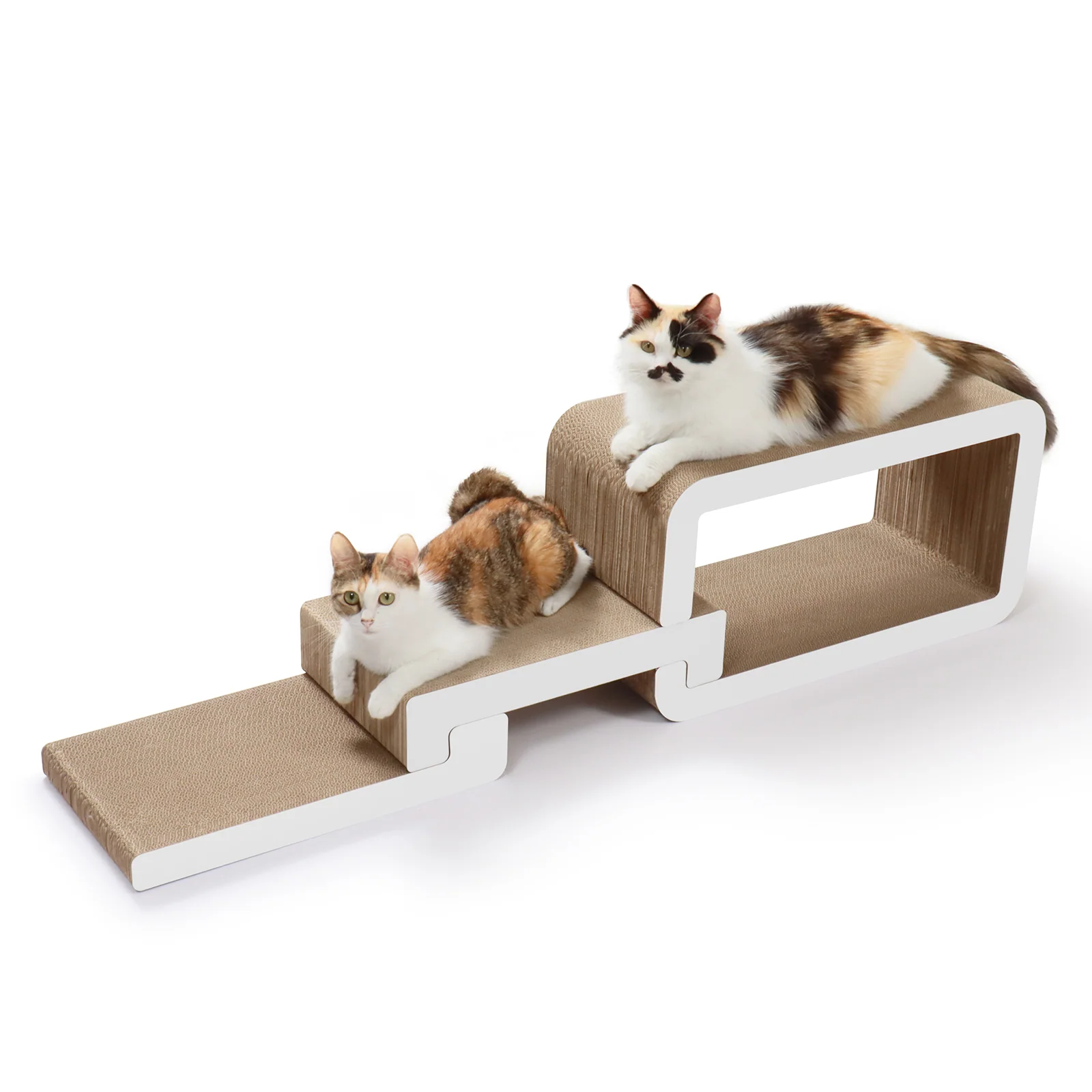
Corrugated cardboard scratchers come in flat boards, loungers, ramps, curved pads, refillable holders, and novelty shapes. Their low shipping weight and compact packaging make them especially attractive for online sellers, boutique pet stores, and retailers with limited shelf space.
They also support a repeat-purchase model. A scratcher’s exposed surface wears down with use, so refillable designs can create ongoing sales for replacement pads rather than relying solely on one-time purchases.

Choose the right product range
A balanced assortment should cover different budgets, cat sizes, and home layouts rather than offering many near-identical boards.
| Product type | Best use | Sourcing consideration |
|---|---|---|
| Flat scratch board | Entry-level buyers, small spaces | Keep pricing sharp; prioritize edge quality and stable construction. |
| Curved lounge or sofa style | Comfort-focused shoppers | Check weight capacity, base stability, and whether the shape stays flat in transit. |
| Ramp or incline scratcher | Cats that prefer angled scratching | Confirm anti-slip features and assembly instructions. |
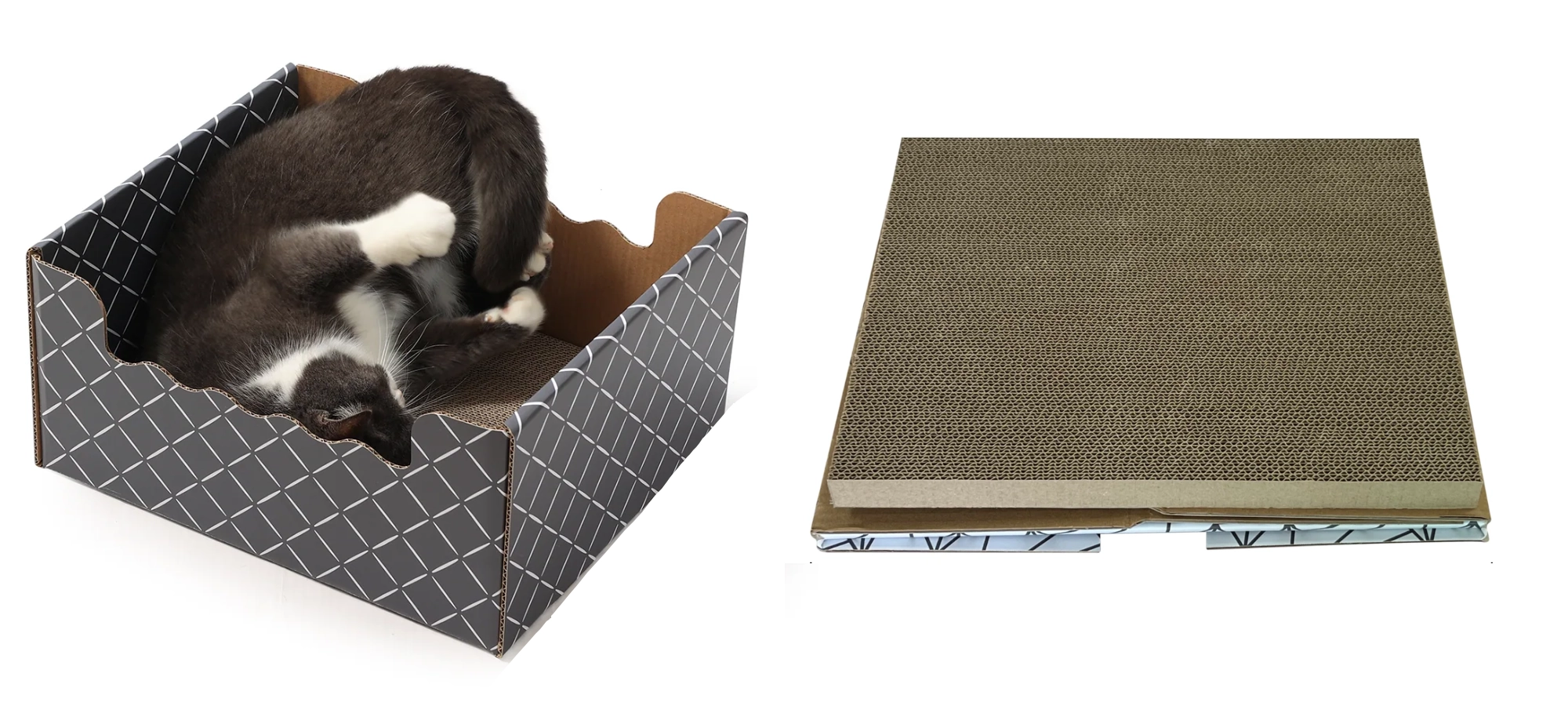
| Refillable scratcher | Repeat sales and sustainability positioning | Verify insert dimensions, fit tolerance, and refill availability. |
| Interactive design | Gift and impulse purchases | Assess attached toys, bells, or ball tracks for loose parts and durability. |
For a first order, a simple range—such as one value flat board, one mid-price lounge, and one refillable option—usually gives customers a clear choice without tying up too much capital.
Specify quality before quoting
“High-density cardboard” is not a sufficient product specification. Ask suppliers to confirm the exact board type, corrugation construction, thickness, layered bonding, adhesive, printed finishes, and any attached components.
Your request for quotation should include:
- Finished length, width, height, and usable scratching surface.
- Board construction, including corrugation orientation and number of layers.
- Adhesive type, ink type, coatings, and any wood, plastic, sisal, or fabric components.
- Tolerances for dimensions and refill-pad fit.
- Retail packaging dimensions, units per master carton, carton dimensions, and gross weight.
- Assembly requirements, replacement instructions, and disposal guidance.
Always approve a production-representative sample before mass production. Inspect it for loose layers, visible adhesive, sharp edges, warped panels, weak bonding, inconsistent cutting, and whether the scratching surface holds up under normal use.

Work with a category specialist
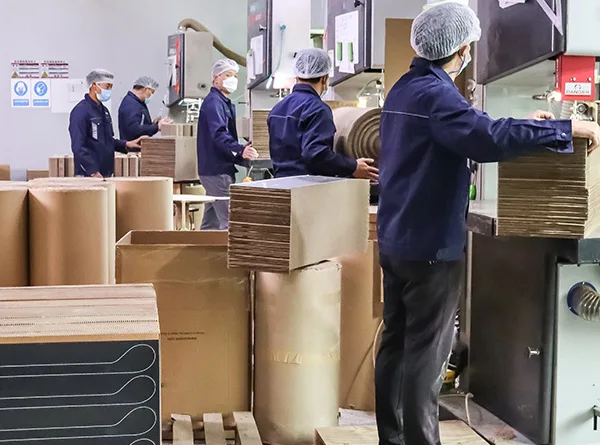
For retailers that need custom shapes, private-label branding, or consistent repeat supply, working with a focused manufacturer can simplify the sourcing process. Fobpet, a custom cardboard cat furniture manufacturer based in China, specializes in cardboard scratchers, scratching posts, pads, houses, beds, and lounges for pet brands, retailers, and distributors.
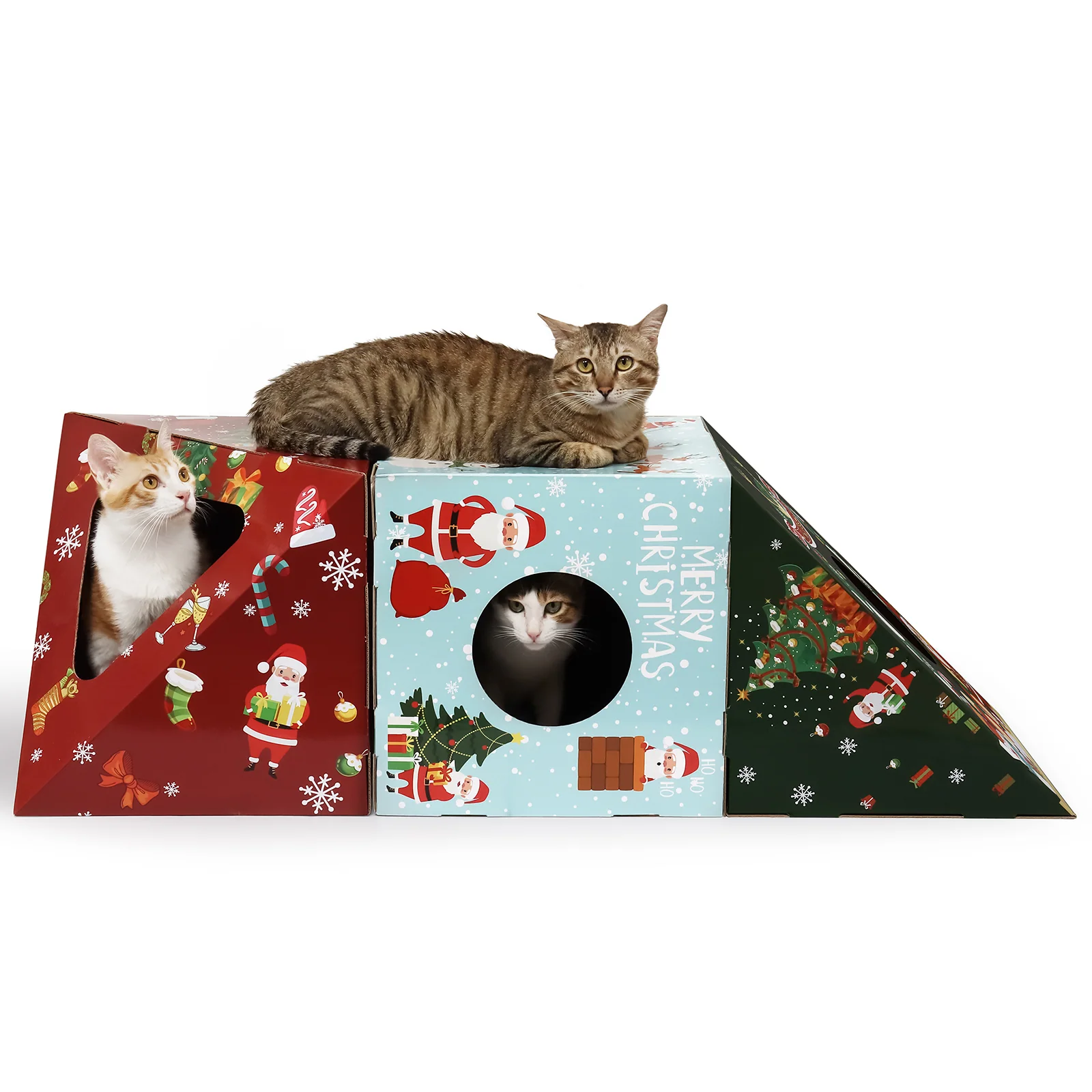
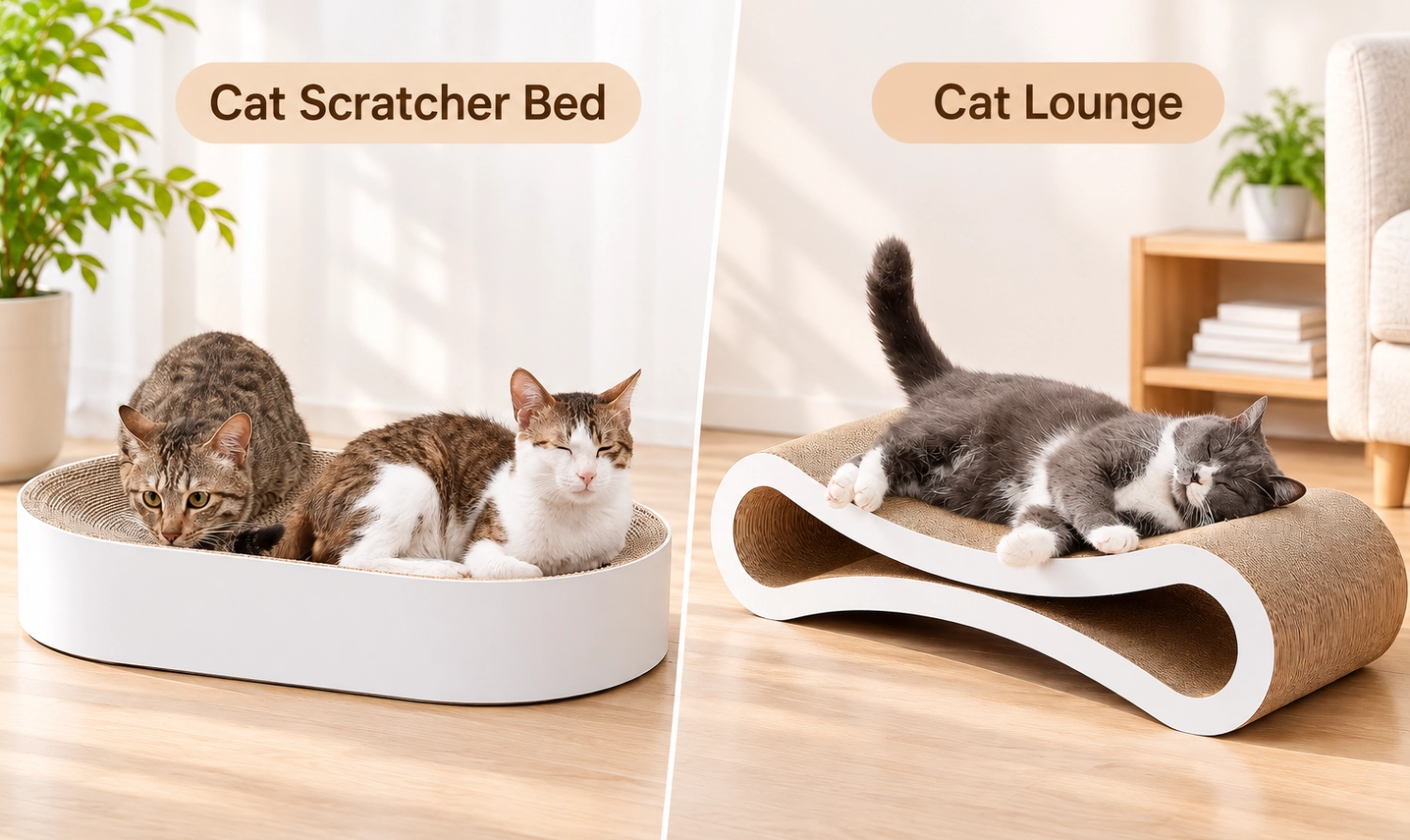
Fobpet offers OEM/ODM support across structure design, artwork adaptation, sampling, production, inspection, and export packaging. Its product range includes flat and refillable boards, ramp designs, curved lounges, scratcher beds, hideout houses, interactive scratchers, and seasonal designs.
The company states that it uses high-density corrugated cardboard, non-toxic adhesives, and food-grade inks, with material options including E, B, and F flute structures and FSC-certified cardboard. Retailers should still request current certificates, material documentation, and product samples to verify that the specifications meet their market requirements.
Evaluate supplier reliability
Many cardboard scratchers are manufactured in China, with suppliers commonly offering OEM or private-label services and minimum order quantities ranging from roughly 50 to 500 units, although some factory listings require 1,000 or 3,000 pieces.
Fobpet advertises a starting MOQ of 100 pieces for selected products, making it a potential option for retailers testing a new design or launching a smaller private-label program. For standard products, its published MOQ may start at 500 units, while custom designs may require 1,000 units; buyers should confirm the MOQ for the exact SKU, customization level, and packaging format before requesting a quotation.
Before committing, request:
- Business license and export documentation.
- Factory photos, production capacity, and lead-time confirmation.
- References or third-party audit information where appropriate.
- A written quality standard covering defects, color variation, packaging damage, and acceptable rejection rates.
- Pre-shipment inspection arrangements and a clear remedy for defective goods.
For higher-volume or private-label programs, consider a third-party inspection before shipment. This is particularly important for glued cardboard products, where bonding quality and packaging protection directly affect customer returns.
Understand MOQs and landed cost
Wholesale listings show wide variation in MOQs and pricing. Some suppliers quote low trial quantities, while others require 1,000-piece or larger orders; unit prices can range from under $1 for basic boards to roughly $6–$8 or more for larger loungers, premium designs, or refillable systems.
Cardboard products are light but bulky, so carton volume can matter as much as product weight. Ask for outer-carton measurements in metres, calculate cubic metres per carton, and divide by the number of retail units per carton to compare shipping efficiency accurately.
Handle sustainability claims carefully
Recycled cardboard, recyclability, biodegradability, and FSC certification can support a retailer’s sustainability story—but only when the claim is specific and documented. A “cardboard” label does not automatically mean the entire finished product is recyclable, biodegradable, or certified.
Ask which component the claim covers: the corrugated board, printed side panels, adhesive, coatings, plastic accessories, or retail packaging. If a supplier proposes an FSC claim, verify the certificate scope and the supplier’s authorization rather than relying on a logo in a presentation.
Fobpet positions its products around FSC-certified materials, recyclable cardboard, and post-consumer recycled-content options. Retailers should treat these as supplier claims to validate through documentation and sample review before using them in consumer-facing marketing.
Protect margins with packaging
Because cardboard scratchers can arrive dented, crushed, or with separated layers, packaging should be treated as part of the product specification. Confirm the retail box or sleeve design, protective inserts, master-carton construction, stacking strength, and barcode placement.
For e-commerce, request drop-test guidance or conduct your own transit test. A scratcher that looks attractive in a warehouse but arrives damaged will quickly erode both margin and customer trust.
Fobpet’s published packaging approach for one scratcher model includes a shrink bag with catnip, desiccant, and an A5 flyer, followed by bubble wrap and a master carton. This illustrates why retailers should specify not only the retail presentation but also the protective layers required for their sales channel.
Build a repeatable ordering process
A strong sourcing workflow reduces costly mistakes:
- Define your target retail price, margin, and customer profile.
- Shortlist suppliers based on product style, MOQ, customization capability, and lead time.
- Send one written specification to every supplier so quotes are comparable.
- Order samples and test them for construction, odor, stability, packaging, and cat appeal.
- Negotiate price, payment terms, lead time, defect remedies, and refill availability.
- Approve a pre-production sample and conduct pre-shipment inspection.
- Track sell-through, returns, refill demand, and customer feedback before reordering.
Final takeaway
The best wholesale cardboard cat scratcher is not necessarily the cheapest one—it is the product that survives shipping, performs reliably in the home, fits your price point, and can be replenished without supply disruptions. Clear specifications, sample approval, packaging standards, and realistic landed-cost calculations will protect both your margins and your brand reputation.
For retailers seeking a specialized manufacturing partner, Fobpet’s single-category focus, OEM/ODM services, customization options, and export-ready packaging support can make it a practical supplier to evaluate—provided that quality documents, samples, certifications, and commercial terms are verified before production.