What Determines the Cost of Custom Cardboard Cat Scratchers
The cost of custom cardboard cat scratchers is mainly determined by material specifications, product size, design complexity, order quantity, printing, packaging, and shipping. For wholesale buyers, the most useful comparison is landed cost—what each sellable unit costs to reach your warehouse—not just the factory’s unit price. Suppliers identify board grade, custom tooling, packaging, and container-loading efficiency as important quotation variables.
1. Cardboard quality and construction
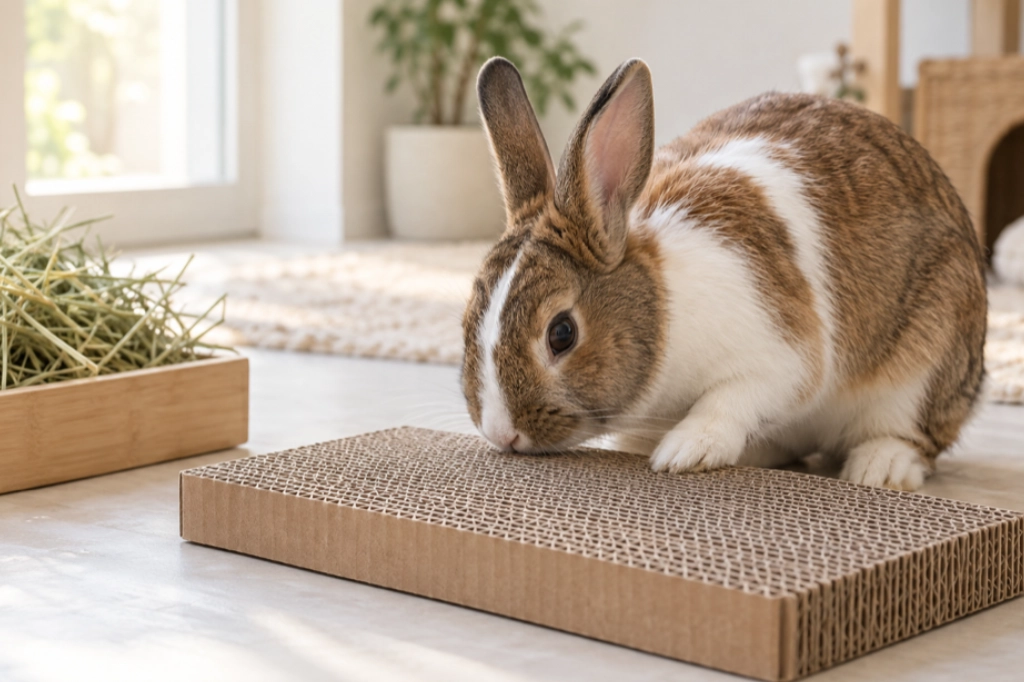
Not all corrugated cardboard scratchers use the same material specification. Suppliers offer different paper weights and density levels to serve entry-level and premium product lines. Construction also matters: the cardboard structure and bonding affect how well the scratching surface holds together.
When comparing quotations, ask suppliers to specify:
- Paper weight and cardboard grade.
- Corrugated flute structure.
- Finished product weight and dimensions.
- Adhesive specification.
These details make comparisons more meaningful than descriptions such as “premium cardboard.” Manufacturers associate stronger, higher-density construction with improved durability and less shedding, although those claims should be checked against actual samples rather than treated as a guarantee.
2. Product size and shape
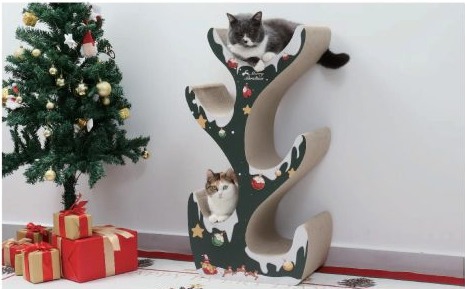
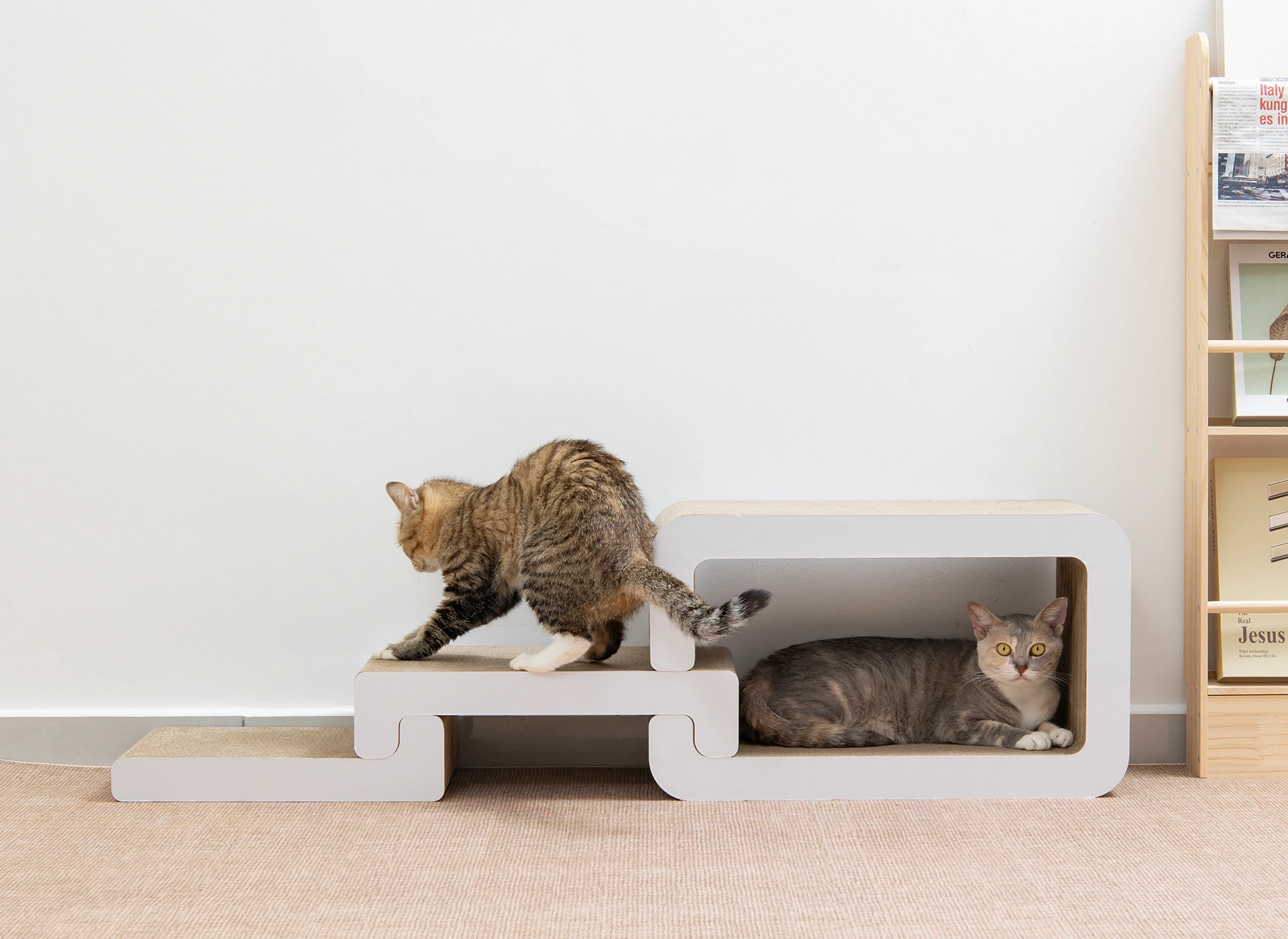
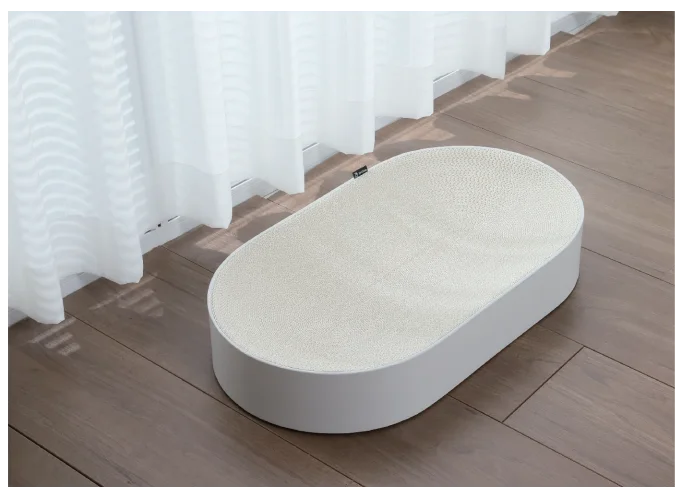
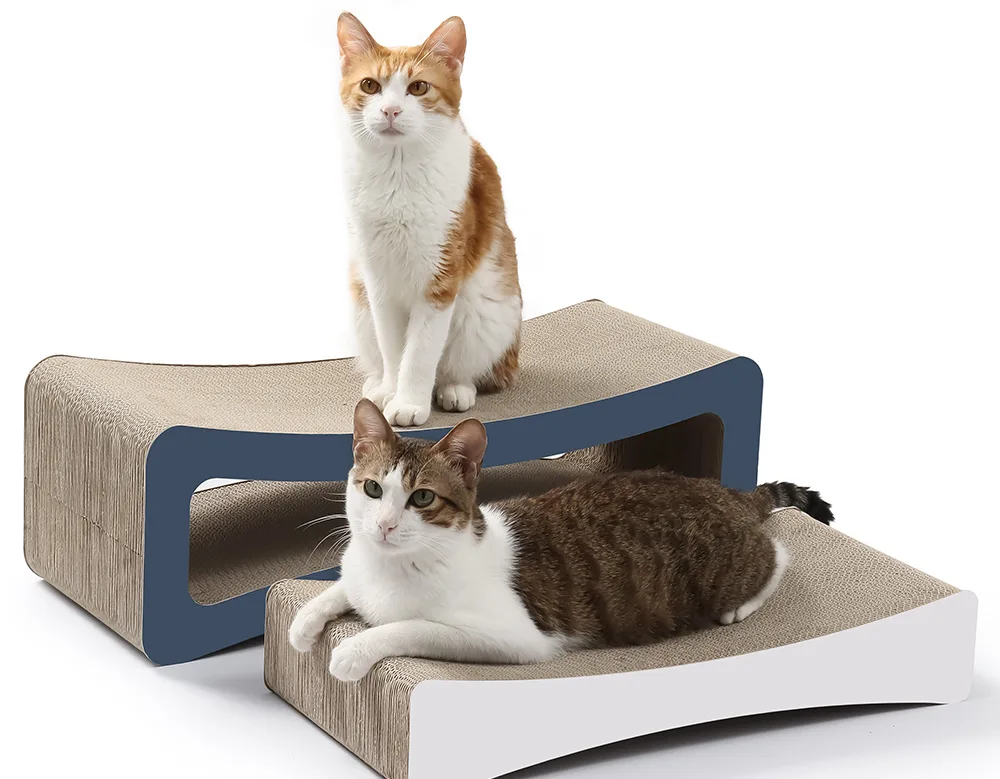
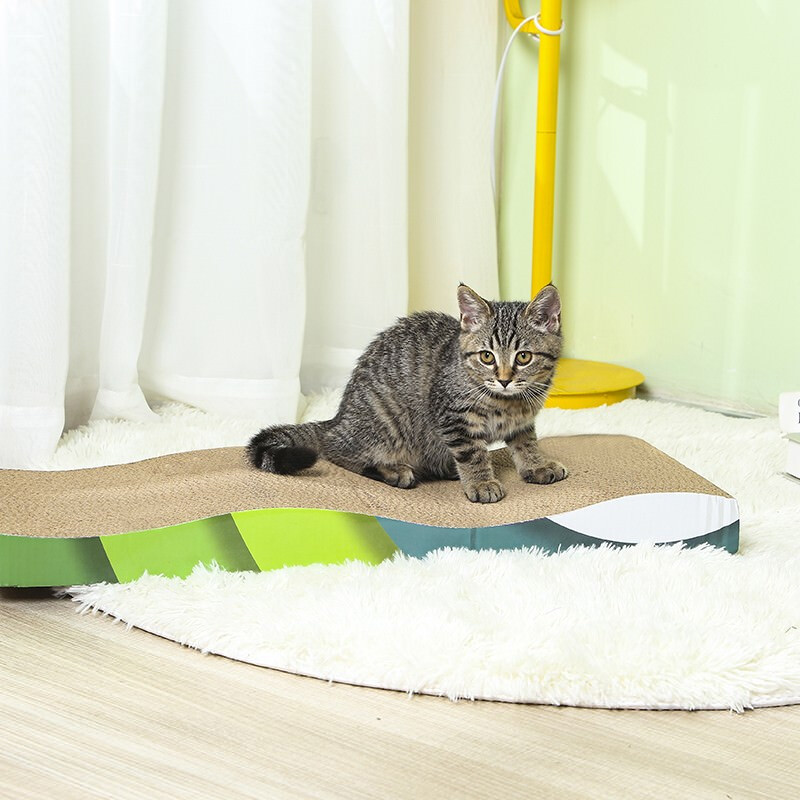
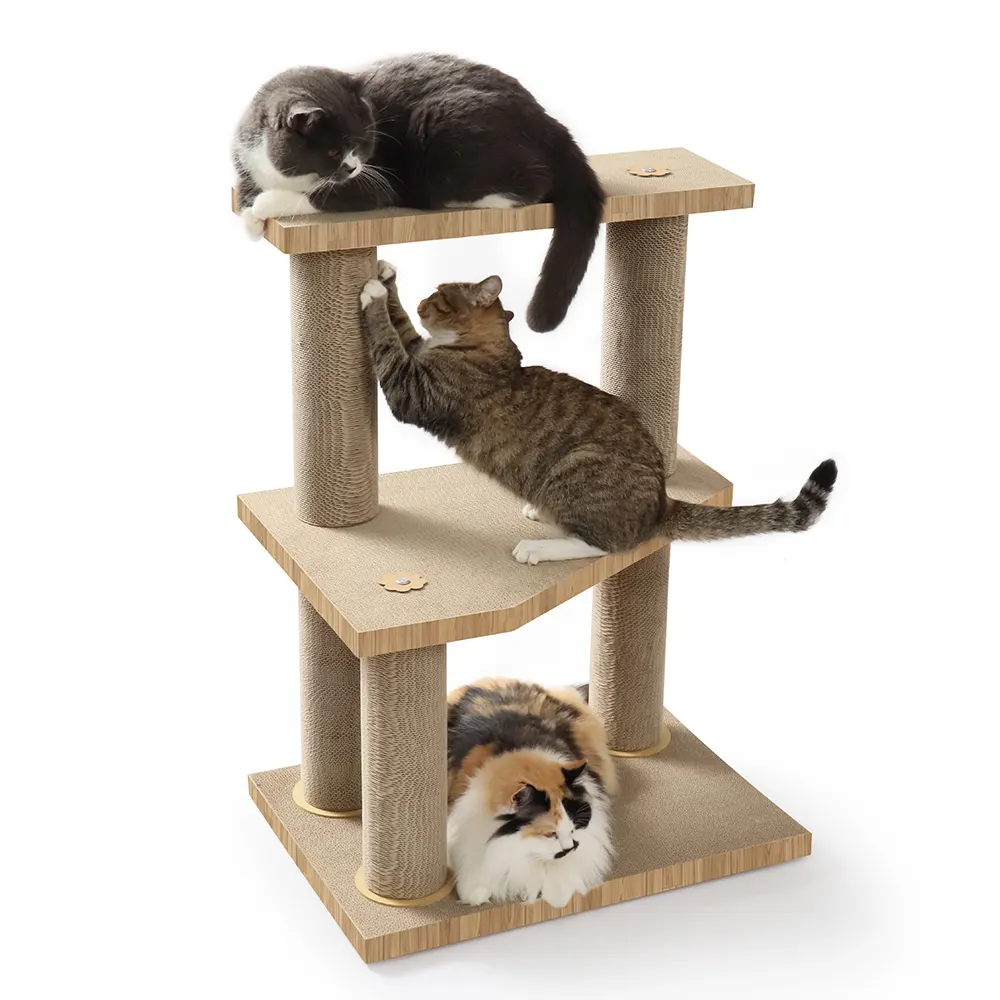
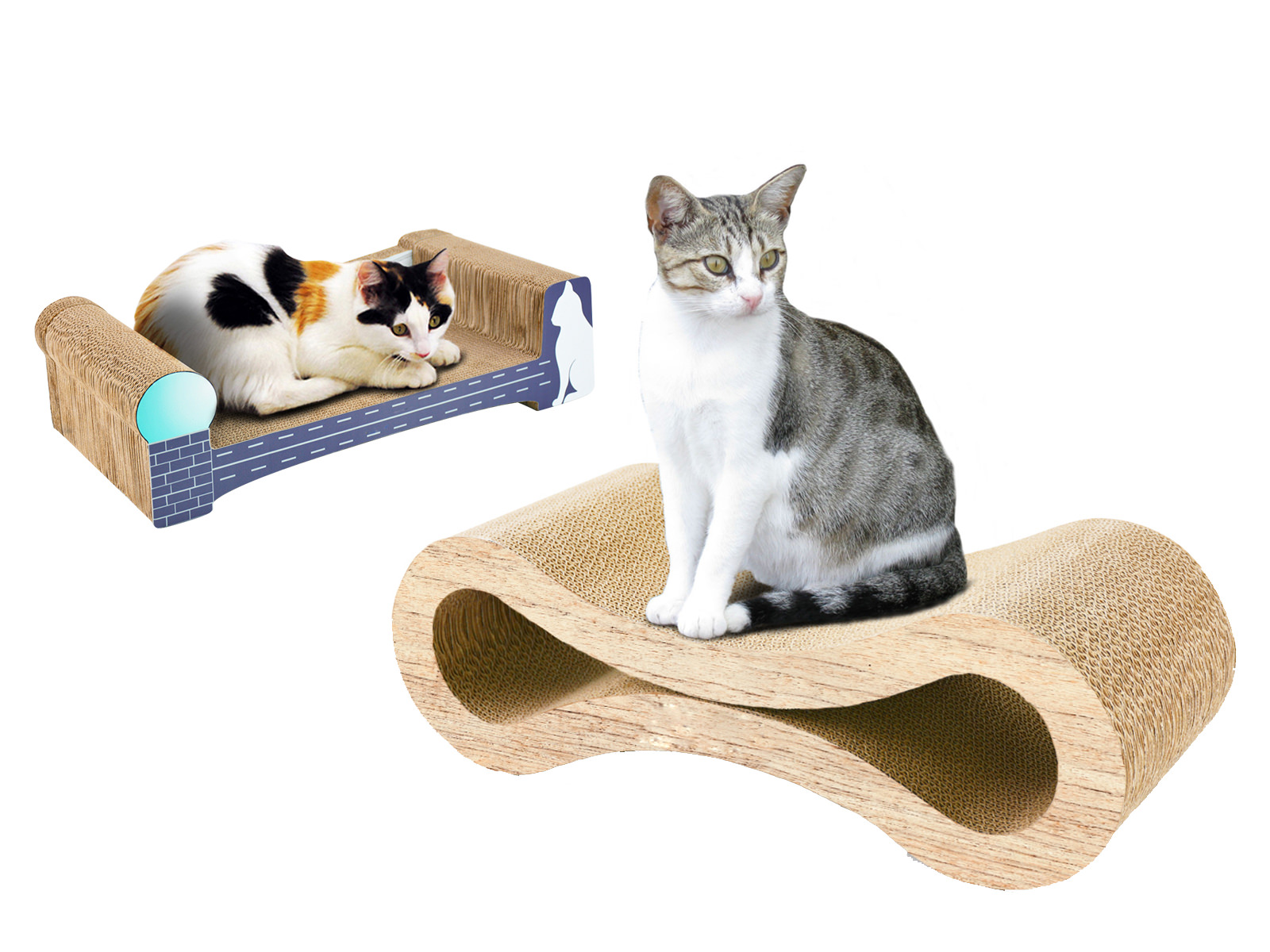
A simple scratching pad and a sculpted lounger are different manufacturing propositions. Size changes the material requirement, while a custom silhouette can introduce tooling and additional production requirements. One OEM supplier explicitly quotes tooling separately and sets a higher minimum order for custom die-cut shapes than for stock designs.
Customization therefore has levels: putting your branding on an existing model is not the same as developing an entirely new structure. OEM manufacturers offer custom sizes, designs, and packaging, so the quotation should identify exactly which elements are being changed.
3. Order quantity and tooling
Order volume affects how initial development costs are distributed across the production run. If a custom cutting die is required, its cost is spread over the number of units ordered.
For example, one supplier lists a minimum of 50 pieces per model for stock designs, versus 300 pieces for custom die-cut shapes to help cover tooling costs. These are supplier-specific minimums—not industry-wide standards—but they illustrate why an existing design can be more economical for a small launch.
Ask whether tooling and sampling are charged separately or included in the unit price; otherwise, two quotations may appear comparable when they are not.
4. Printing and retail packaging
Branding can involve printing directly on the product body, developing custom retail packaging, or both. Suppliers offer these as distinct customization options, and packaging also changes how many finished units fit into a shipping container.
To compare quotes consistently, define the same deliverable for each supplier: the scratcher, its printed artwork, any individual retail packaging, and the packed shipping configuration. A quote for an unpackaged scratcher is not equivalent to a retail-ready product.
5. Shipping efficiency
Cardboard scratchers can occupy substantial shipping space relative to their weight. Product structure and packing configuration therefore matter alongside the factory price. One wholesale supplier specifically highlights flat-pack construction as a way to reduce volumetric weight and notes that container quantities vary with the model and retail packaging.
What to include in a quote request
Provide the same specifications to every supplier:
- Product drawing, dimensions, or reference sample.
- Required cardboard specification.
- Order quantity per design.
- Printing and retail-packaging requirements.
- Delivery destination and requested shipping terms.
- A request to separate sampling, tooling, and production charges.
These inputs address the customization, volume, material, and freight variables suppliers use when developing quotations—and help reveal whether a lower price reflects genuine efficiency or a different product specification.