Flat, Inclined, or Vertical Cat Scratchers: How to Choose
The best cat scratcher is the one that matches your cat’s natural scratching posture, preferred material, and favorite locations. Most cats scratch vertically, but many prefer flat cardboard or an angled surface—so offering more than one style is usually the smartest choice.
Why orientation matters
Cats scratch to maintain their claws, stretch their bodies, and leave visual and scent marks. Because scratching is partly a preference-based behavior, a scratcher that does not match the way your cat naturally reaches, pulls, and stretches may be ignored.
Watch where your cat already scratches: sofa arms and curtains often indicate a vertical preference, while rugs, carpets, and stairs often indicate a horizontal preference.
Quick comparison
| Style | Best for cats that… | Key buying point | Possible drawback |
|---|---|---|---|
| Flat / horizontal | Scratch rugs, carpets, floors, or the tops of furniture | Large, stable surface; enough room to stand and pull | Can slide; may take floor space |
| Inclined / angled | Scratch at a partial stretch or seem unsure between floor and upright scratching | Firm support at a consistent angle; no wobbling | Less full-body stretch than a tall post |
| Vertical | Scratch sofa corners, curtains, chair legs, or walls | Tall enough for a full stretch; heavy, stable base | Must be sturdy or cats may avoid it |
Flat scratchers
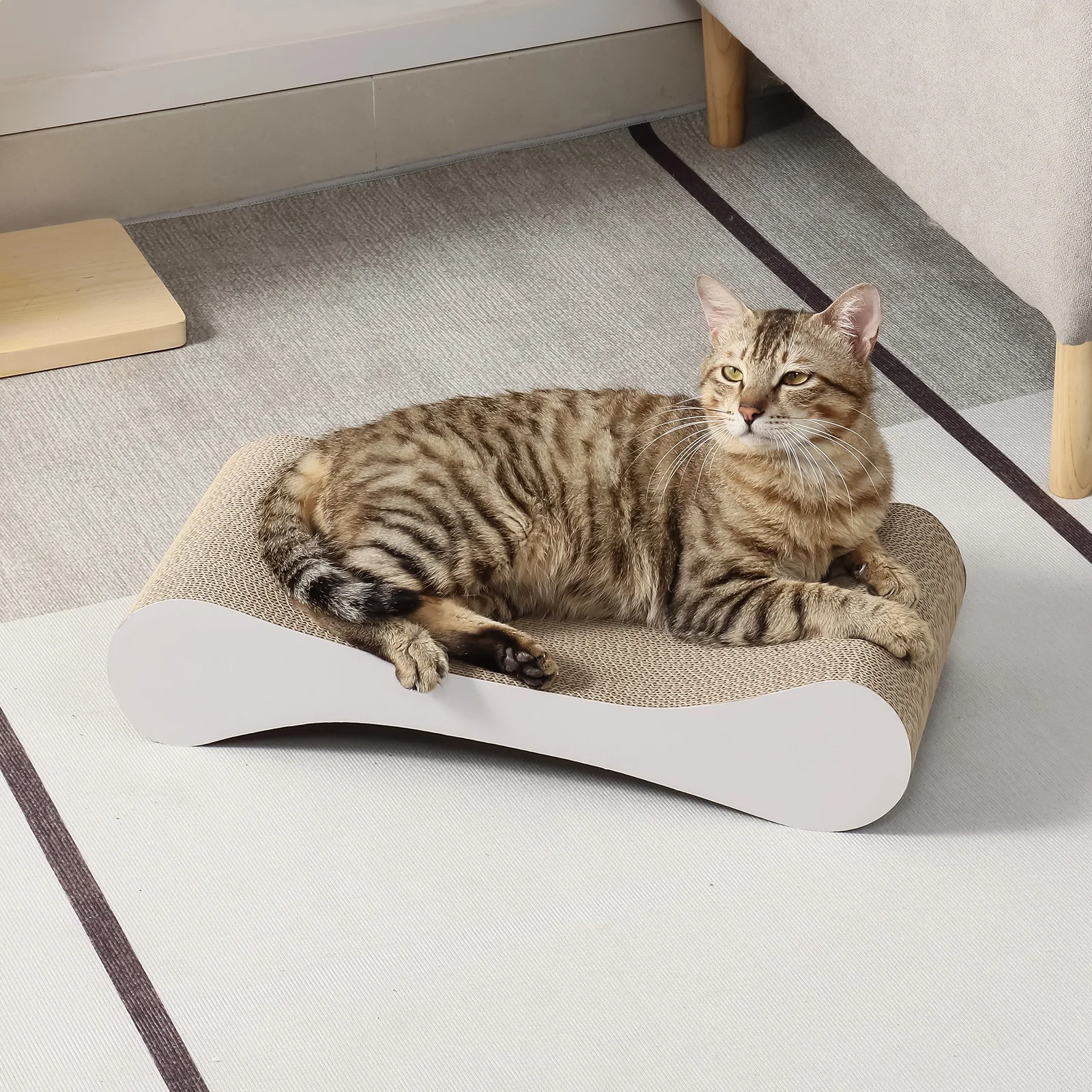
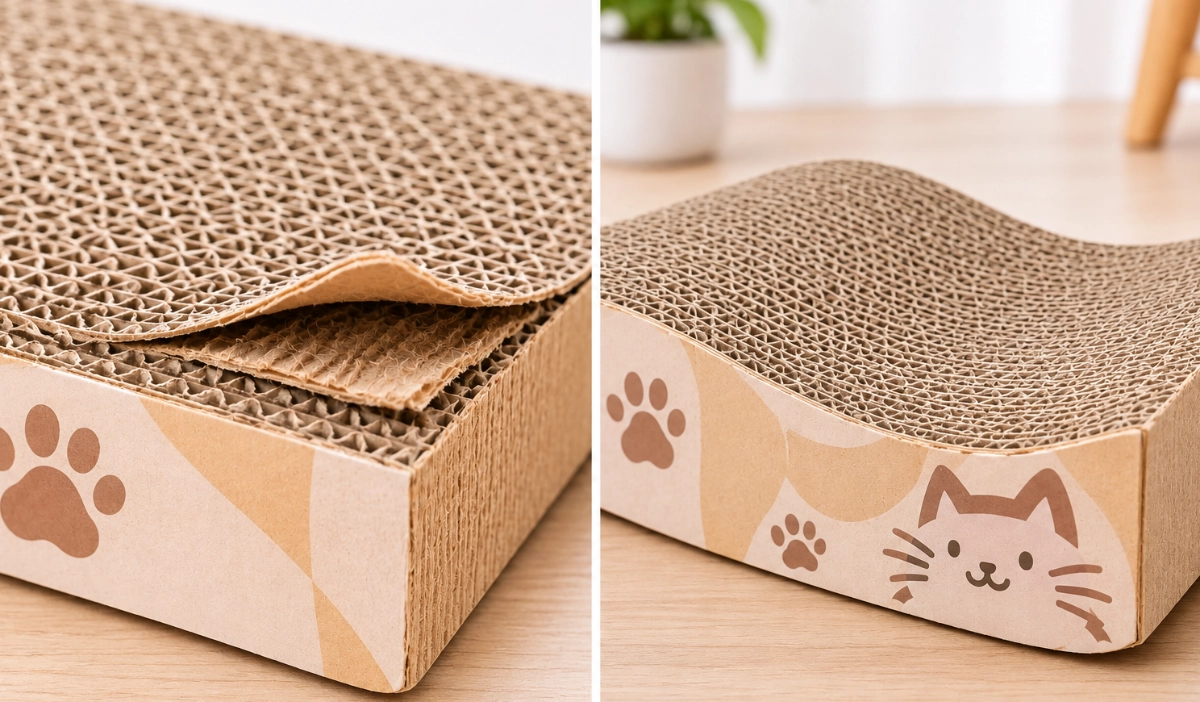
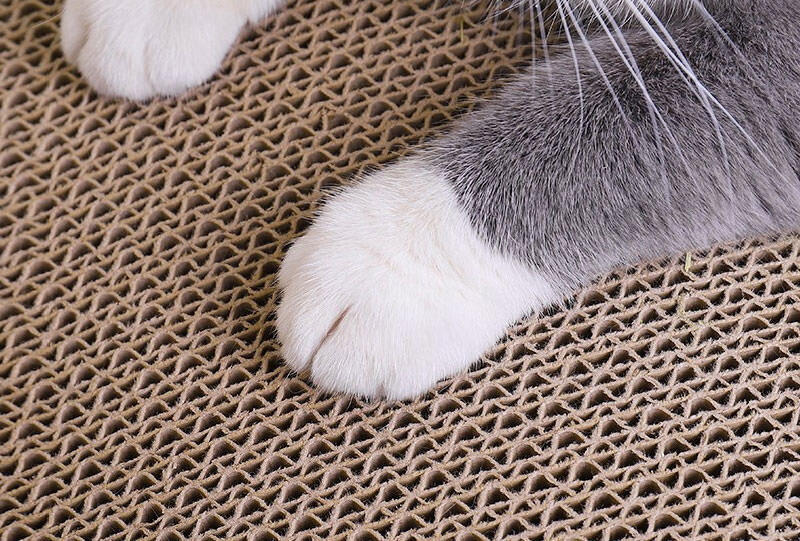
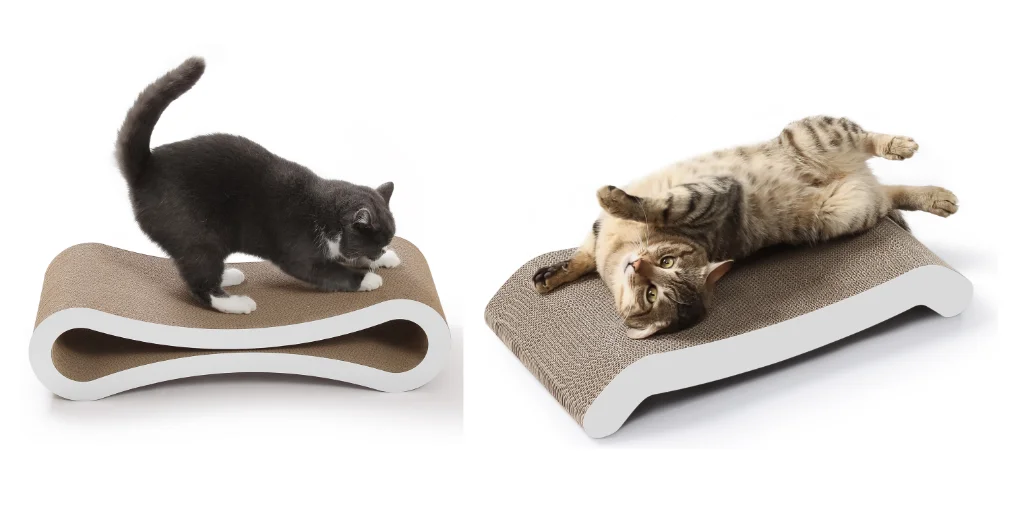
Flat scratchers—usually corrugated cardboard pads, mats, or lounge-style boards—are ideal for cats that like to crouch over a surface and rake their claws across it. If your cat targets rugs or carpet, a horizontal scratcher is often the closest acceptable alternative.
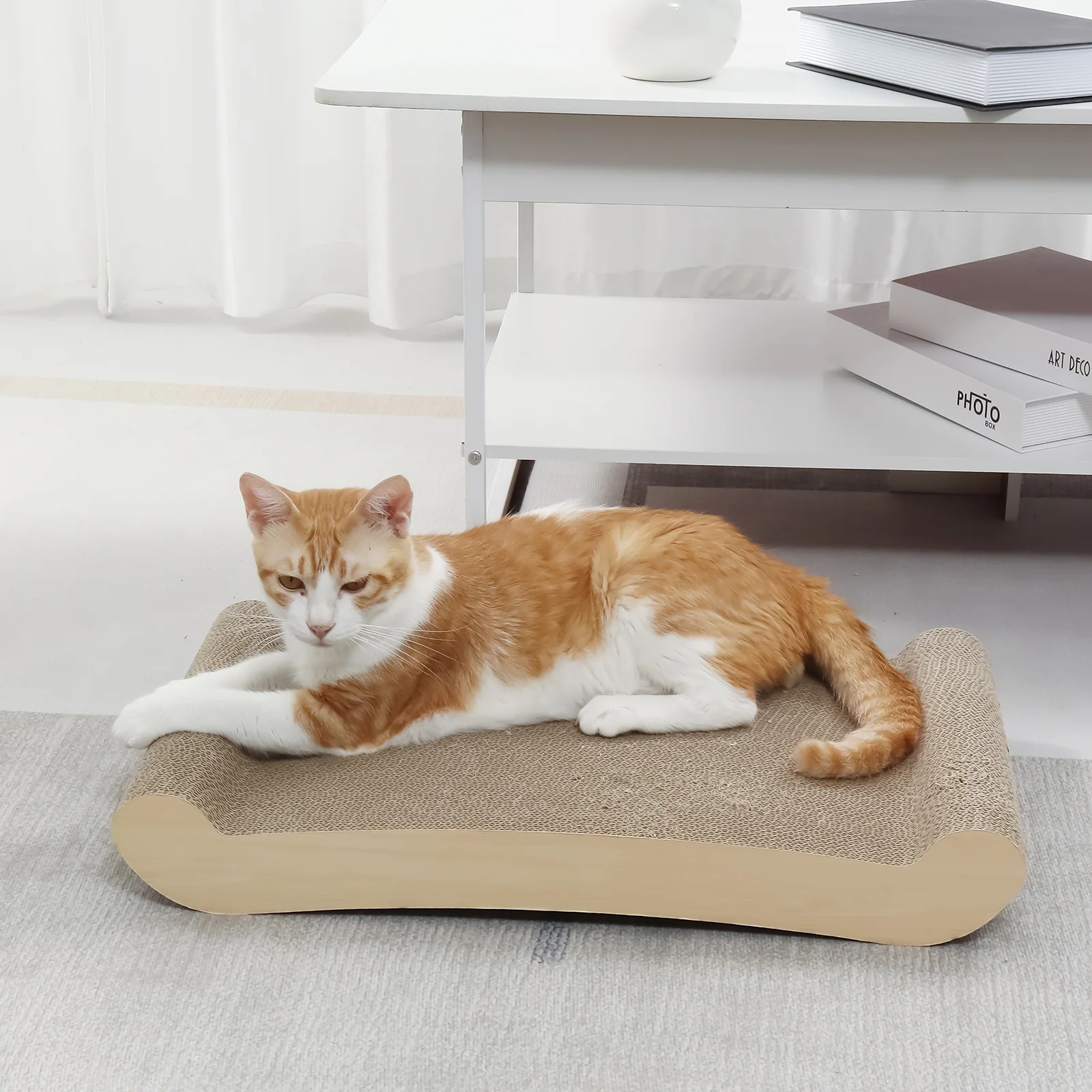
Choose one with a wide scratching area, a nonslip base, and a replaceable scratching surface. Cardboard is especially popular because it gives cats something satisfying to shred, though it wears out faster than sisal or wood.
Inclined scratchers
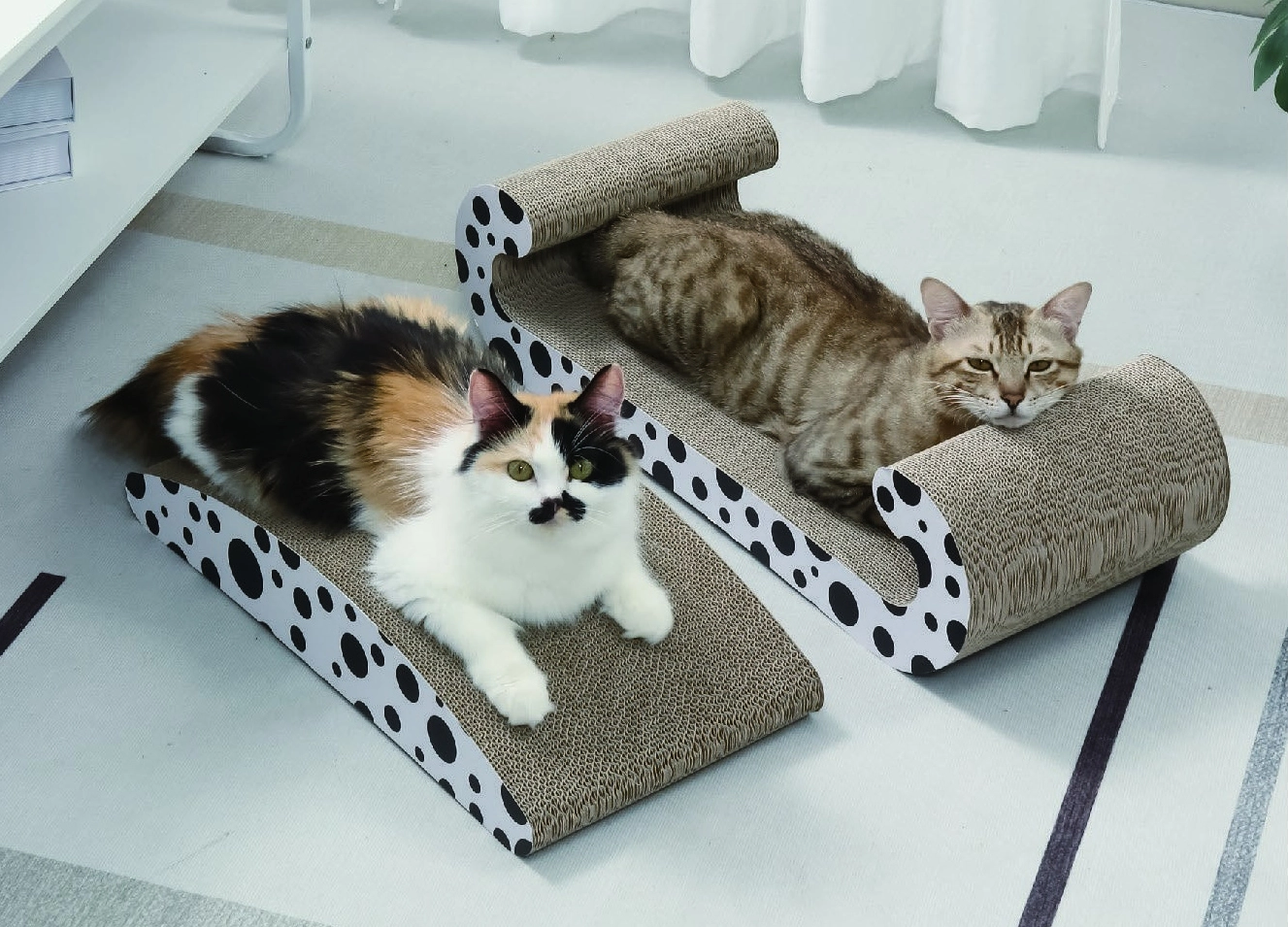
Inclined scratchers sit between horizontal and vertical designs. They can be a good compromise for cats that like a slight upward reach but do not consistently use a tall post, and they may be easier for kittens, senior cats, or cats with mobility issues because they offer less resistance than some upright posts.
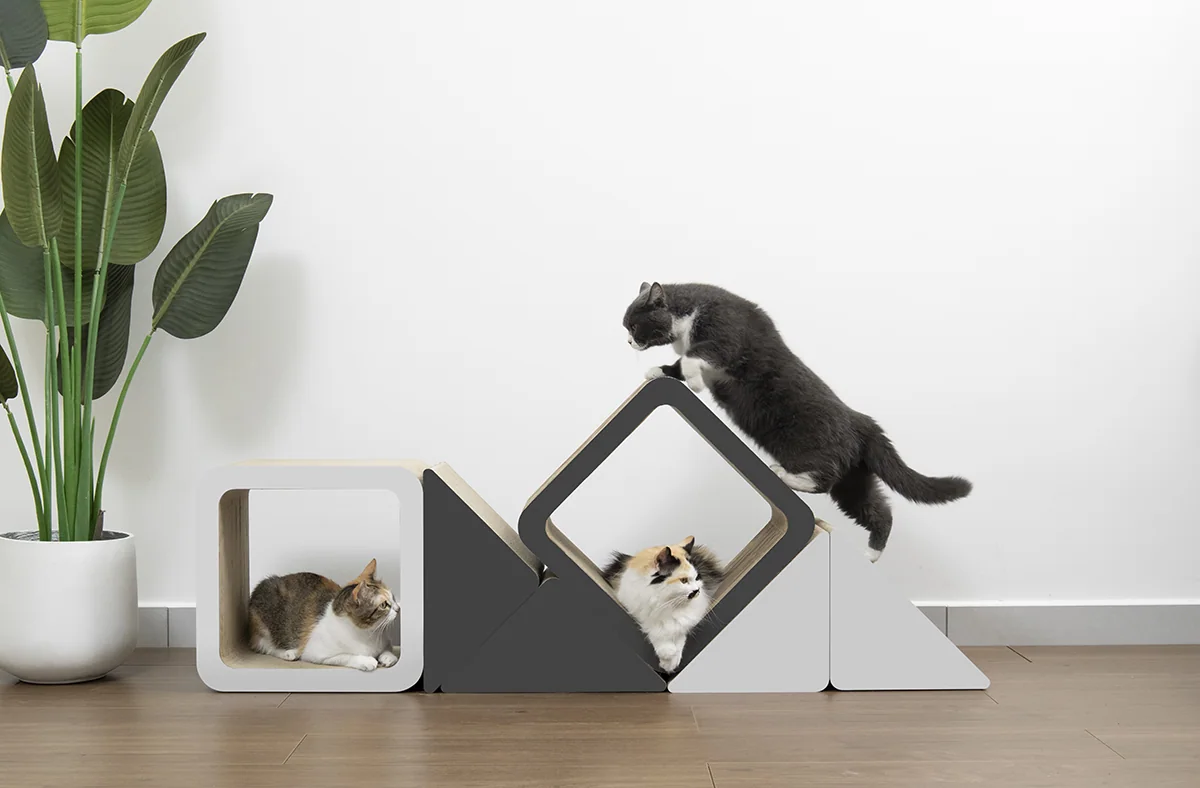
Look for a purpose-built angled scratcher with solid backing—not merely a board leaning against furniture. The angle should stay fixed during use, and the lower edge should not shift or pinch your cat’s paws.
Vertical scratchers
Vertical posts are the classic choice for cats that stand on their hind legs and stretch upward. Ideally, the post should be at least as tall as your cat standing on its hind legs with its front legs fully extended, so it can complete a satisfying stretch.
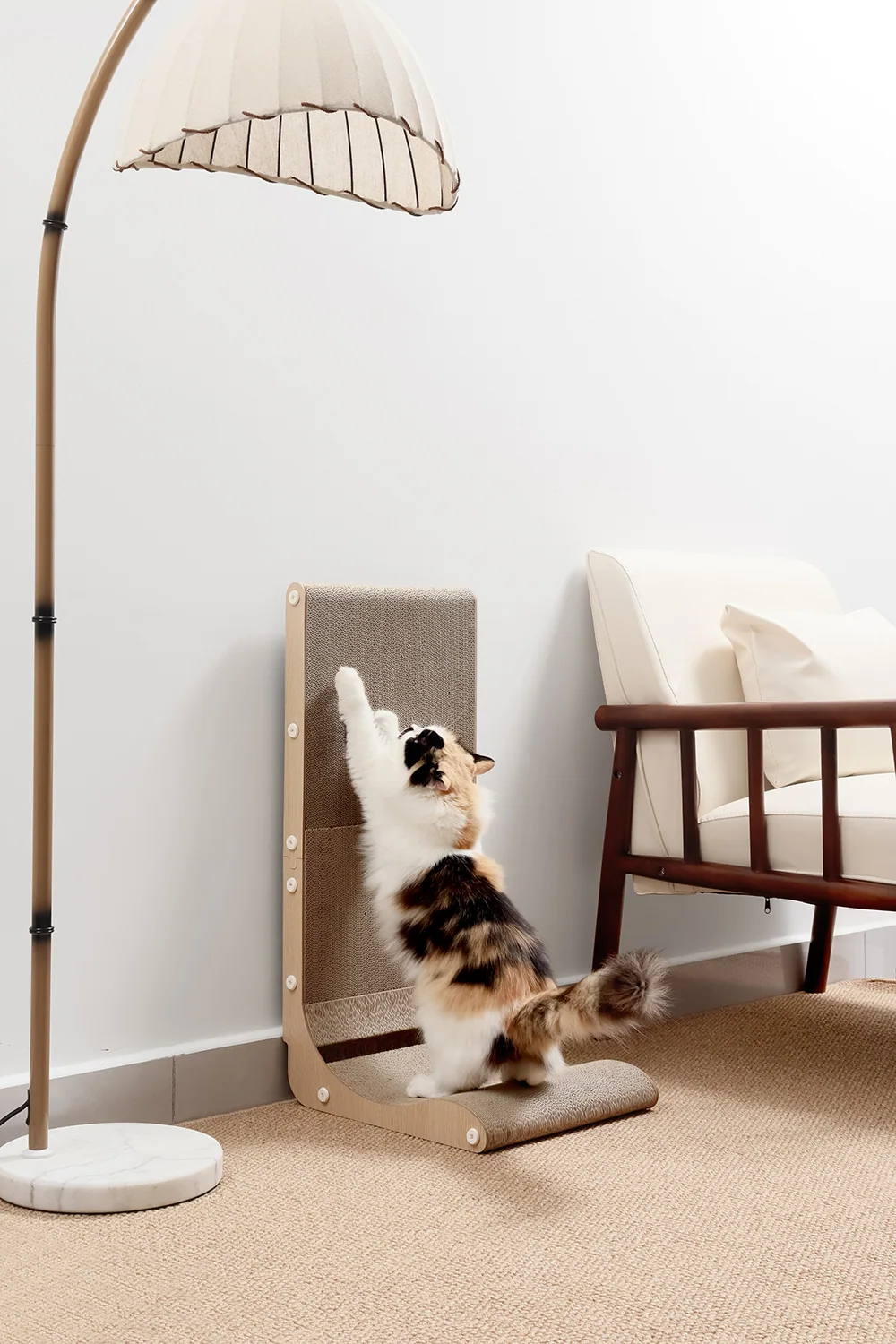
Stability is essential: a post that wobbles or tips can make a cat feel unsafe and stop using it. Choose a wide, heavy base or a wall-mounted design, and place it where your cat already likes to scratch.
Material matters too
Orientation is only half of the decision. Offer textures such as sisal, corrugated cardboard, carpet, untreated wood, or rough woven fabric, then observe which one your cat actually uses. Many cats enjoy sisal, while cardboard is especially common for horizontal scratchers.
Avoid assuming that one expensive scratcher will solve everything. A better setup is a small variety: for example, one tall sisal post, one flat cardboard pad, and one angled scratcher placed in different high-traffic areas.
Placement and training
Put scratchers beside the furniture your cat currently targets, near sleeping areas, and along routes your cat uses daily. Cats often scratch after waking, so a scratcher near a favorite bed can be particularly effective.
To encourage use:
- Place the scratcher directly next to the unwanted scratching spot.
- Sprinkle catnip or attach a toy to make it more interesting.
- Reward your cat when it uses the scratcher.
- Once your cat uses it reliably, gradually move it to a more convenient location.
Best choice by cat type
- Carpet scratcher: Start with a flat cardboard or fabric scratcher.
- Sofa-arm or curtain scratcher: Start with a tall, stable vertical post.
- Kitten, senior cat, or cautious scratcher: Try an inclined scratcher with a gentle angle.
- Multi-cat household: Provide at least one scratcher per cat plus one extra, with both vertical and horizontal options in different rooms.
- Unsure cat: Offer flat, inclined, and vertical options, then invest in more of the style your cat uses most.
The simplest rule is this: match the scratcher to the behavior you already see, make it stable, and give your cat a choice. That approach protects your furniture while supporting a normal, healthy feline behavior.