Delamination and Warping in Cardboard Cat Scratchers: What to Check
A cardboard cat scratcher should provide a stable, well-constructed surface for everyday scratching. Some surface wear is expected, but layers peeling apart or a base twisting out of shape deserve closer attention.
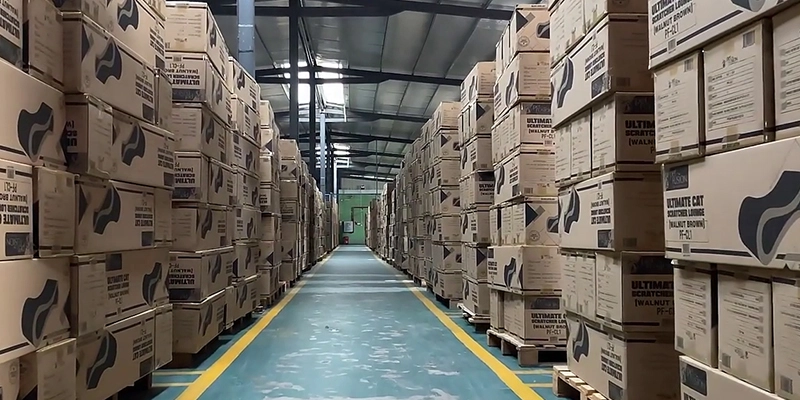
At Fobpet, we design and manufacture high-quality cardboard cat scratchers through a strictly controlled production process. Our products undergo rigorous quality inspections before release. We take product quality seriously—and we believe cat owners should also know what to look for when choosing and maintaining a scratcher.
This guide explains how to recognize delamination and warping, distinguish them from ordinary wear, and decide when a scratcher needs replacing.
What Are Delamination and Warping?
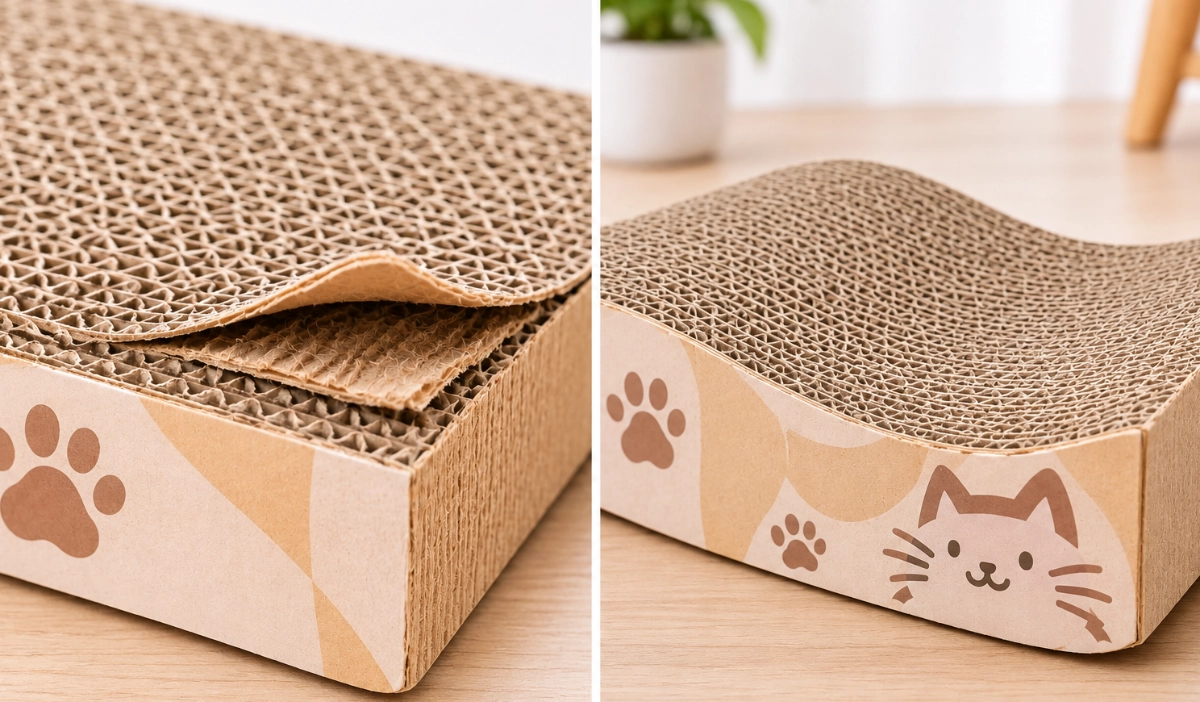
Delamination occurs when bonded cardboard layers or assembled sections begin to separate. You might notice a lifting paper layer, a gap between cardboard strips, or a section pulling away from the main body.
Warping is a change in the scratcher’s intended shape. A flat base may bow upward, a corner may lift, or the body may develop a twist.
These issues are different from the roughened surface that develops through normal scratching. The important question is whether the scratcher still holds together and remains stable during use.
1. Inspect the Edges and Bonded Sections
Start with the corners, exposed edges, and joints between cardboard sections.
Look for:
- Gaps extending into the body of the scratcher.
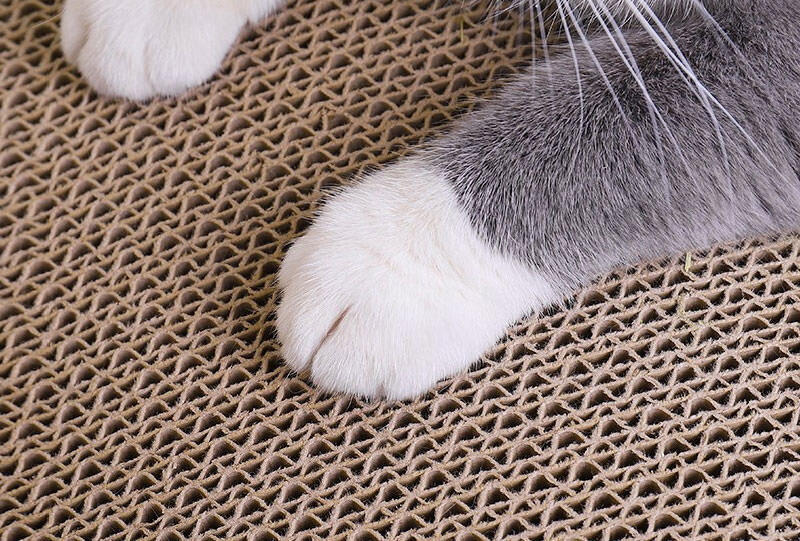
- Paper layers lifting away from the corrugated structure.
- Cardboard strips or blocks separating from adjacent sections.
- Loose sections that move during gentle handling.
Inspect existing gaps without pulling the layers apart. Deliberately peeling the cardboard can create damage rather than reveal its original condition.
A worn scratching surface does not automatically mean the product has failed. Separation that affects a large section or continues to spread is more concerning.
The Fobpet Approach
At Fobpet, high-quality construction is a priority throughout design and manufacturing. Our strict production procedures and rigorous quality inspections support our commitment to delivering well-made cat scratchers.
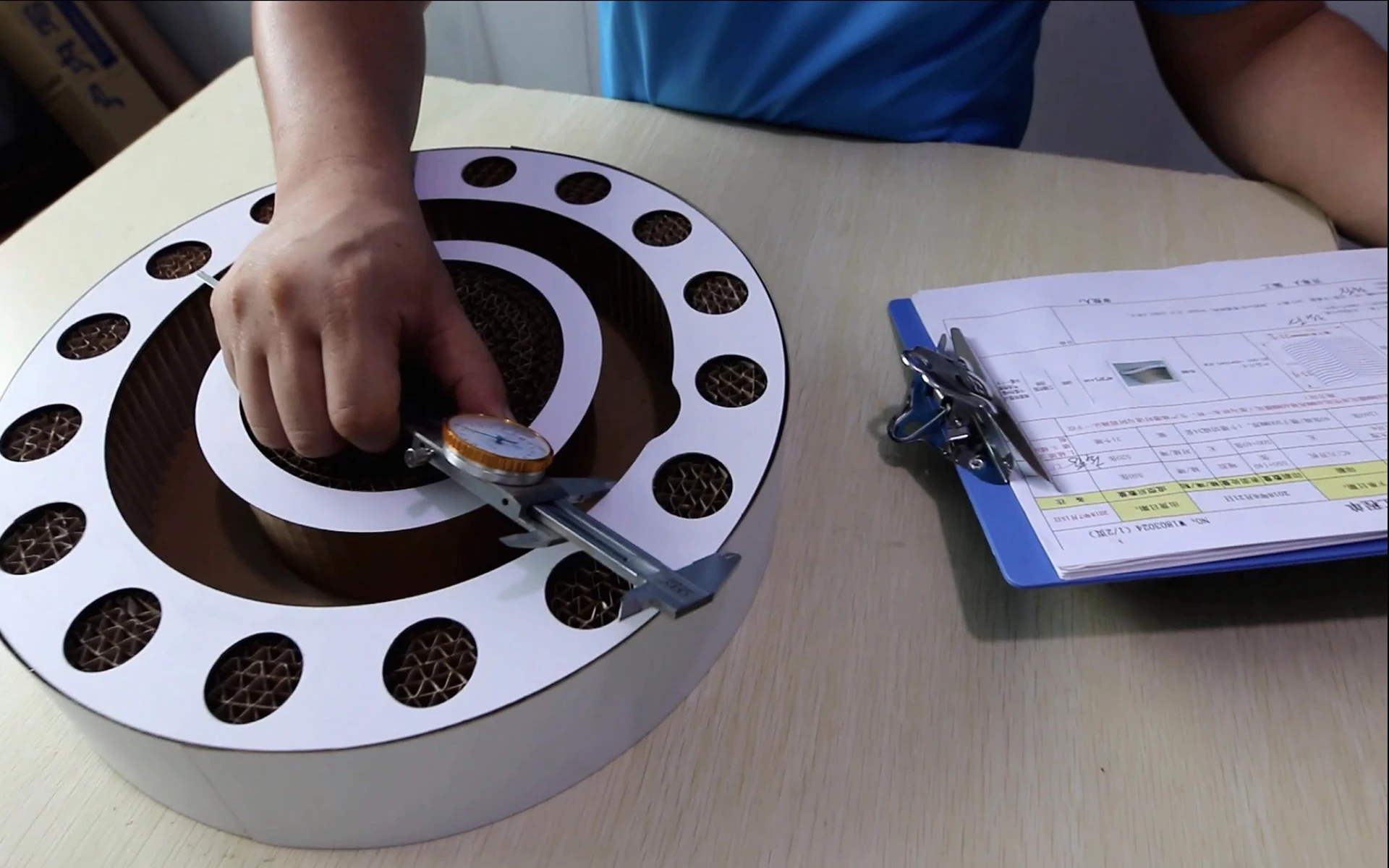
When assessing any scratcher—including a Fobpet product—look beyond its surface appearance and check that the assembled body remains securely held together.
2. Check Whether the Scratcher Sits as Intended
Place the scratcher on a clean, level surface and examine it from several angles.
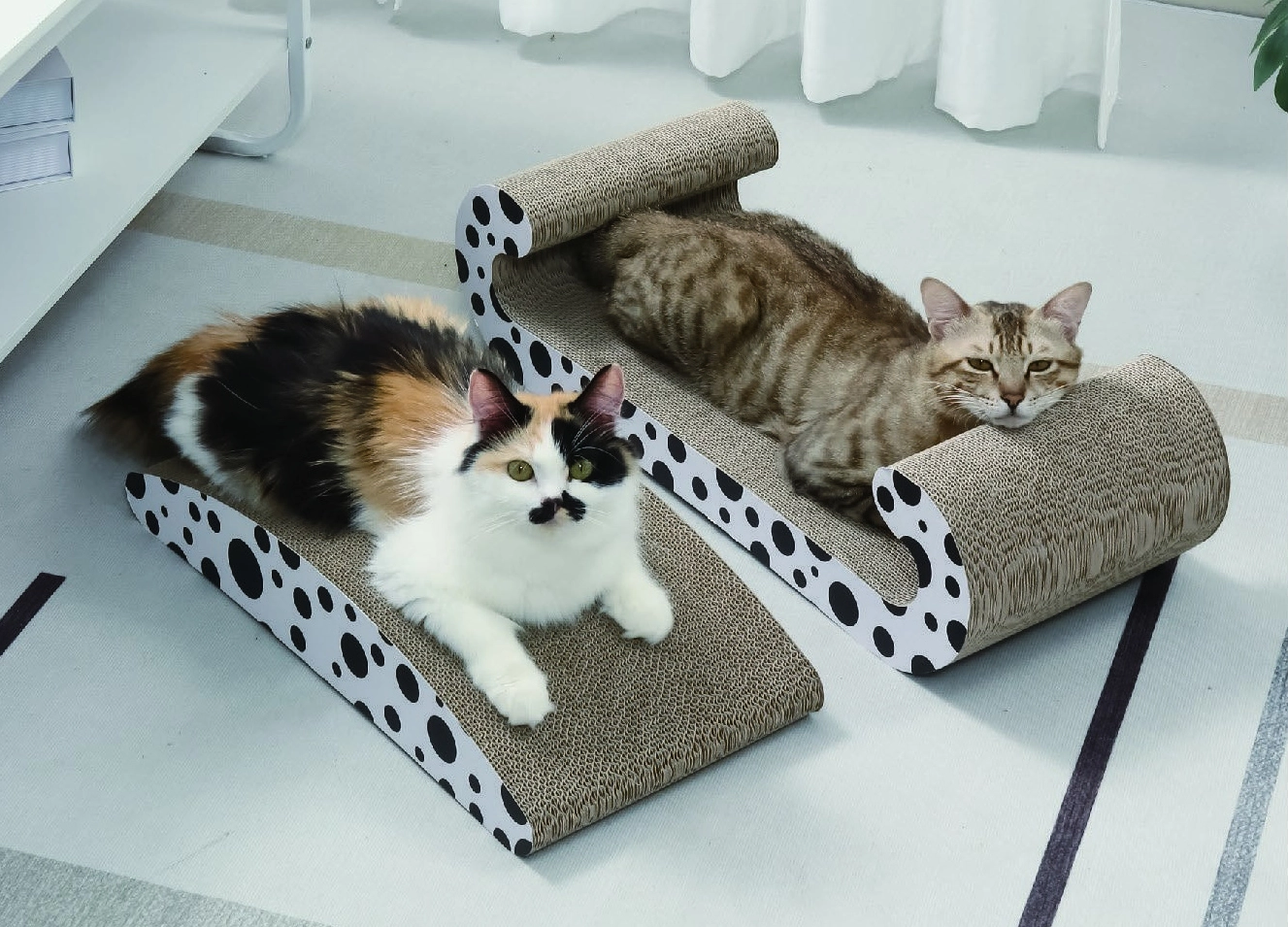
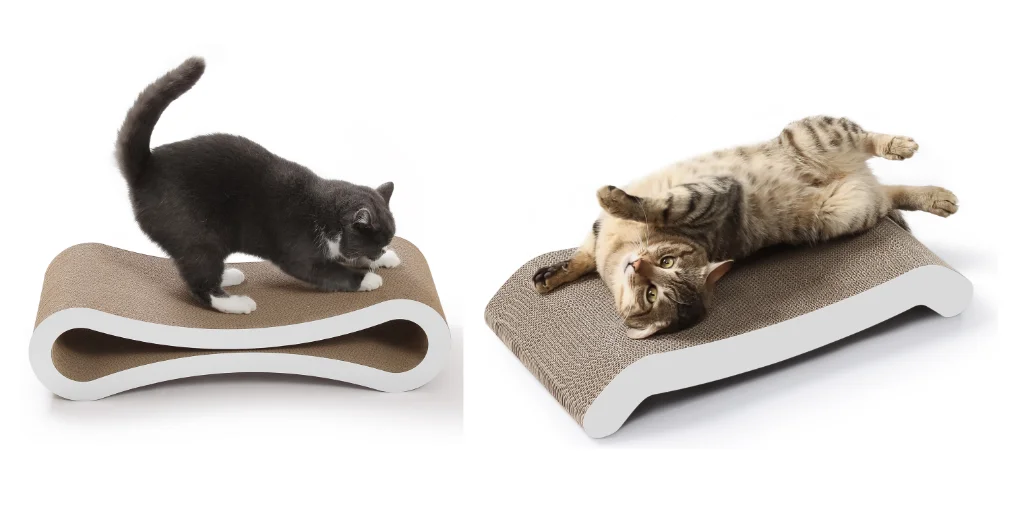
For a flat model, check whether the base rests evenly. For a curved lounge, ramp, or sculpted design, compare its shape with the product description rather than expecting every part to lie flat.
Ask yourself:
- Does one corner lift away from the floor?
- Does the scratcher rock under gentle pressure?
- Has a previously straight section developed a noticeable bow?
- Does the body twist or shift unexpectedly?
Also distinguish sliding from warping. A scratcher moving across a smooth floor is not necessarily misshapen. Warping means the structure itself has changed shape.
If a new product arrives with significant distortion, photograph the issue and contact the seller before using or attempting to reshape it.
3. Check for Moisture-Related Damage
Inspect the underside, edges, and areas near the floor. Look for water marks, swelling, softened cardboard, or an uneven change in shape.
To help keep the scratcher in good condition:
- Position it away from water bowls and areas prone to spills.
- Move it before mopping the surrounding floor.
- Avoid soaking the cardboard during cleaning.
- Check it promptly after accidental moisture exposure.
If the scratcher becomes substantially softened, contaminated, or moldy, replace it rather than trying to restore its appearance.
Strict manufacturing standards are important, but care after purchase also matters. Keeping the product clean and dry helps preserve the condition in which it was supplied.
4. Examine Weight-Supporting Areas
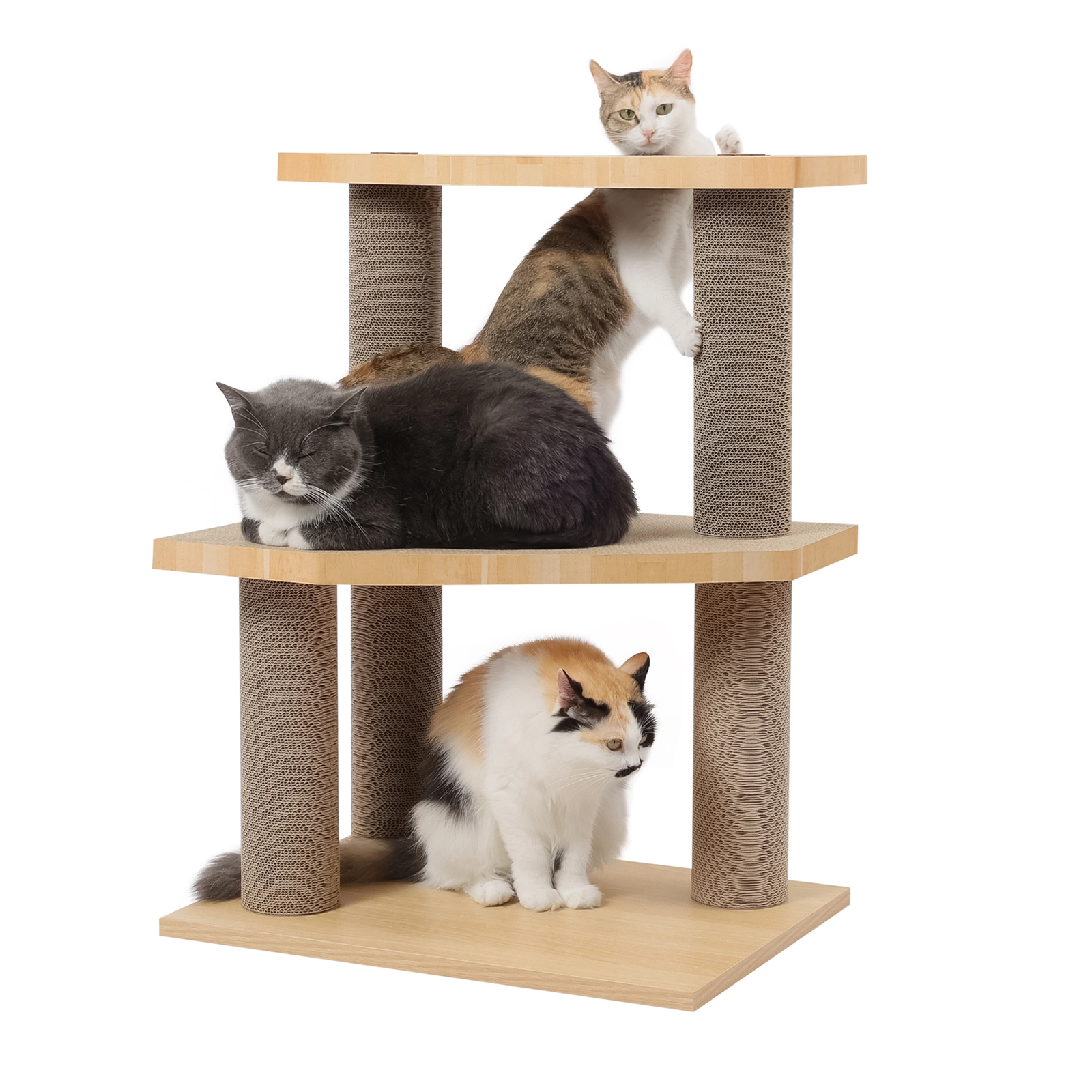
Pay particular attention to parts designed to support your cat, such as the middle of a lounge, the span of a bridge-style scratcher, or the joints connecting a ramp to its base.

Check for:
- Sections that fold or collapse under gentle handling.
- Large gaps across supporting areas.
- Detached cardboard blocks.
- Loose materials or exposed fasteners.
Do not place your cat on a visibly damaged scratcher to test its strength. If a supporting section appears compromised, remove the product from use.
5. Know When to Keep, Return, or Replace It
The scratcher’s condition matters more than appearance alone.
| What you notice | What to do |
|---|---|
| A rough scratching surface, with a firm and stable body | Remove loose debris and continue monitoring its condition. |
| Significant separation or distortion immediately after unpacking | Photograph the condition and contact the seller before use. |
| Gaps that continue widening or whole sections coming loose | Remove the scratcher from use and replace it. |
| A collapsing or unstable supporting section | Stop using the product. |
| Mold, contamination, or substantial moisture damage | Replace the scratcher rather than attempting a cosmetic repair. |
Avoid covering up a structural problem with tape or extra glue. A repair that makes the product look intact does not necessarily restore its original construction.
Fobpet’s Commitment to Quality
At Fobpet, we design and manufacture high-quality cat scratchers with careful attention to production quality. We follow strict manufacturing procedures, and our products undergo rigorous quality inspections.

That commitment also means encouraging informed product care. When your scratcher arrives, check its overall shape, bonded sections, and stability. Continue inspecting it as your cat uses it, especially after heavy wear or accidental spills.
A cat scratcher does not need to look new forever. It does need to remain securely assembled, appropriately shaped, and stable enough for its intended use.