Cardboard Cat Scratcher for Big Cats: A Practical Buying Guide
A cardboard cat scratcher for big cats should offer enough room to stretch, a surface that feels satisfying under strong paws, and a structure that stays steady during use. For cats with long bodies or broad frames, a compact scratching pad may leave too little space to scratch comfortably. Feline-welfare guidance emphasizes the importance of suitable scratching materials, stable structures, and enough room for a full stretch.
- What Does “Big Cats” Mean in This Guide?
- Why Cardboard Can Be a Good Scratching Surface
- What Size Cardboard Scratcher Does a Big Cat Need?
- Compare usable scratching space
- Check lounging dimensions separately
- Keep vertical and horizontal measurements distinct
- Which Cardboard Scratcher Style Should You Choose?
- Why Stability Matters for Large Cats
- How to Compare Cardboard Construction
- Where to Place a Cardboard Cat Scratcher
- How to Encourage Your Cat to Use It
- Cleaning, Maintenance, and Replacement
- Frequently Asked Questions
The most important consideration is fit. A scratcher labeled “large” may still have a narrow cardboard insert, a cramped lounging area, or a base that moves when a cat pulls against it. Understanding your cat’s size and scratching preferences makes it easier to choose a product that earns its place in the daily routine.
What Does “Big Cats” Mean in This Guide?
Here, “big cats” means large domestic cats—not wild species such as lions or tigers. The term describes pet cats with longer bodies, broader frames, or a larger overall build that need more room to scratch and rest. Maine Coons are a familiar example, although mixed-breed cats can also have large frames. Healthy body size and weight vary between breeds and individual animals.
There is no single weight cutoff used in this guide. Many adult domestic cats weigh around 8–12 pounds (3.6–5.4 kg), while naturally larger cats can exceed that range at a healthy body condition. Weight provides useful context, but it does not tell you everything about a cat’s length, reach, or space requirements.
A large cat is not necessarily an overweight cat. A naturally big cat has a larger frame, while an overweight cat carries excess body fat relative to its ideal condition. Veterinary guidance considers body condition alongside weight, including the visibility of the waist and how easily the ribs can be felt.
For scratcher shopping, “big cats” is therefore a practical description rather than a medical category. Consider body length, scratching reach, shoulder width, and resting footprint—not simply the number on the scale.
Why Cardboard Can Be a Good Scratching Surface
Scratching is normal feline behavior. It helps cats maintain their claws, stretch, and leave visual and scent markings. Providing appropriate scratching surfaces gives them an outlet for these needs rather than expecting them to avoid furniture without a suitable alternative.
Corrugated cardboard is one of several commonly recommended scratching materials, alongside sisal, wood, and carpet. Cats have individual preferences: some enjoy working their claws across a floor-level cardboard pad, while others prefer reaching up an upright post. The direction of the scratching surface can matter just as much as its material.
Cardboard is not automatically the best choice for every large cat. Observe what your cat already scratches and how it positions its body. A broad cardboard pad may suit a cat that scratches rugs, while a cat that reaches up furniture may also need a tall vertical option. Offering different surfaces and orientations can help accommodate those preferences.
What Size Cardboard Scratcher Does a Big Cat Need?
There is no universal measurement that guarantees a comfortable fit. Welfare guidance focuses on giving cats enough room to stretch fully and providing a scratching structure that remains stable during use. For upright surfaces, the scratching area should accommodate an upward stretch; for horizontal pads, consider the space needed to reach forward.
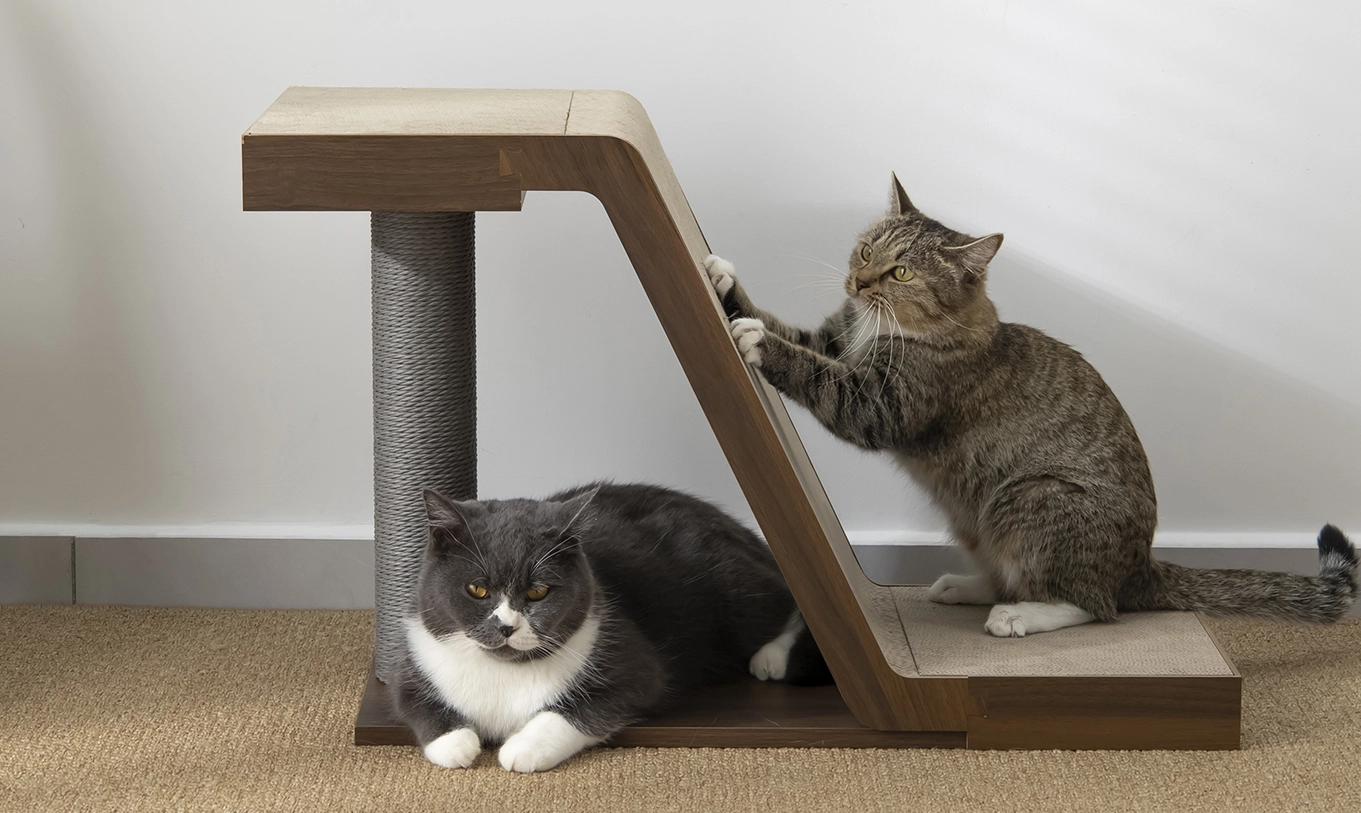
Compare usable scratching space
Product dimensions may describe the entire structure rather than the exposed cardboard panel. A wide decorative frame or thick sidewalls can make a scratcher look spacious while leaving a smaller area for claws.
Before buying, check:
- The length and width of the exposed cardboard.
- Whether your cat can reach forward without running out of surface.
- Whether both front paws have room to work.
- Whether raised edges restrict movement.
- Whether a removable insert fits securely inside its holder.
As a practical comparison, observe the space your cat occupies during a normal scratching session. Use that footprint to assess the product rather than relying only on labels such as “large,” “jumbo,” or “XL.”
Check lounging dimensions separately
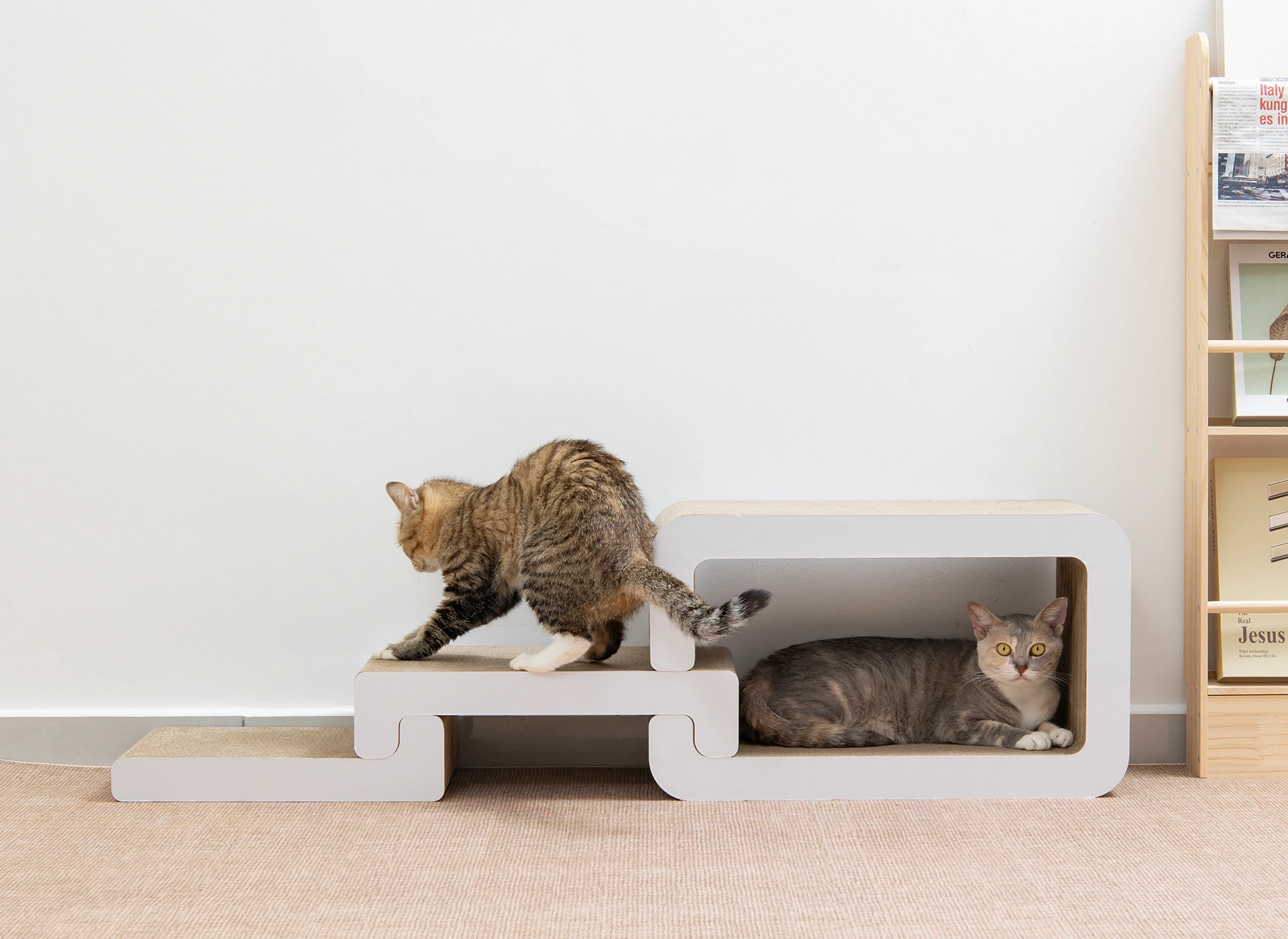
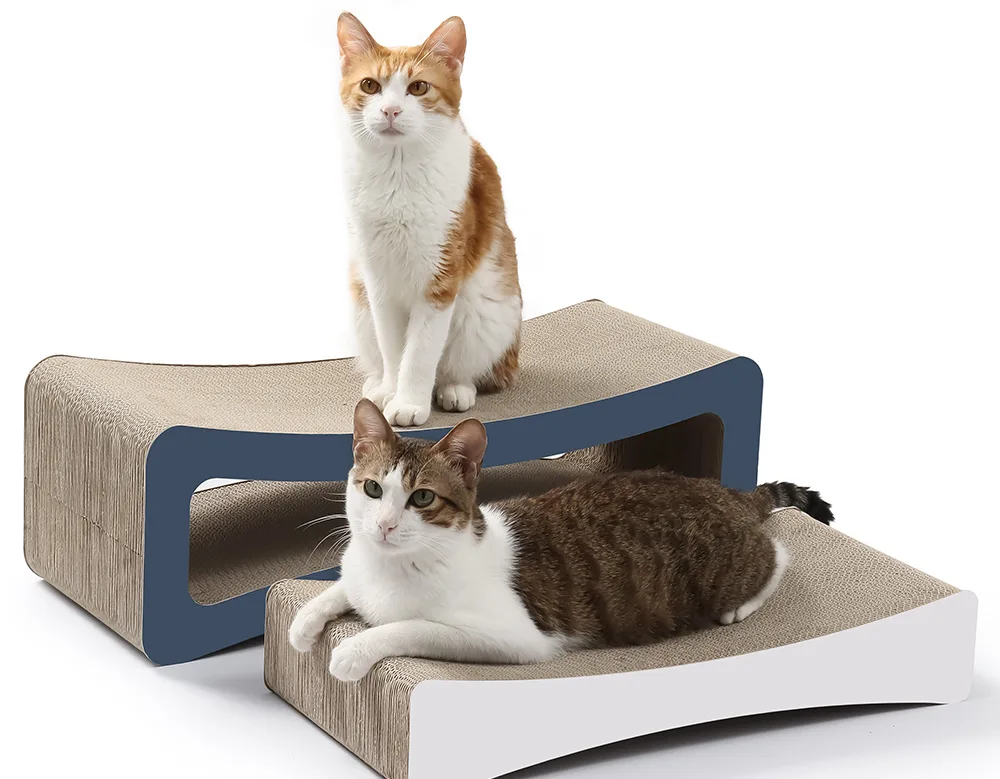
A scratcher that doubles as a bed needs enough room for resting as well as scratching. Curved sides, narrow centers, and decorative openings can reduce the usable lounging area.
Compare the resting surface with the space your cat occupies when lying comfortably. For elevated or bridge-style products, also check the manufacturer’s stated load limit and intended use.
Keep vertical and horizontal measurements distinct
A height recommendation for an upright scratching post is not a minimum-length standard for every flat cardboard pad. These designs support different body positions. Choose dimensions according to your cat’s reach and preferred scratching direction rather than applying one measurement to every style.
Which Cardboard Scratcher Style Should You Choose?
Cats vary in their preferences for both scratching materials and surface orientation. Choosing a familiar scratching position is a sensible starting point, while offering another style can provide additional choice.
| Scratcher style | When to consider it | What to inspect |
|---|---|---|
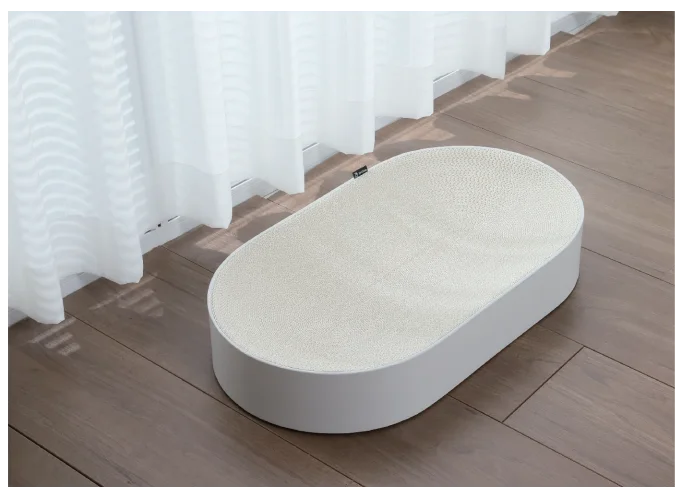
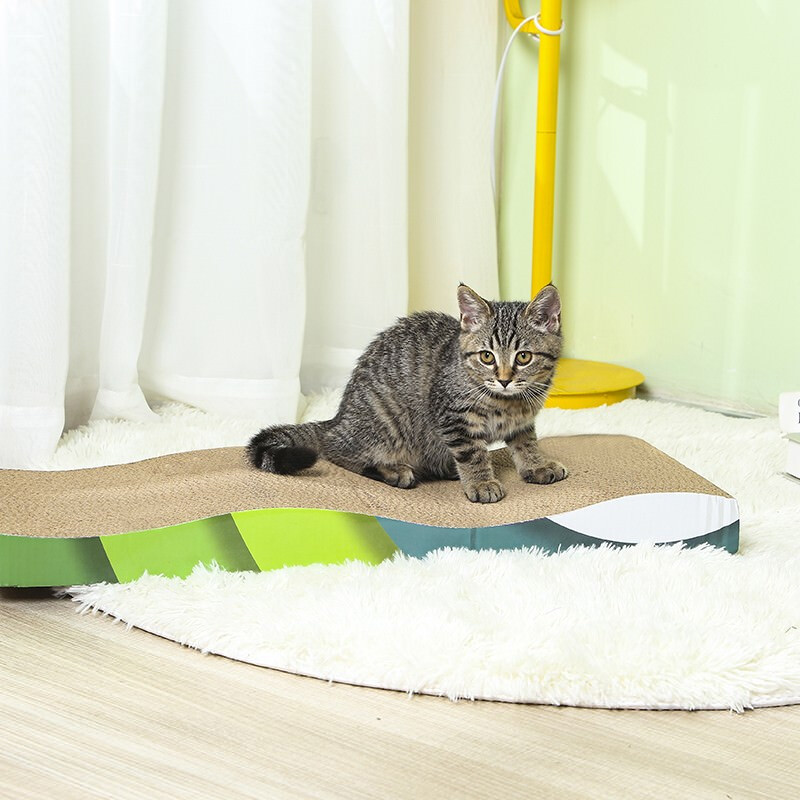
| Flat cardboard pad | Your cat scratches rugs or other floor-level surfaces | Panel length, width, and resistance to sliding |
| Cardboard lounge | You want a combined scratching and resting area | Usable lounging space, edge support, and any stated load limit |
| Angled scratcher | Your cat enjoys reaching onto a raised surface | Base stability and secure panel attachment |
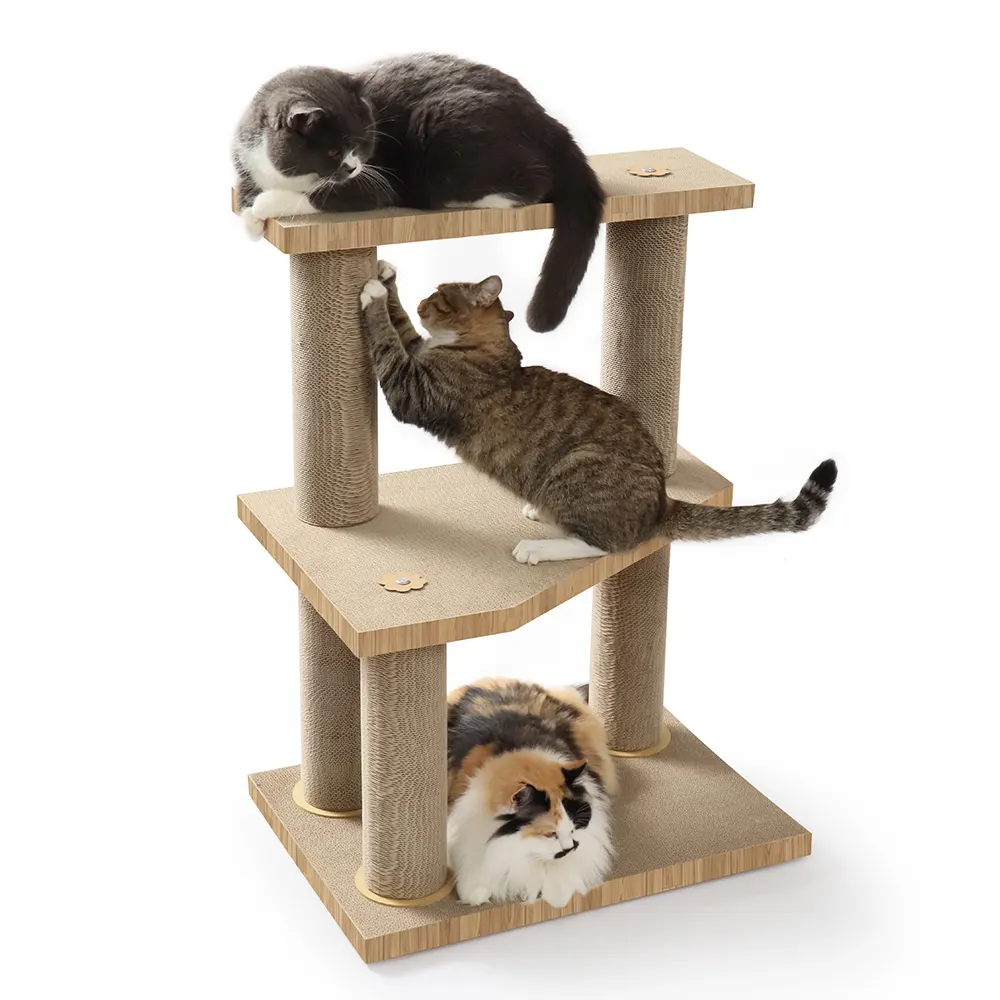
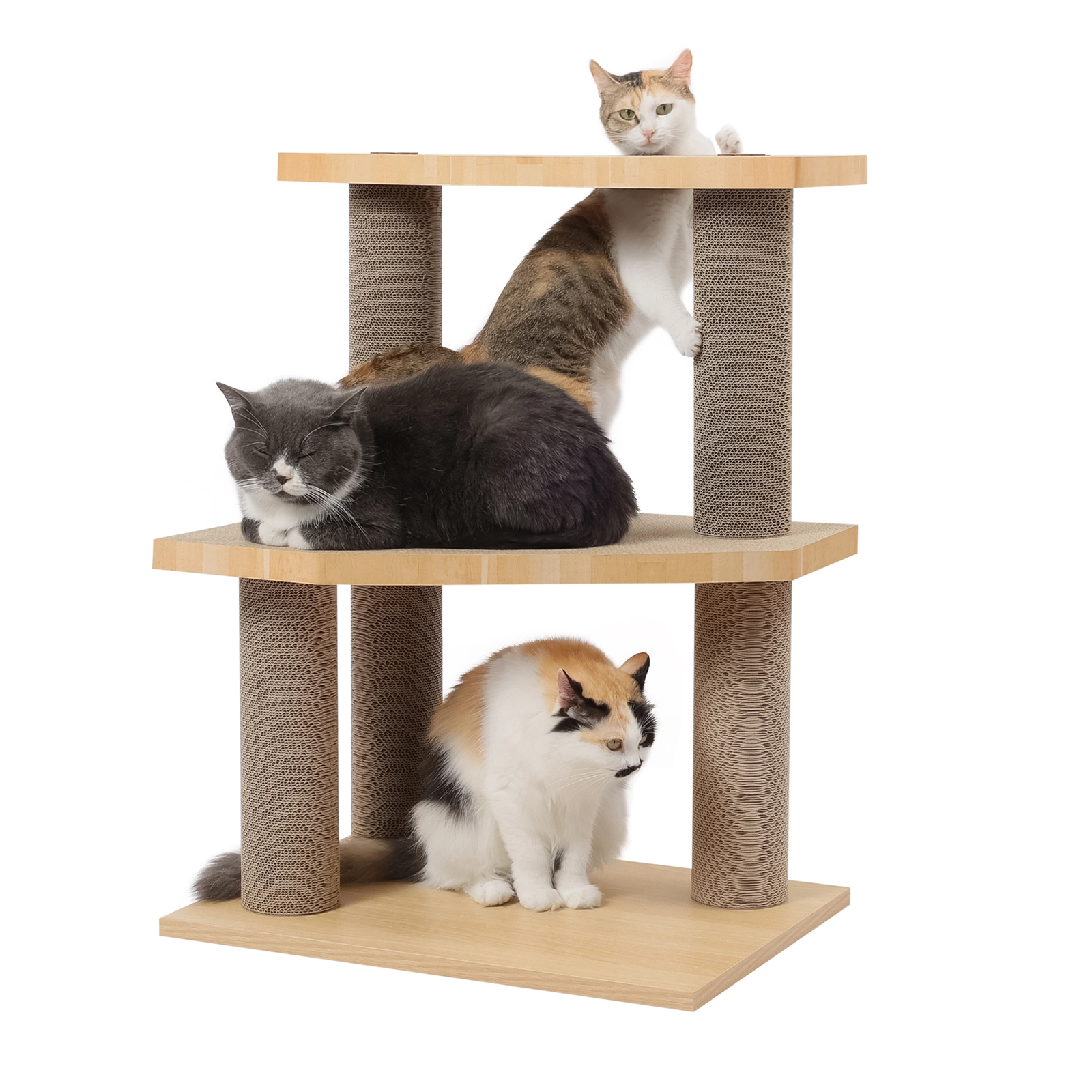
| Vertical cardboard panel | Your cat reaches up to scratch furniture | Accessible scratching height and mounting requirements |
| Scratcher with a hideaway | Your cat also enjoys enclosed resting spaces | Entrance size, interior dimensions, and structural support |
Older cats may appreciate accessible horizontal or angled cardboard scratchers. International Cat Care notes that these softer surfaces can offer less resistance, making them easier for some kittens and senior cats to scratch. Individual comfort and preference still matter more than age alone.
Why Stability Matters for Large Cats
A spacious scratcher is of limited use if it slides or tips whenever a cat pulls against it. The ASPCA recommends sturdy scratching structures that do not shift or collapse during use, and veterinary behavior literature also identifies stability as an important feature.
Before allowing regular use, carry out a simple setup check:
- Place the scratcher on a level surface.
- Check for rocking, flexing, or loose connections.
- Make sure any removable insert stays in its holder.
- Follow all assembly and mounting instructions.
- Observe the first few scratching sessions for sliding or tipping.
For a flat pad, a compatible nonslip backing or holder may help keep it in position. Any added support should lie flat and avoid introducing loose edges or accessible fasteners.
For a raised lounge or scratcher with an opening underneath, do not assume that a large exterior guarantees adequate support. Check the manufacturer’s specifications for the intended activity and your cat’s weight.
How to Compare Cardboard Construction
Product photographs show appearance more clearly than structural quality. Look beyond the shape and color to examine how the scratching panel, frame, and edges are assembled.
Useful questions include:
- Are the cardboard layers firmly joined?
- Does the insert sit securely without shifting?
- Are edges intact and free from exposed sharp components?
- Does the surrounding frame support the scratching panel?
- Can a worn insert be replaced?
- Is the panel designed to be flipped for use on both sides?
Terms such as “premium,” “extra-dense,” and “heavy-duty” are less useful than clear dimensions, construction details, and care instructions. Avoid assuming that a particular thickness alone guarantees a specific lifespan.
If environmental claims influence your purchase, look for specific information about recycled content, coatings, adhesives, and disposal. Treat recyclability as something to verify against the product’s components and local collection rules rather than assuming that the entire structure can be recycled because it contains cardboard.
Where to Place a Cardboard Cat Scratcher
A well-chosen scratcher can still be overlooked if it sits somewhere your cat rarely visits. Recommended locations include areas near sleeping places, familiar scratching spots, and entry or exit points where cats may want to leave visual and scent markings.
Start near an existing scratching spot
If your cat scratches beside the sofa, place an appropriate scratcher nearby rather than moving it immediately to an unused corner. Match the orientation as well: a horizontal cardboard pad may not fully replace the experience of reaching up a sofa arm. A vertical option nearby can provide another suitable outlet.
Keep access clear
Leave enough room around the scratcher for your cat to approach, stretch, and move away comfortably. Avoid positioning it where a door repeatedly hits it or where people must constantly step over it.
Provide separate options in multi-cat homes
One large scratcher does not necessarily replace several accessible scratching locations. International Cat Care recommends providing multiple scratching opportunities, different materials, and rigid structures in multi-cat households.
How to Encourage Your Cat to Use It
Introduce a new scratcher without forcing contact. The ASPCA recommends encouraging interest with toys or catnip and advises against holding a cat against a scratching surface and dragging its paws over it, which can frighten the animal.
Try this gradual approach:
- Place the scratcher near a familiar resting or scratching area.
- Let your cat investigate voluntarily.
- Use a nearby toy or a little catnip if your cat responds to it.
- Reward voluntary scratching with something your cat enjoys.
- Adjust the location or try another orientation if interest remains low.
Avoid punishment. Scratching is a normal behavior, so the goal is to redirect it toward an appealing surface rather than suppress the behavior itself.
Cleaning, Maintenance, and Replacement
Follow the manufacturer’s care directions, particularly for products with removable inserts, coated frames, or attached fabric. As a practical routine, remove loose debris, keep the scratcher dry, and inspect both the cardboard and its supporting structure.
Look for:
- Separating or loose sections.
- A panel that no longer stays in its holder.
- A damaged or unstable base.
- Exposed fasteners or sharp components.
- Moisture damage or contamination that cannot be cleaned as directed.
- Structural wear that affects support or normal use.
Do not judge replacement needs by appearance alone. The ASPCA notes that cats may prefer familiar, shredded scratching objects because they retain scent and provide a satisfying texture. Cosmetic wear is different from damage that compromises stability or exposes unsafe components.
If the product supports replacement inserts, confirm that the new panel is compatible and fits securely. Flip a reversible panel only when the design allows it.
Frequently Asked Questions
Are cardboard scratchers suitable for Maine Coons?
They can be, provided the cat enjoys cardboard and the scratcher offers sufficient usable space and stability. Choose according to the individual cat’s reach, body dimensions, and scratching preferences rather than relying on a breed name in the product listing. The key principles remain a comfortable stretch, a preferred surface, and a structure that stays steady.
Is cardboard better than sisal for big cats?
Neither material is universally better. Both are recognized scratching options, and cats have individual preferences. A broad cardboard pad alongside a stable sisal post can offer different textures and scratching positions rather than requiring one product to meet every need.
Will a cardboard scratcher stop furniture scratching?
It may help redirect the behavior, but simply adding a scratcher does not guarantee that furniture scratching will stop. Surface texture, orientation, location, and access all influence whether a cat finds the alternative appealing.
How long does a cardboard cat scratcher last?
There is no single lifespan that applies to every product and household. Evaluate its condition and function instead of replacing it on a fixed schedule. A familiar, worn surface may remain attractive, while a loose panel, unstable frame, or exposed component requires attention.
Should I choose a flat pad or a cardboard lounge?
Choose according to how your cat will use it. A flat pad keeps the focus on floor-level scratching; a lounge adds a resting function and therefore requires a separate check of sleeping space and support. In either case, prioritize usable dimensions over decorative size and match the scratching position to your cat’s established preferences.