Cat Scratcher Lounge vs. Flat Scratching Board: Which Is the Better Choice?
A cat scratcher lounge combines a scratching surface with a shaped resting area, while a flat scratching board provides a simple, low-profile surface for everyday scratching. Both can suit cats that enjoy scratching horizontally, but the better choice depends on the cat’s habits, the space available, and the design of the individual product.
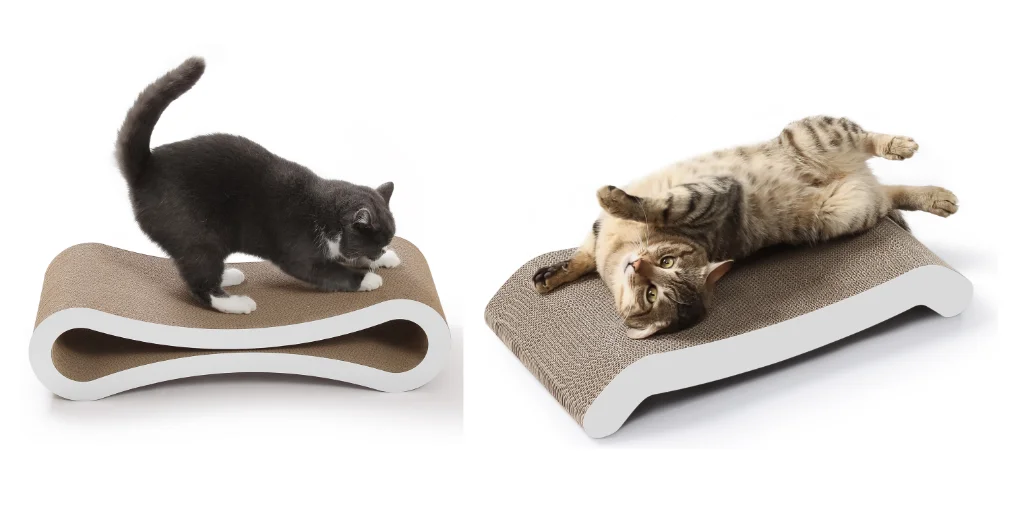
For pet owners, the decision is about finding a scratcher their cat will use. For pet brands and retailers, it is also about offering products that meet different customer needs. Understanding the differences between these two formats makes both decisions easier.
- What Is a Cat Scratcher Lounge?
- What Is a Flat Scratching Board?
- Cat Scratcher Lounge vs. Flat Scratching Board: Key Differences
- Which Design Is Better for Your Cat?
- Which One Offers Better Durability and Value?
- Choosing a Product Range for Pet Brands and Retailers
- Fobpet: Professional Cardboard Cat Scratcher Design and Manufacturing
- Final Verdict
What Is a Cat Scratcher Lounge?
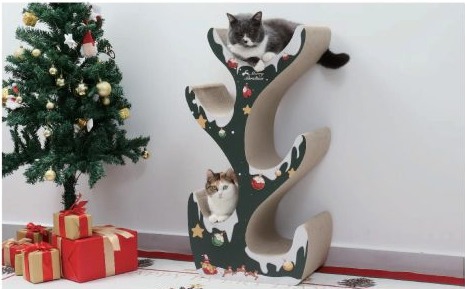
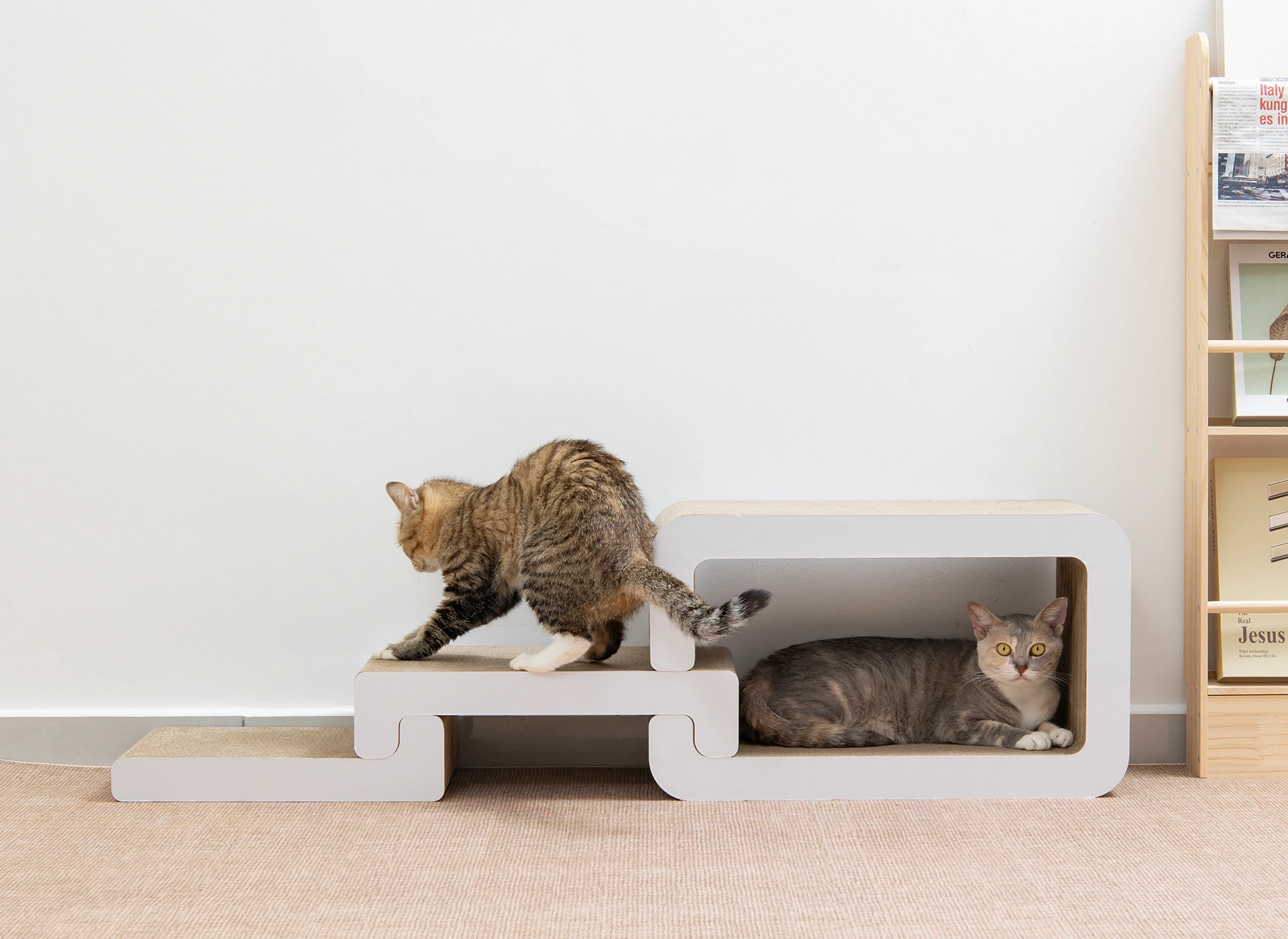
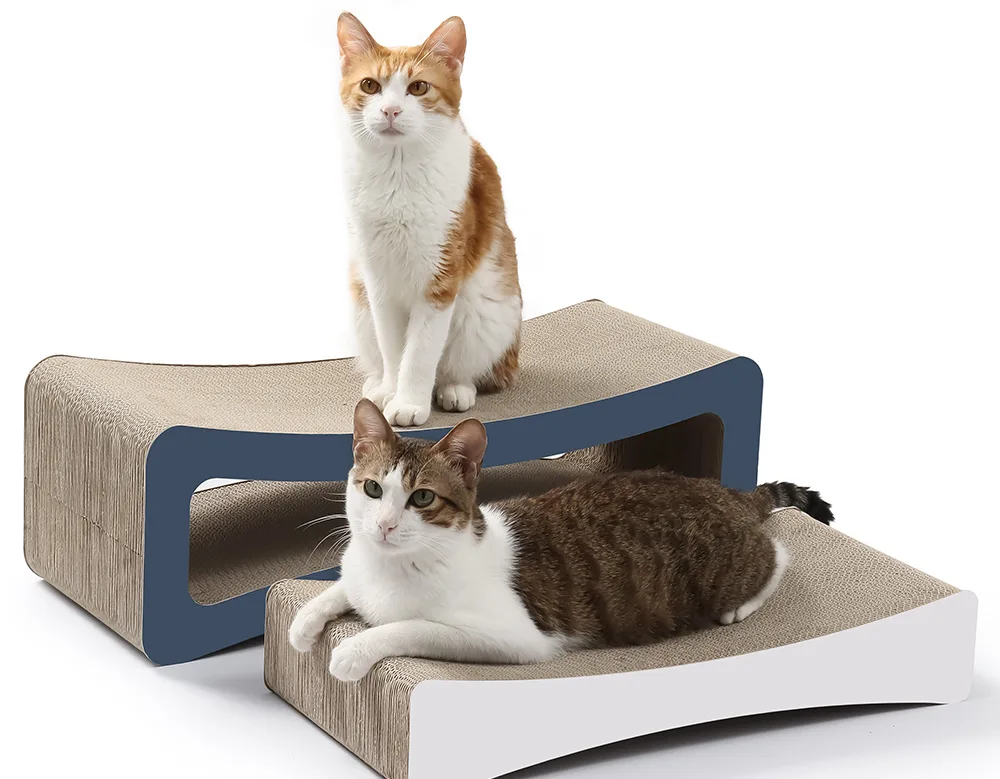
A cat scratcher lounge is designed to serve as both a scratching surface and a resting spot. Common styles include curved platforms, shallow beds, and contoured cardboard structures that give cats a defined place to sit or stretch out.
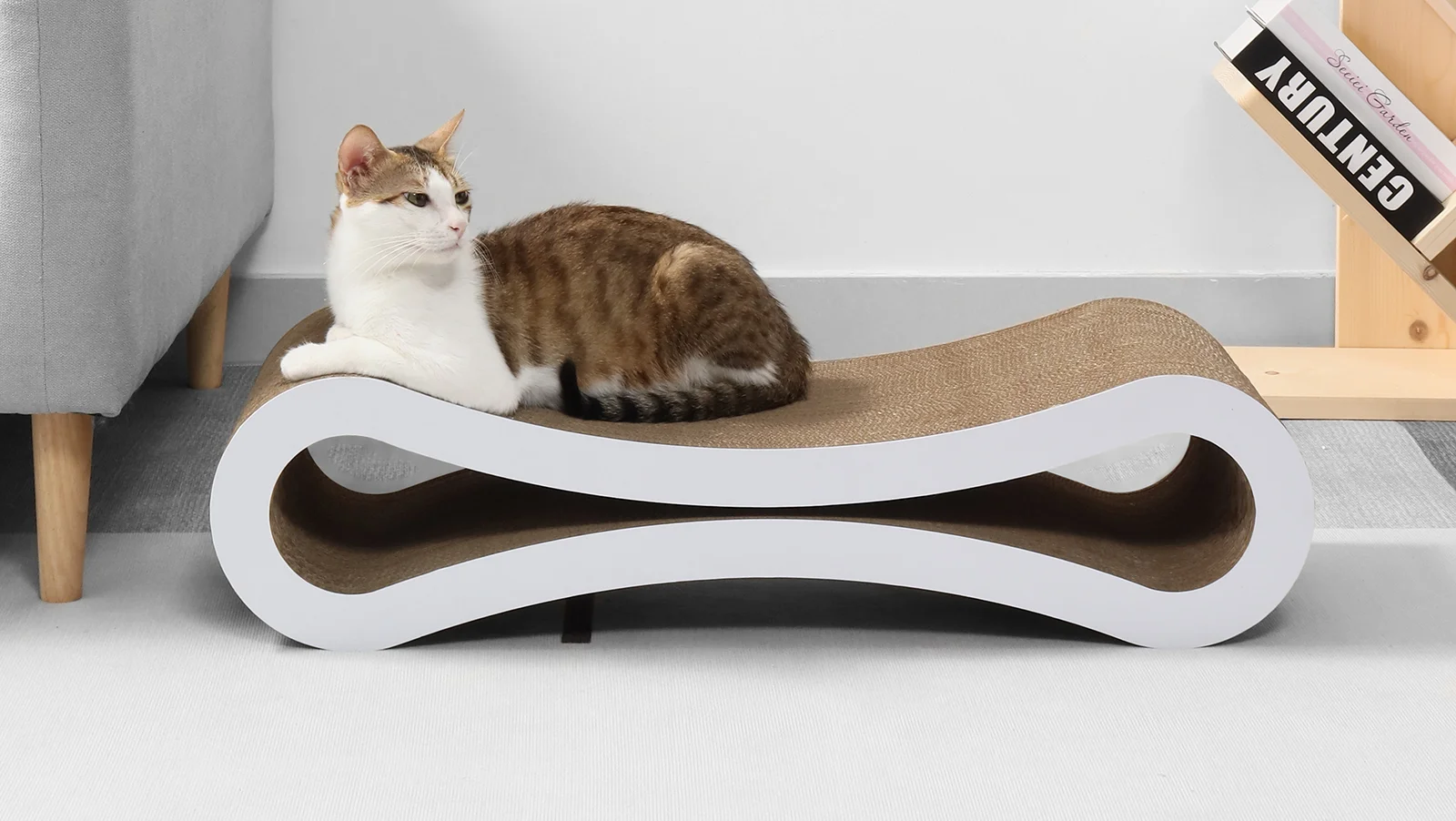
Its main appeal is this combination of functions. Instead of providing only a surface to scratch, a lounge can also become part of a cat’s resting routine. However, a lounge-shaped product does not guarantee that a cat will sleep on it; individual preferences and the usable space still matter.
When comparing lounges, look beyond the outer shape. The resting area should accommodate the cat comfortably, and the scratching surface should remain easy to reach.
What Is a Flat Scratching Board?
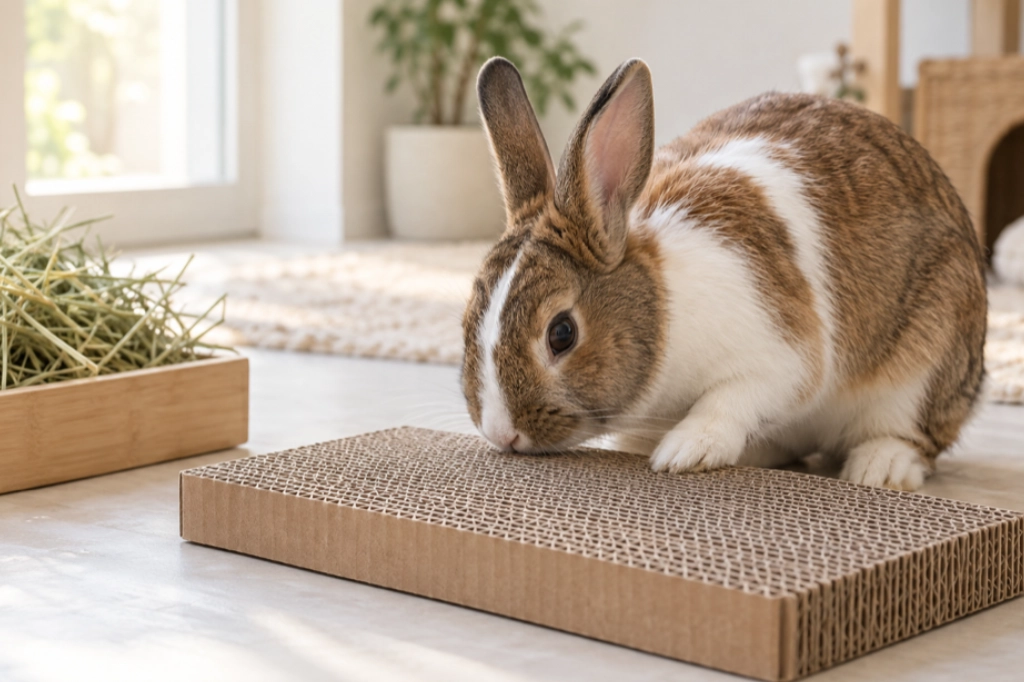
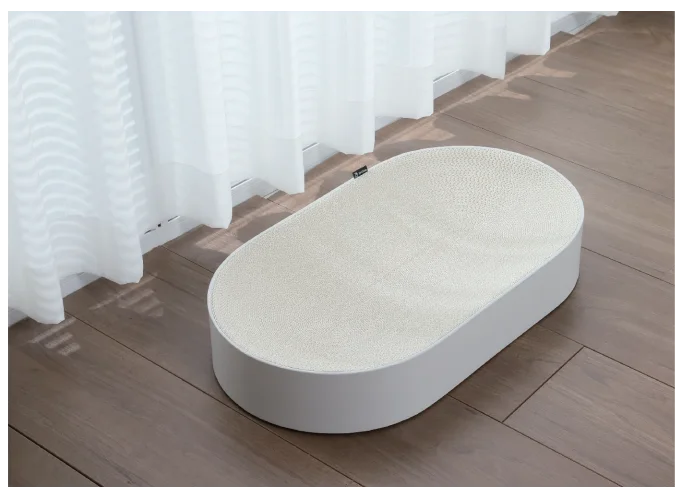
A flat scratching board is a horizontal scratching surface that sits close to the floor. Its straightforward design makes it easy to place near furniture, beside a familiar scratching spot, or in another area the cat regularly uses.
Flat boards are especially relevant for cats that scratch rugs, carpets, or other horizontal surfaces. They provide an alternative that matches the cat’s existing scratching position. Some cats also rest on flat scratchers, so lounging is not exclusive to curved or bed-shaped designs.
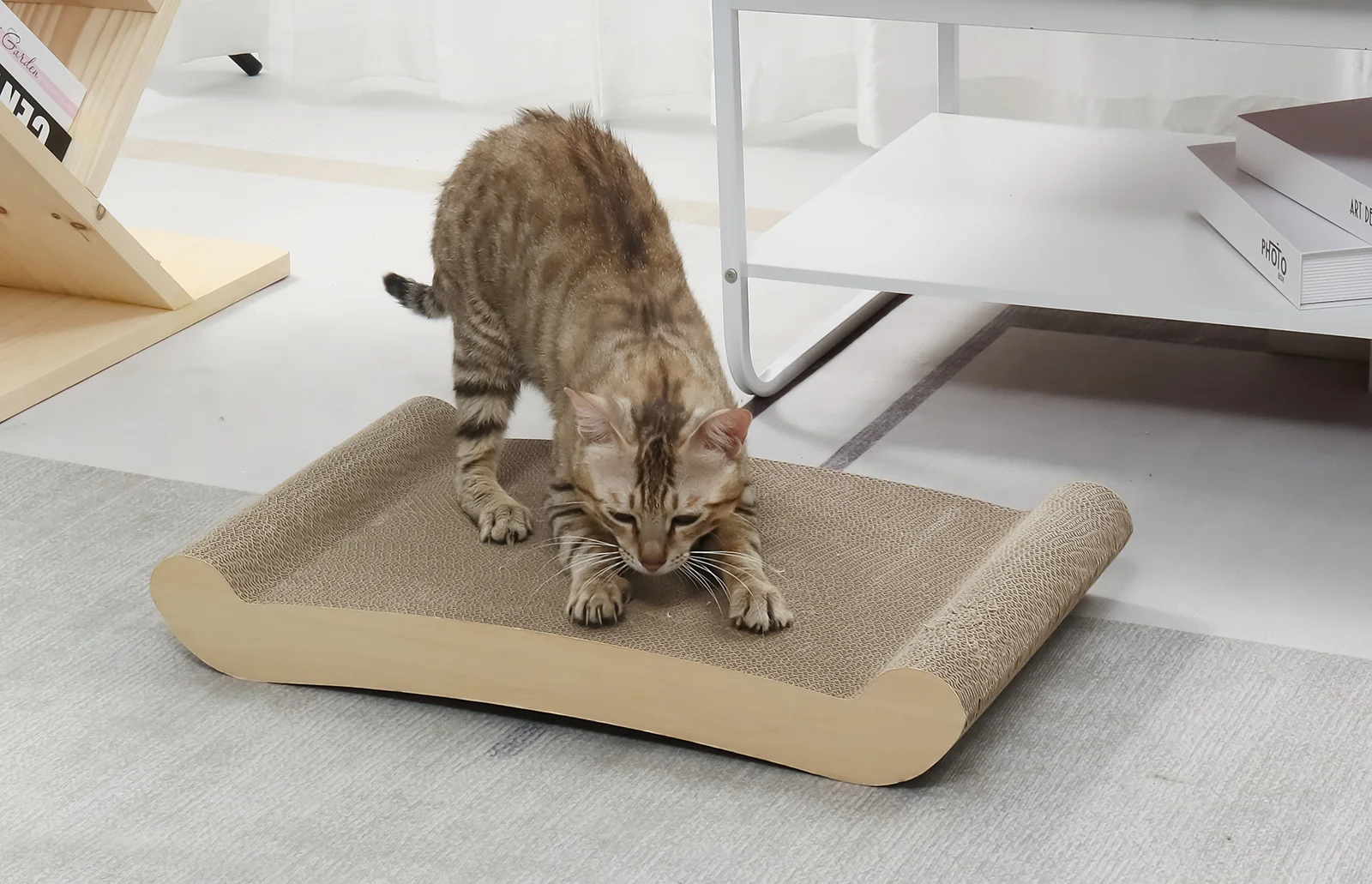
For households that want a simple scratching solution without a larger piece of cat furniture, a flat board is a practical format to consider.
Cat Scratcher Lounge vs. Flat Scratching Board: Key Differences
| Feature | Cat Scratcher Lounge | Flat Scratching Board |
|---|---|---|
| Primary purpose | Combines scratching with a defined resting area. | Provides a straightforward horizontal scratching surface. |
| Typical shape | Curved, contoured, or bed-like. | Flat and low-profile. |
| Space considerations | Placement must accommodate the full shape and footprint. | Easier to position in narrow or unobtrusive locations. |
| Resting function | Designed with lounging in mind. | May also be used for resting, depending on the cat. |
| Main buying considerations | Usable resting space, scratching access, and stability. | Scratching area, stability, and ease of placement. |
| Long-term value | Depends on construction, usable surfaces, and replacement options. | Depends on the same factors—not simply the flat shape. |
Which Design Is Better for Your Cat?
Start With Scratching Habits
The most important consideration is preference. Observe how your cat scratches before choosing a product.
A cat that scratches carpets or rugs may respond well to a flat board or a horizontally oriented lounge. A cat that stretches upright against furniture may also need a vertical scratching surface. The distinction between horizontal and vertical scratching can matter more than the difference between a lounge and a board.
Neither format should be treated as a universal solution. A curved lounge, for example, does not automatically replace a tall scratching post.
Compare Usable Dimensions
Product dimensions tell only part of the story. On a lounge, raised edges and curves can reduce the space available for resting or scratching. Compare the usable area with the cat’s size rather than relying only on the product’s overall length and width.
For a flat board, check whether the surface provides enough room for the cat to stand comfortably while scratching. In either format, stability matters: the product should not tip or move away easily during use.
Consider Placement
A flat board offers flexibility when you want to add a scratching surface beside furniture or near an existing floor-level scratching spot. A lounge is more suitable when you want to create a dedicated scratch-and-rest area and have room for its shape.
The best placement is not necessarily the most visually convenient one. Consider where the cat already spends time and scratches, rather than choosing a location solely to keep the product out of sight.
Which One Offers Better Durability and Value?
There is no automatic durability winner. A larger lounge is not necessarily longer-lasting, and a flat board is not necessarily a short-term product.
Instead, compare the features of each design:
- Does it provide more than one usable scratching surface?
- Can the product be reversed when one side wears out?
- Is a replacement scratching insert available?
- Does the structure remain stable during use?
- How much of the cardboard surface can the cat actually access?
Reversible designs and replaceable pads are available in different scratcher formats. These features can influence long-term value more directly than whether the product is called a lounge or a board.
Cardboard debris is another consideration. Both formats can shed fragments during scratching. A recessed surface or surrounding border may help contain loose pieces, but not every lounge includes those features. Evaluate the actual construction rather than assuming one category will always be tidier.
Choosing a Product Range for Pet Brands and Retailers
For a pet product collection, lounges and flat boards serve different roles.
A lounge can be presented as a combined scratching and resting product. A flat board offers a more straightforward option focused on accessible, everyday scratching. Carrying both formats gives customers a choice based on their cats’ habits and their available space.
Clear product descriptions should explain those differences without promising that every cat will prefer a particular shape. Useful details include overall dimensions, usable surface area, product orientation, and whether the design is reversible or uses a replaceable insert.
Fobpet: Professional Cardboard Cat Scratcher Design and Manufacturing
Fobpet specializes in the design and production of cardboard cat scratchers, including Cat Scratcher Lounges and Flat Scratching Boards.
These two categories form a complementary product offering: lounges combine scratching with a shaped resting area, while flat boards provide a simple horizontal scratching surface. By producing both formats, Fobpet gives pet brands, retailers, and distributors options for building a cardboard cat scratcher collection around different customer needs.
When planning a product range with Fobpet, define the intended use first—whether the product will serve as a dedicated scratch-and-rest spot or a compact everyday scratching surface. That distinction provides a clear starting point for discussing the appropriate format, dimensions, and design.
Final Verdict
Choose a cat scratcher lounge when a combined scratching and resting area is the priority. Choose a flat scratching board when simplicity, flexible placement, and a low-profile design matter more. In both cases, match the product to the cat’s scratching habits and evaluate its usable area, stability, and construction.
For businesses developing a cardboard cat scratcher range, Fobpet’s design and manufacturing focus covers both formats—allowing lounges and flat boards to serve distinct, complementary roles within the collection.