How to Build a Cardboard Cat Scratcher Product Assortment
Building a cardboard cat scratcher product assortment starts with choosing products that serve different customer needs—not simply collecting different shapes. A well-planned range gives each model a clear purpose, makes price differences easy to understand, and balances customer choice with manageable inventory.
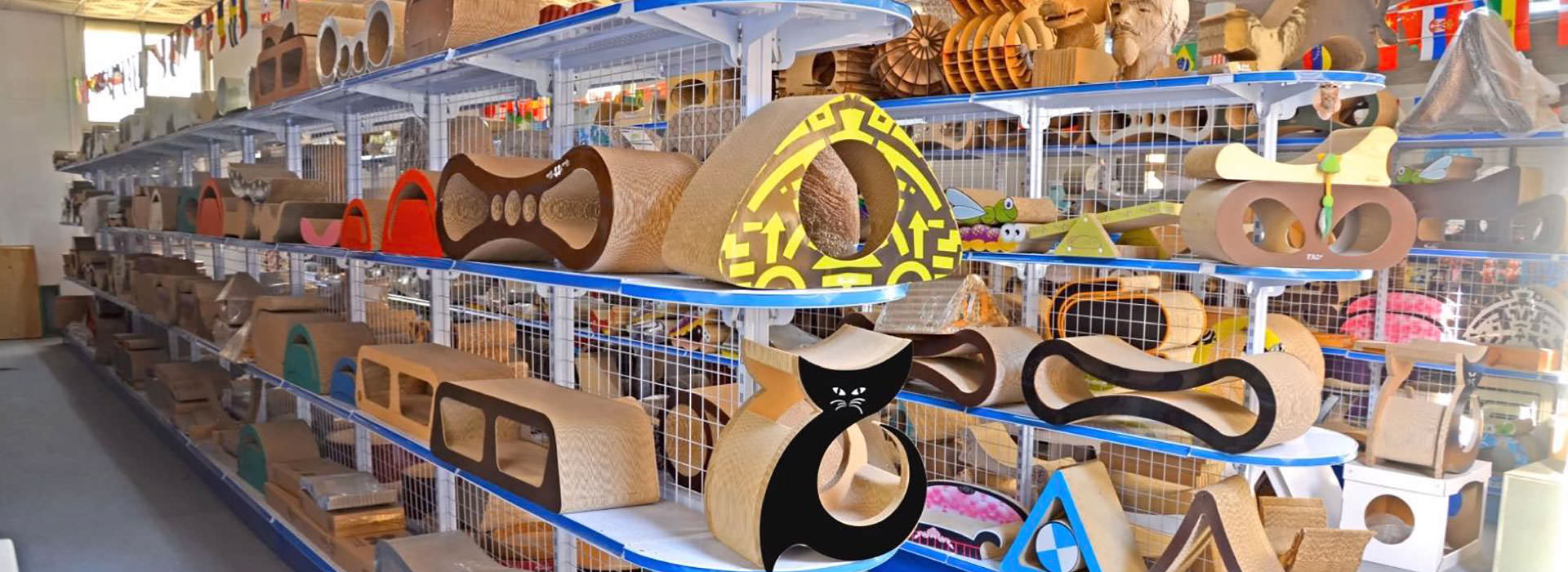
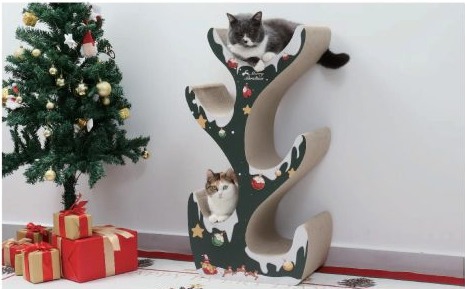
For pet brands, retailers, and distributors, the key is differentiation. A standard flat scratching board, a wider pad, and a contoured cat scratcher lounge can each offer a distinct benefit. Several nearly identical products with different printed patterns may create more stock to manage without giving customers a meaningful reason to choose between them.
This guide explains how to plan a focused assortment, compare product specifications, evaluate samples, and organize sourcing. The assortment examples are practical planning frameworks, not industry benchmarks or sales forecasts.
- 1. Define Your Target Customer and Sales Channel
- 2. Build Around Different Scratching Preferences
- Flat Scratching Boards: A Straightforward Entry Option
- Cat Scratcher Lounges: A Scratch-and-Rest Option
- Inclined or Vertical Scratchers: An Orientation Alternative
- Replacement Inserts: A Product System
- 3. Give Every Product a Clear Assortment Role
- 4. Create Price Tiers Based on Measurable Benefits
- 5. Standardize Specifications Before Comparing Suppliers
- 6. Validate Samples With a Documented Test Plan
- 7. Compare Landed Cost, Not Just Factory Price
- 8. Allocate Inventory According to Evidence
- 9. Make Packaging Help Customers Choose
- 10. Review Performance Before Expanding
- Build Your Cardboard Cat Scratcher Assortment With Fobpet
- Common Assortment Mistakes to Avoid
- Frequently Asked Questions
- How many cardboard cat scratcher products should a brand launch?
- Should an assortment include both flat scratching boards and lounges?
- Should every model be available in multiple sizes?
- Can a brand combine OEM and ODM products in one collection?
- What is Fobpet’s minimum order quantity?
- What should buyers confirm before placing an order?
- Build a Collection That Is Easy to Buy and Manage
1. Define Your Target Customer and Sales Channel
Before selecting products, establish who will buy them and how they will be sold. Use your sales history, customer questions, product reviews, and retailer feedback to create a clear buying brief.
Start with these questions:
- Are your customers primarily looking for everyday value, additional scratching space, or a design that complements their home?
- Will the products sell through pet stores, distributors, online marketplaces, or your own website?
- What retail price range fits your brand?
- What shelf, storage, and shipping constraints apply?
- How much inventory can you support per model and variation?
Translate those answers into product requirements.
| Customer or channel focus | Possible assortment emphasis | What to validate |
|---|---|---|
| Value-focused retail | Simple flat boards and practical multipacks | Delivered cost, pack quantity, and clear value communication |
| Design-oriented pet brand | Contoured lounges and coordinated finishes | Usable resting space, finish consistency, and presentation |
| Larger domestic cats | Wider pads and generously sized lounges | Usable dimensions, support, and stability |
| E-commerce | A focused range with protective packaging | Packed dimensions, shipping costs, and transit performance |
| Physical pet stores | Clearly differentiated formats and price tiers | Shelf fit, product identification, and easy comparison |
These are starting points rather than fixed rules. Your customer evidence and channel economics should determine the final collection.
2. Build Around Different Scratching Preferences
A useful assortment reflects how cats interact with scratching surfaces, rather than relying only on visual variety.
Feline veterinary guidance recognizes that cats can prefer different scratching materials and orientations, including horizontal, vertical, and angled surfaces. Cardboard is one option, but it is not a universal preference for every cat. Offering appropriate alternatives helps accommodate individual preferences.
Within a cardboard cat scratcher collection, consider the following product roles.
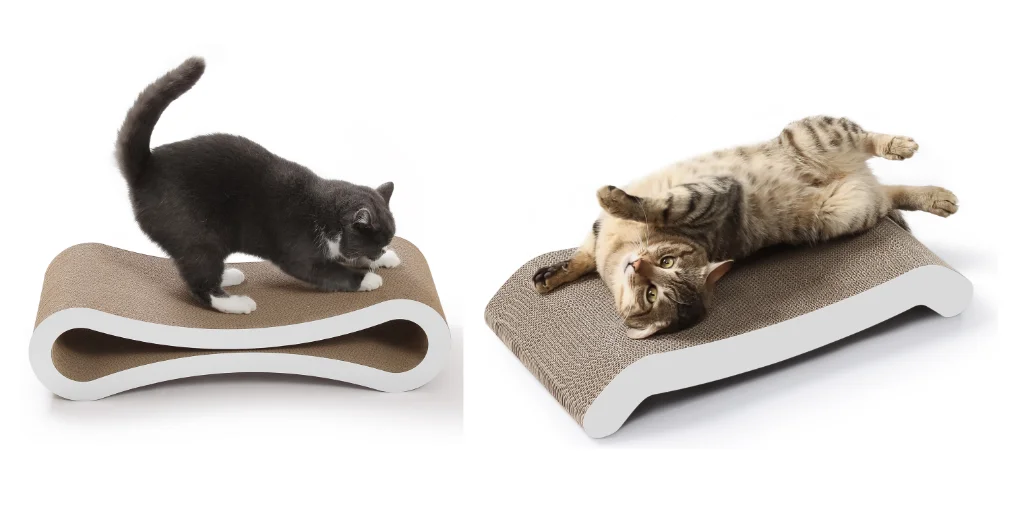
Flat Scratching Boards: A Straightforward Entry Option
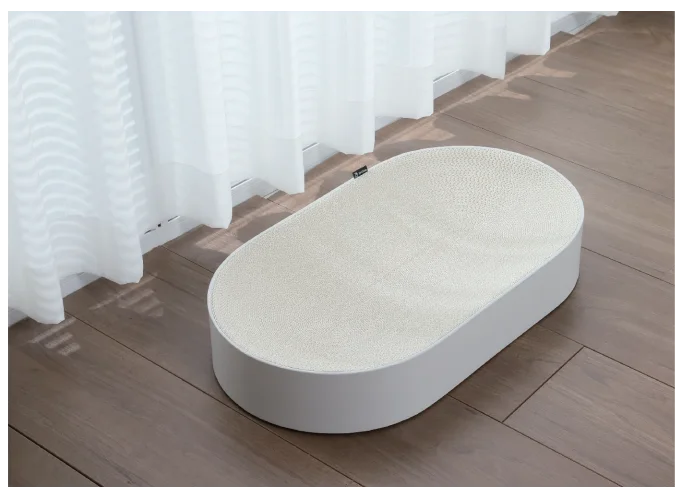
A flat scratching board provides a floor-level scratching surface with a simple product proposition.
Compare:
- Usable scratching length and width.
- Board thickness and construction.
- Whether one or both faces are usable.
- Stability on the intended floor surface.
- Whether a tray or holder is included.
- Single-unit and multipack configurations.
Avoid introducing multiple versions unless the differences are useful. A wider scratching surface creates a clearer functional distinction than an identical board with another printed border.
Cat Scratcher Lounges: A Scratch-and-Rest Option
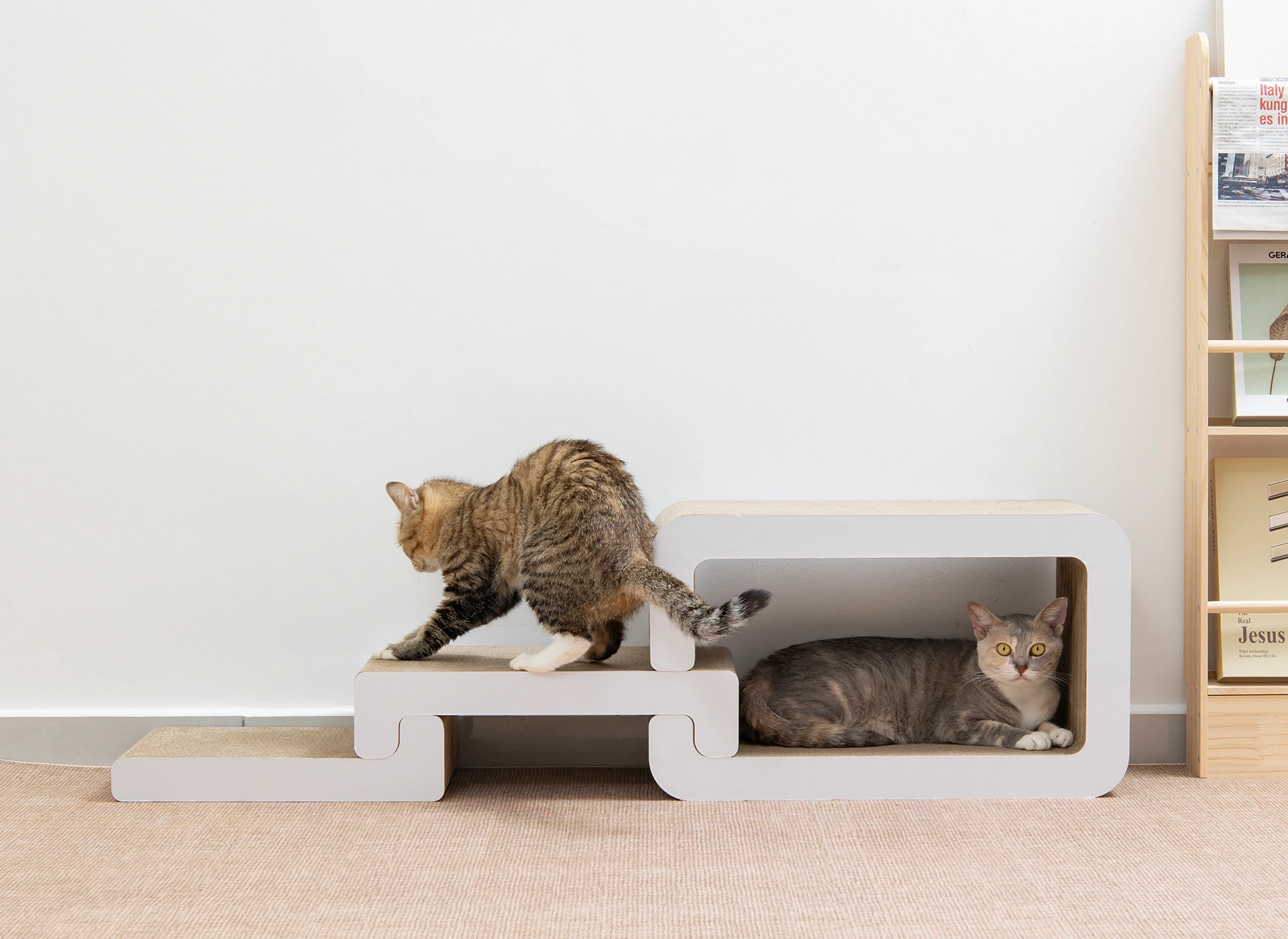
A cat scratcher lounge combines a scratching surface with a shaped resting area. Evaluate both functions before assigning it a place in the collection.
Review:
- Usable resting length and width.
- Shape and accessibility of the resting area.
- Support beneath the central surface.
- Stability when pressure is applied near an edge.
- Packaging protection for curves or projecting sections.
Distinguish overall dimensions from usable space. Decorative curves and side panels can increase the exterior size without increasing the area available for scratching or resting.
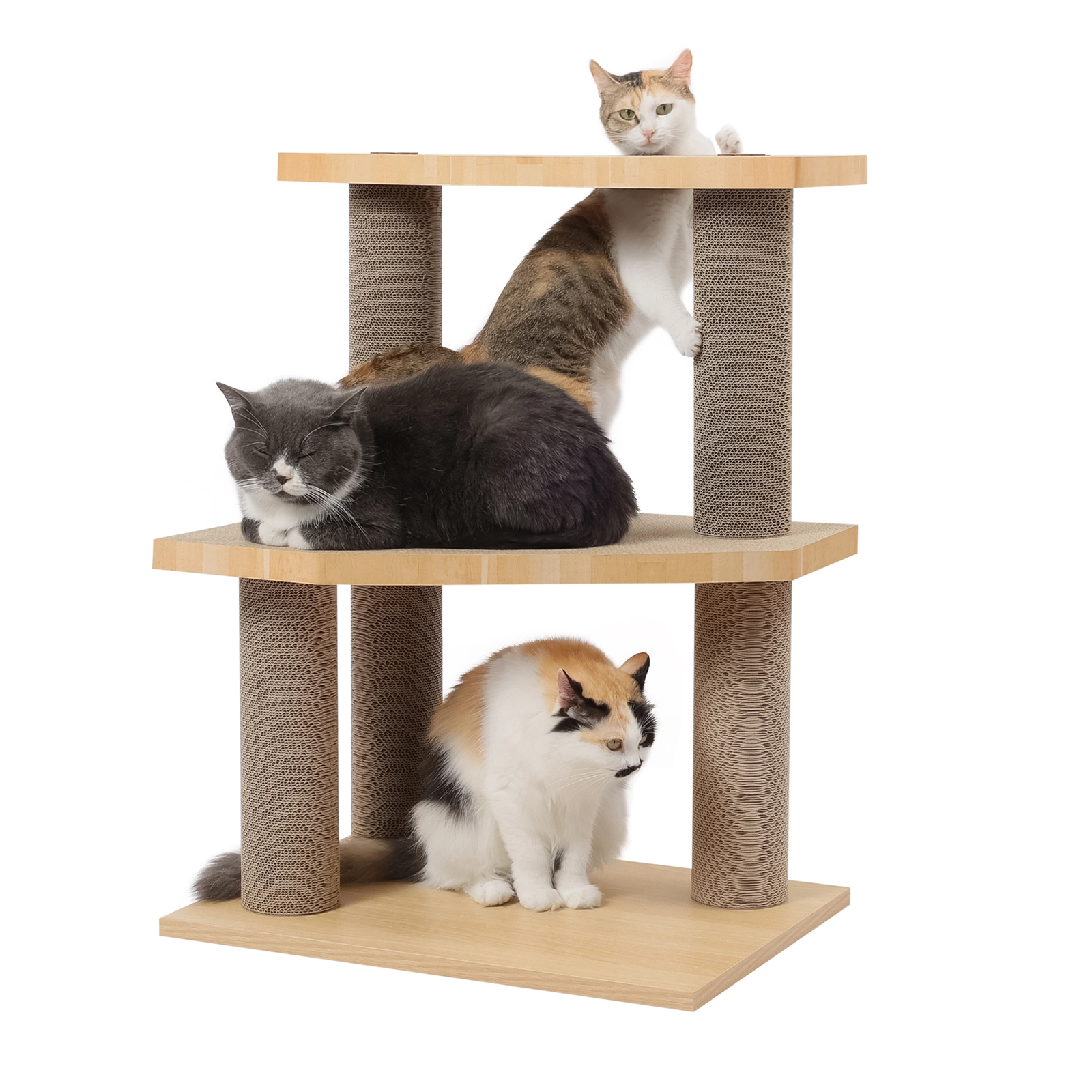
Inclined or Vertical Scratchers: An Orientation Alternative
An inclined or vertical cardboard scratcher introduces a different scratching position. This can create a more meaningful distinction than another horizontal product with cosmetic changes.
Present these formats as alternatives rather than claiming that one orientation is best for all cats. Individual scratching preferences vary.
Before adding them, assess base stability, assembly requirements, usable surface area, and movement during use.
Replacement Inserts: A Product System
If you offer a holder with replaceable cardboard inserts, plan the original product and replacement supply together.
Define:
- Insert dimensions and manufacturing tolerances.
- Compatible holder models.
- How customers identify the correct replacement.
- Packaging that protects insert edges.
- Expected availability of replacement stock.
Do not promote a refill system unless customers can reasonably obtain compatible replacements.
3. Give Every Product a Clear Assortment Role
A launch collection does not need to include every possible format. It needs enough variety to test your main customer propositions without creating unnecessary inventory commitments.
The following is an illustrative five-product structure:
| Product | Assortment role | Main point of difference |
|---|---|---|
| Standard flat board | Entry option | Simple, accessible scratching surface |
| Wide flat board | Size upgrade | More usable scratching width |
| Contoured lounge | Scratch-and-rest option | Shaped resting area |
| Inclined scratcher | Orientation alternative | Angled scratching surface |
| Compatible refill pack | Supporting purchase | Replacement surface for a specified holder |
This is not a recommended minimum. A smaller brand might begin with a standard flat board, a wider version, and one lounge, then expand when customer feedback identifies a gap.
Before approving another SKU, ask:
What customer need does this product serve that the existing range does not?
A new color or pattern may support your brand presentation, but it should still justify its own packaging, ordering, and inventory requirements.
4. Create Price Tiers Based on Measurable Benefits
An entry, mid-range, and premium structure can organize the collection, provided the differences are clear.
| Feature | Entry option | Mid-range option | Premium option |
|---|---|---|---|
| Main function | Basic scratching | Larger or more versatile scratching area | Distinctive scratch-and-rest or holder system |
| Usable dimensions | Standard format | Larger surface | Generous usable area appropriate to the design |
| Construction | Simple board | Thicker board, tray, or reversible design | More involved structure or replaceable components |
| Presentation | Essential labeling | Branded retail packaging | More developed presentation where justified |
| Value message | Everyday practicality | Additional usable features | Specific functional and design benefits |
These are possible ways to structure a range, not universal definitions of quality.
Avoid using “premium” as a substitute for specifications. Explain what customers receive: additional usable space, a shaped resting area, a compatible refill system, or another identifiable benefit.
5. Standardize Specifications Before Comparing Suppliers
Similar-looking products may be built to different specifications. Prepare a specification sheet for each model so quotations and samples can be compared consistently.
Product and Material Specifications
Include:
- Overall length, width, and height.
- Usable scratching dimensions.
- Usable resting dimensions, where applicable.
- Product weight and agreed tolerances.
- Corrugated board construction and relevant paper specifications.
- Adhesive and printing requirements.
- Trays, feet, fasteners, and other components.
- Reversible or replaceable features.
Ask suppliers to explain terms such as “high-density cardboard” or “stronger construction.” Request the underlying specification and assess the finished sample rather than relying on descriptive language alone.
Packaging Specifications
Record:
- Individual packaging format.
- Packed dimensions and gross weight.
- Units per master carton.
- Master-carton dimensions and gross weight.
- Artwork, barcode, and labeling requirements.
- Assembly instructions, where needed.
Commercial Requirements
Confirm:
- Quantity per model and variation.
- Minimum order quantity by SKU.
- Whether mixed-model orders are permitted.
- Sample and production lead times.
- Tooling, artwork, and setup charges.
- Delivery terms and quotation validity.
Documenting these details reduces ambiguity when reviewing quotations and approving orders.
6. Validate Samples With a Documented Test Plan
Separate construction checks from observations of how cats use the product. A scratcher can attract interest while still having a stability, packaging, or assembly problem.
Check Construction and Packaging
Define acceptance criteria before testing. Depending on the design, assess:
- Rocking or sliding on the intended floor surface.
- Movement when pressure is applied near edges.
- Separation between bonded layers.
- Deformation under a defined load.
- Loose components or exposed attachment points.
- Assembly fit and insert compatibility.
- Damage after a packaging test appropriate to the distribution route.
Record the method, conditions, number of samples, and results. Do not present an internal test as independent certification.
Observe Actual Use
For supervised product trials, record:
- Number of cats observed.
- Approximate size and life stage.
- Trial duration and product placement.
- Whether an attractant was included.
- Scratching, resting, avoidance, and product movement.
- Visible wear and debris during the observation period.
Because preferences vary, a positive response from one cat does not establish that all cats will prefer the product.
Use genuine records to support specific statements. Do not publish claims such as “preferred by most cats,” “tested for months,” or “vet approved” without evidence that directly supports them.
7. Compare Landed Cost, Not Just Factory Price
The factory unit price is only one part of the buying decision. Compare the cost of getting saleable inventory into your warehouse or fulfillment network.
Define which costs the calculation includes, such as:
- Product and packaging.
- Freight and insurance.
- Duties and brokerage.
- Inbound handling.
Apply the same method across suppliers and models.
Include applicable marketplace fees, outbound shipping, promotional allowances, and return-related costs.
Request packed dimensions as well as product dimensions. Compare shipping quotations for the actual packaging configuration before approving a bulky lounge or multipack.
The lowest factory price does not necessarily produce the strongest overall commercial result.
8. Allocate Inventory According to Evidence
Do not automatically order equal quantities of every model.
Base the quantity plan on:
- Sales of comparable products.
- Retailer commitments or preorder information.
- Customer research and sample feedback.
- Cash investment per SKU.
- Storage requirements.
- Replenishment lead time.
- Uncertainty surrounding a new format.
Where supplier terms allow, use controlled quantities for unproven designs and preserve purchasing capacity for replenishing successful products.
Also distinguish product breadth from variation depth. Three formats in two sizes create six SKUs. Adding three artwork options to each expands the range to eighteen.
Before approving that expansion, ask whether the variations are likely to generate additional demand or simply divide sales across more inventory positions.
9. Make Packaging Help Customers Choose
Packaging should explain why the product exists within the collection.
Prioritize:
- Product format and function.
- Clear dimensions.
- A useful scale image.
- Usable scratching or resting space.
- Reversible or refill features, where applicable.
- Assembly and placement instructions.
- Appropriate inspection and replacement guidance.
For larger-cat products, provide usable dimensions instead of relying only on “XL” or “jumbo.” If you publish a load rating, retain the test method and results that support it.
Environmental language also requires care. For products marketed in the United States, the FTC’s Green Guides address misleading environmental claims and qualifications for recyclability claims. Recycled-content claims should accurately describe the qualifying recovered material.
Do not assume that cardboard construction alone supports claims such as “100% recyclable,” “fully sustainable,” or “eco-friendly.” Review the complete product, supporting documentation, and relevant disposal conditions before selecting claim language.
10. Review Performance Before Expanding
Treat the first assortment as a testable commercial plan rather than a permanent catalog.
| Metric or feedback | What it helps you investigate |
|---|---|
| Sell-through by SKU | Whether stock is moving as expected |
| Contribution per unit | Whether the product supports channel profitability |
| Returns and complaints | Possible quality, fit, packaging, or expectation problems |
| Transit damage | Whether packaging needs improvement |
| Size-related questions | Whether dimensions and scale are communicated clearly |
| Refill purchases | Whether customers continue using the holder system |
| Retailer feedback | Whether the collection is easy to explain and merchandise |
Interpret these signals together. A slow-selling lounge may have a weak value proposition, but unclear photography, unsuitable pricing, or packaging costs may also contribute.
Expand when the evidence reveals a specific opportunity, such as demand for a wider surface, a compatible refill, or another scratching orientation. Avoid adding products simply to make the catalog appear larger.
Build Your Cardboard Cat Scratcher Assortment With Fobpet
Fobpet specializes in the design and manufacturing of cardboard cat scratchers, including Cat Scratcher Lounges and Flat Scratching Boards. These formats provide a starting point for pet brands, retailers, and distributors developing a collection with distinct product roles.
Fobpet offers both OEM and ODM services:
- OEM projects allow brands to discuss production based on their own designs and specifications.
- ODM projects allow buyers to begin with manufacturer-developed designs and confirm the available customization options.
The appropriate route depends on your product requirements, design resources, and desired differentiation. In either case, confirm specifications, customization scope, and project terms before approving production.
Most Fobpet products have a starting minimum order quantity of 100 pieces. Confirm the MOQ for each selected model and customization requirement, including how sizes, artwork variations, and mixed-model orders are treated.
To prepare an assortment inquiry, provide:
| Information | What to include |
|---|---|
| Target market | Destination country and intended customer segment |
| Sales channel | Pet stores, distribution, e-commerce, or other channels |
| Product selection | Preferred formats, model references, or design drawings |
| Dimensions | Overall size and required usable scratching or resting space |
| Quantity | Breakdown by model, size, and variation |
| Branding | Logo, artwork, and customization requirements |
| Packaging | Retail presentation, barcode, and shipping requirements |
| Delivery | Destination and target delivery timing |
A clear brief gives Fobpet a practical basis for reviewing suitable products, customization options, samples, and project-specific quotations.
Common Assortment Mistakes to Avoid
- Launching too many similar products without clear customer benefits.
- Differentiating mainly through artwork rather than function.
- Showing exterior dimensions without explaining usable space.
- Setting premium prices without identifiable upgrades.
- Comparing suppliers on unit price alone.
- Ordering equal quantities regardless of demand uncertainty.
- Introducing refillable products without a replacement supply plan.
- Publishing durability, safety, or environmental claims without supporting records.
Frequently Asked Questions
How many cardboard cat scratcher products should a brand launch?
There is no universal number. Start with the smallest range that can test your main customer needs and price positions. Three meaningfully different products may provide more useful information than a larger collection of near-duplicates.
Should an assortment include both flat scratching boards and lounges?
Include both when they serve your customers and fit your channel economics. A flat board offers a straightforward scratching surface, while a lounge adds a resting function. Evaluate the lounge’s usable resting space and structure separately.
Should every model be available in multiple sizes?
No. Add sizes when customer evidence identifies a meaningful need. Each size introduces another specification, packaging requirement, and inventory commitment.
Can a brand combine OEM and ODM products in one collection?
Yes, a collection can use different development approaches for different product roles. For example, a brand may explore an existing design for a supporting product while developing its own flagship design. Confirm each project’s customization scope and commercial terms with the manufacturer.
What is Fobpet’s minimum order quantity?
Most Fobpet products have a starting MOQ of 100 pieces. The requirement for a specific order should be confirmed against the selected model, customization scope, and quantity breakdown.
What should buyers confirm before placing an order?
Confirm product specifications, approved samples, quantities, packaging, artwork, quality criteria, lead times, delivery terms, and the final quotation. Resolve any differences between the sample and production requirements before approval.
Build a Collection That Is Easy to Buy and Manage
A well-planned cardboard cat scratcher assortment gives every product a reason to exist. It connects customer needs with clear formats, understandable price differences, documented specifications, and realistic inventory commitments.
Begin with a focused collection, validate what each model delivers, and use actual performance to guide expansion. To explore a range with Fobpet, prepare your product brief and request model-specific information, samples, and quotations before committing to production.