Cardboard Cat Scratchers for Large Cats: A Size and Structure Checklist
Cardboard can be an excellent scratcher material for large cats, but only if the scratcher is long enough, stable enough, and built to survive repeated full-force scratching. For big breeds such as Maine Coons, Ragdolls, and Norwegian Forest Cats, the biggest mistake is buying a standard “small cat” pad that cannot accommodate a full stretch.
Why size matters
Cats scratch to stretch, maintain claws, mark territory, and release energy. A scratcher that is too short or too light forces a large cat to crouch, use it at an awkward angle, or abandon it in favor of a sofa or rug.
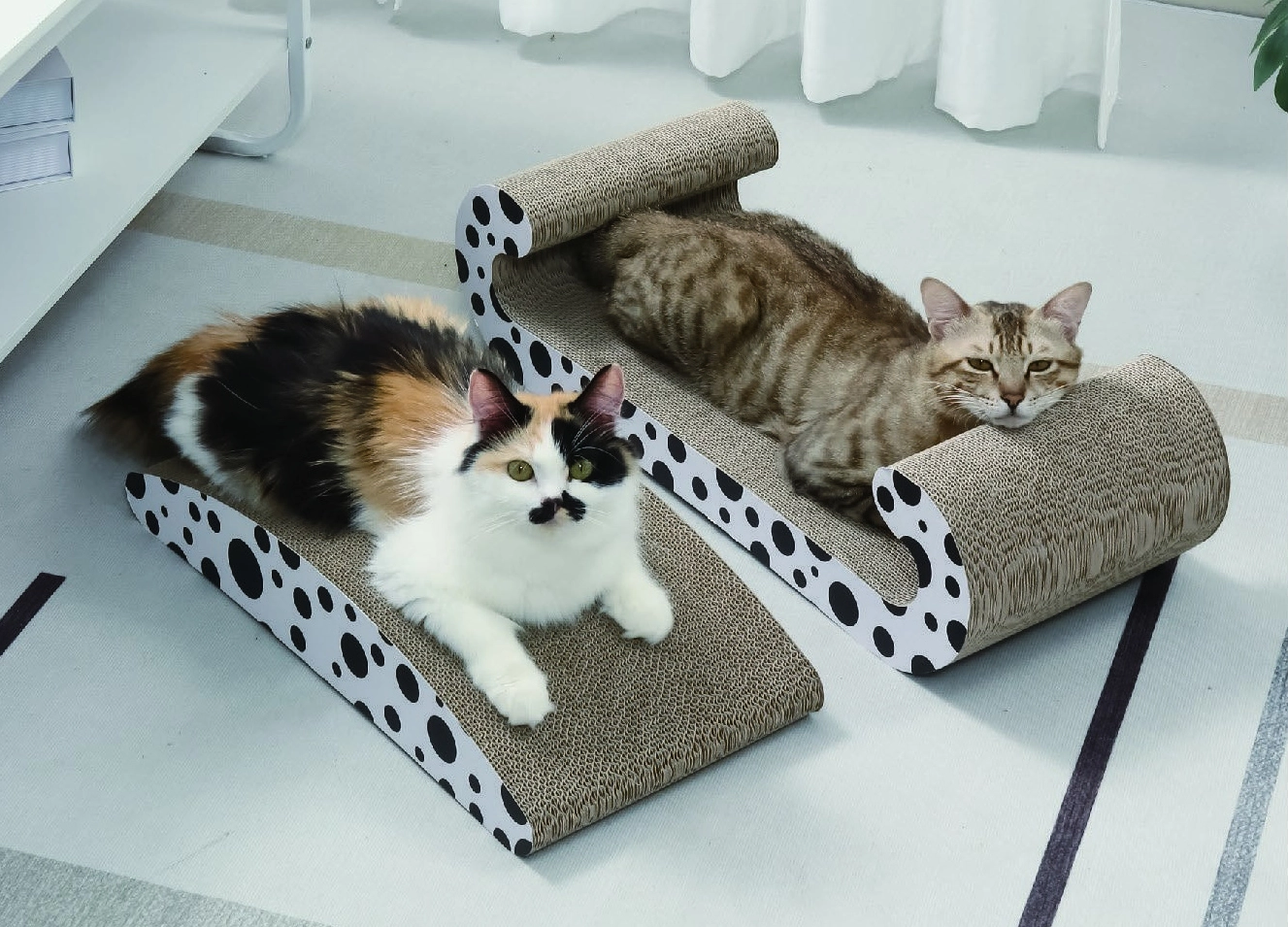
For horizontal cardboard scratchers, choose a usable scratching surface at least as long as your cat’s body excluding the tail; 18 inches is a common minimum for average cats, while large cats generally benefit from 24 inches or more. For vertical designs, aim for a scratchable height of 30–32 inches so your cat can stand on its hind legs and stretch fully; if that is unavailable, prioritize at least 25 inches plus excellent stability.
Size checklist
Use this before buying:
- Measure your cat’s full stretch. Measure from nose to the base of the tail, then observe how far your cat reaches upward when scratching. The scratchable area should allow a complete extension, not merely fit the cat’s curled-up body.
- Choose at least 24 inches of usable horizontal surface. For Maine Coons, Ragdolls, and similarly large cats, 30 inches or more is often more comfortable.
- Choose 30–32 inches of scratchable vertical height when possible. Do not count decorative tops, bases, or non-scratchable trim toward this measurement.
- Check the scratching width. A pad should be wide enough for both front paws and the cat’s chest; overly narrow boards can feel unstable or restrict natural raking motions.
- Size up for multi-cat homes. Provide at least one scratcher per cat plus one extra, placed in different locations rather than clustered together.
Structure checklist
A large cat needs more than a big surface. The structure must resist sliding, tipping, crushing, and rapid shredding.
| Feature | What to look for | Why it matters |
|---|---|---|
| Base stability | Wide, heavy base; non-slip underside; no rocking when pushed | Cats avoid scratchers that shift or tip during use. |
| Cardboard density | Dense, tightly layered corrugated cardboard | Dense cardboard sheds less and better withstands aggressive scratching. |
| Scratchable depth | Thick insert or replaceable/refillable core | Large cats wear cardboard down quickly; replaceable inserts extend usefulness. |
| Frame strength | Rigid sides, reinforced edges, minimal flex | The scratcher should not collapse when a cat climbs, leans, or digs into it. |
| Orientation | Horizontal, vertical, or angled based on your cat’s habit | Cats have individual preferences; match the design to the behavior you already see. |
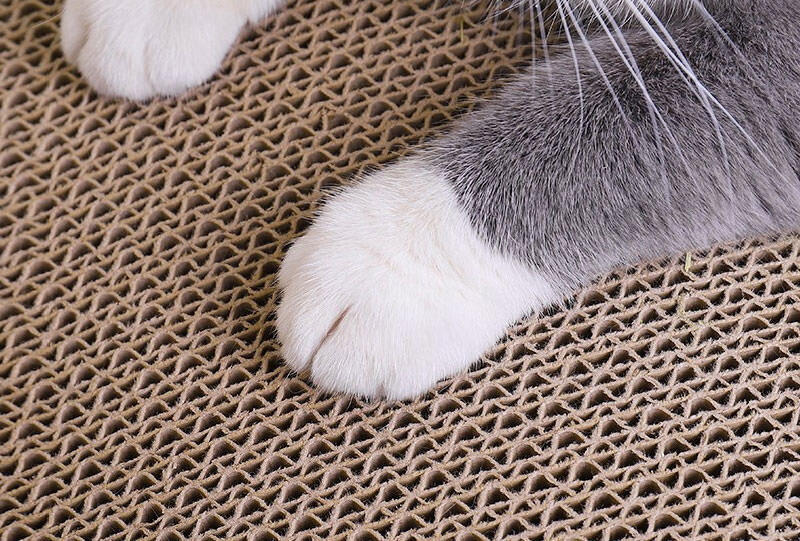
| Claw-friendly surface | Corrugated edges exposed and evenly aligned | The texture should let claws catch and pull naturally without snagging. |
| Safe construction | Sturdy adhesive, no loose staples, sharp edges, or easily swallowed pieces | Cats may chew or ingest small fragments during normal use. |
Match the shape to the cat
Observe your cat before purchasing. A cat that claws rugs or carpets often prefers a horizontal cardboard mat, while one that scratches furniture or walls may need a taller vertical or angled design.
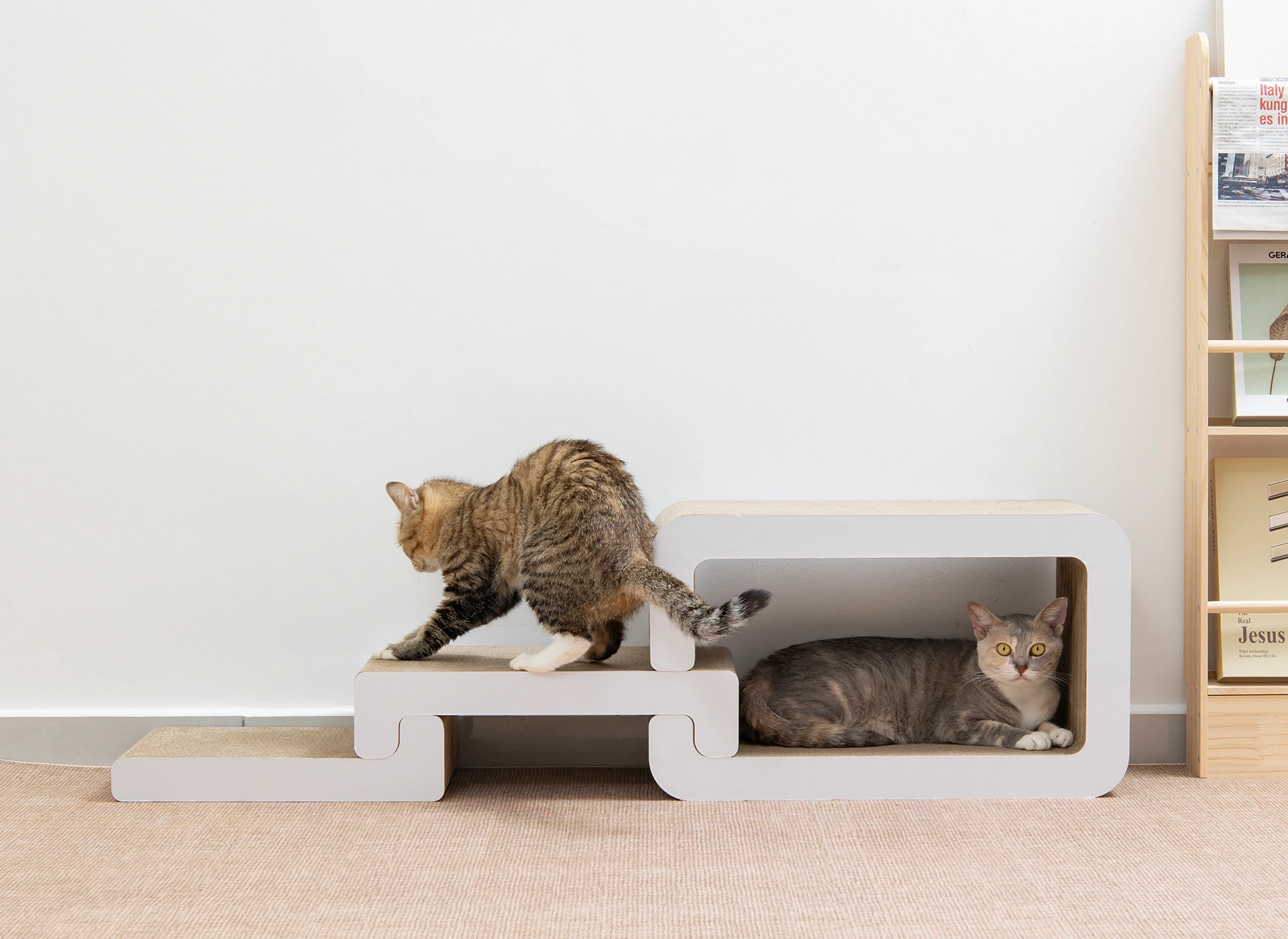
- Flat pads: Best for cats that dig downward at the floor; choose a long, wide, thick version for large cats.
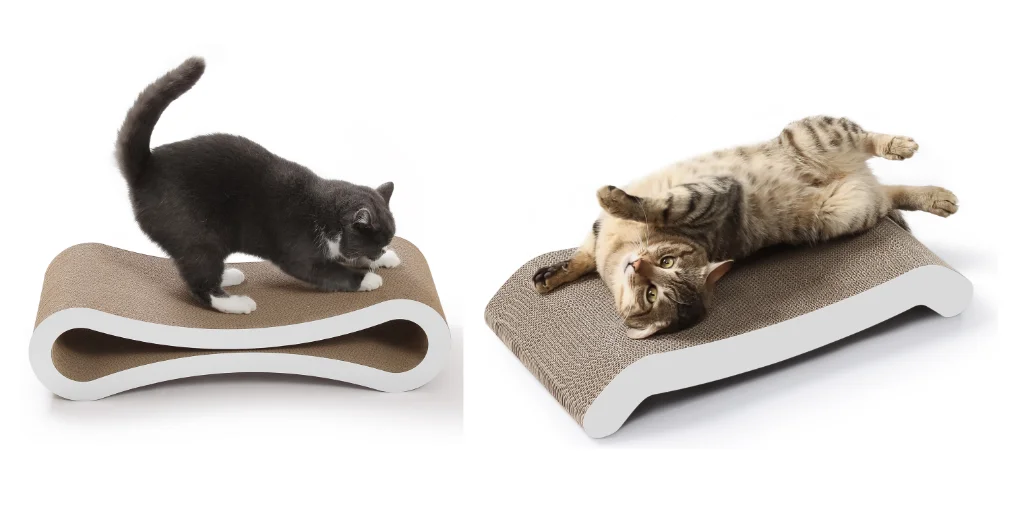
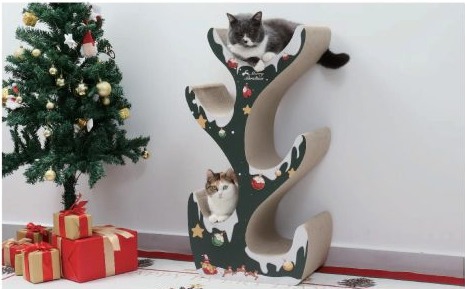
- Curved loungers: Good for cats that want to scratch and nap in the same spot; ensure the curve provides enough usable length for a full stretch.
- Angled boards: Useful for cats that scratch halfway between horizontal and vertical; they provide resistance while taking less floor space than a tall post.
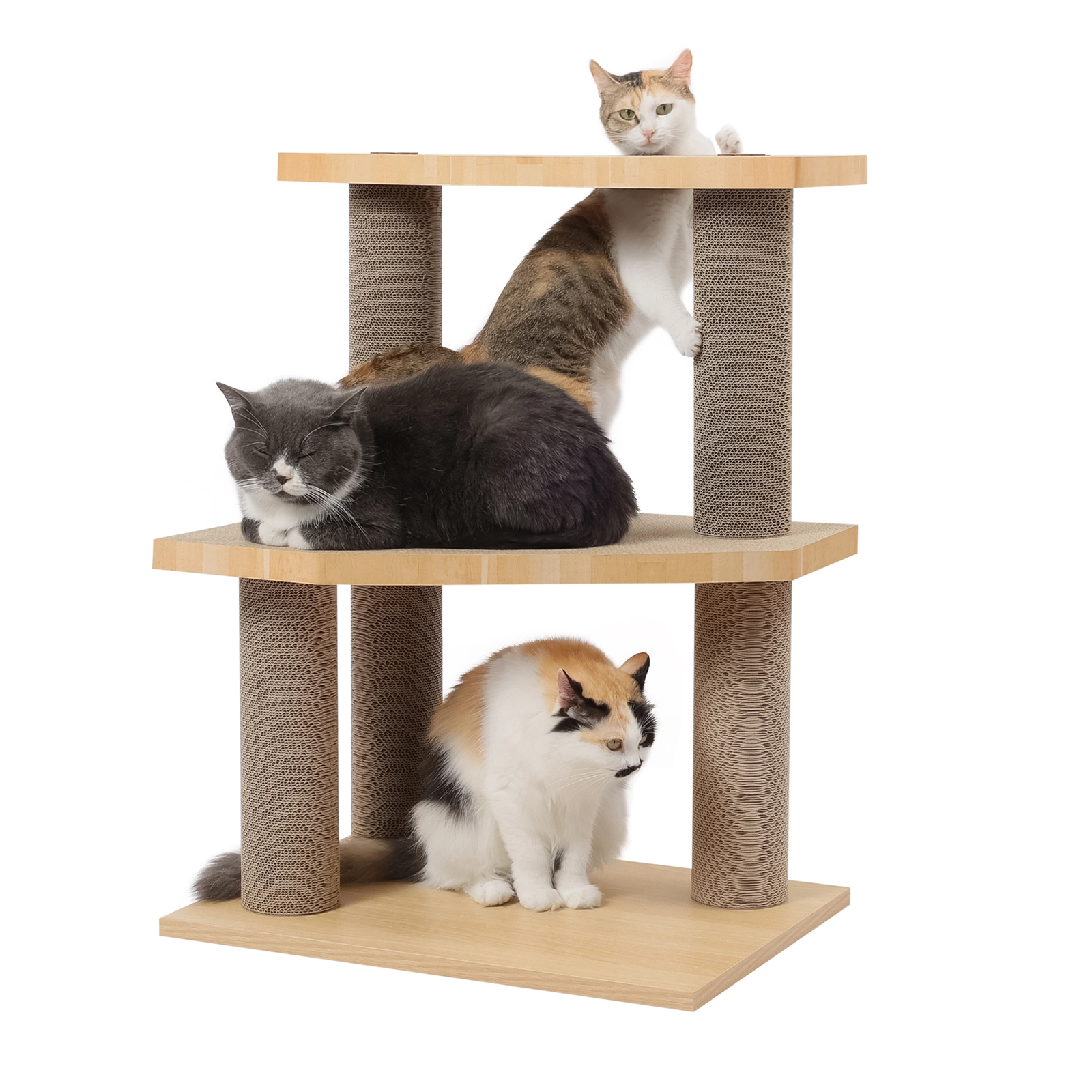
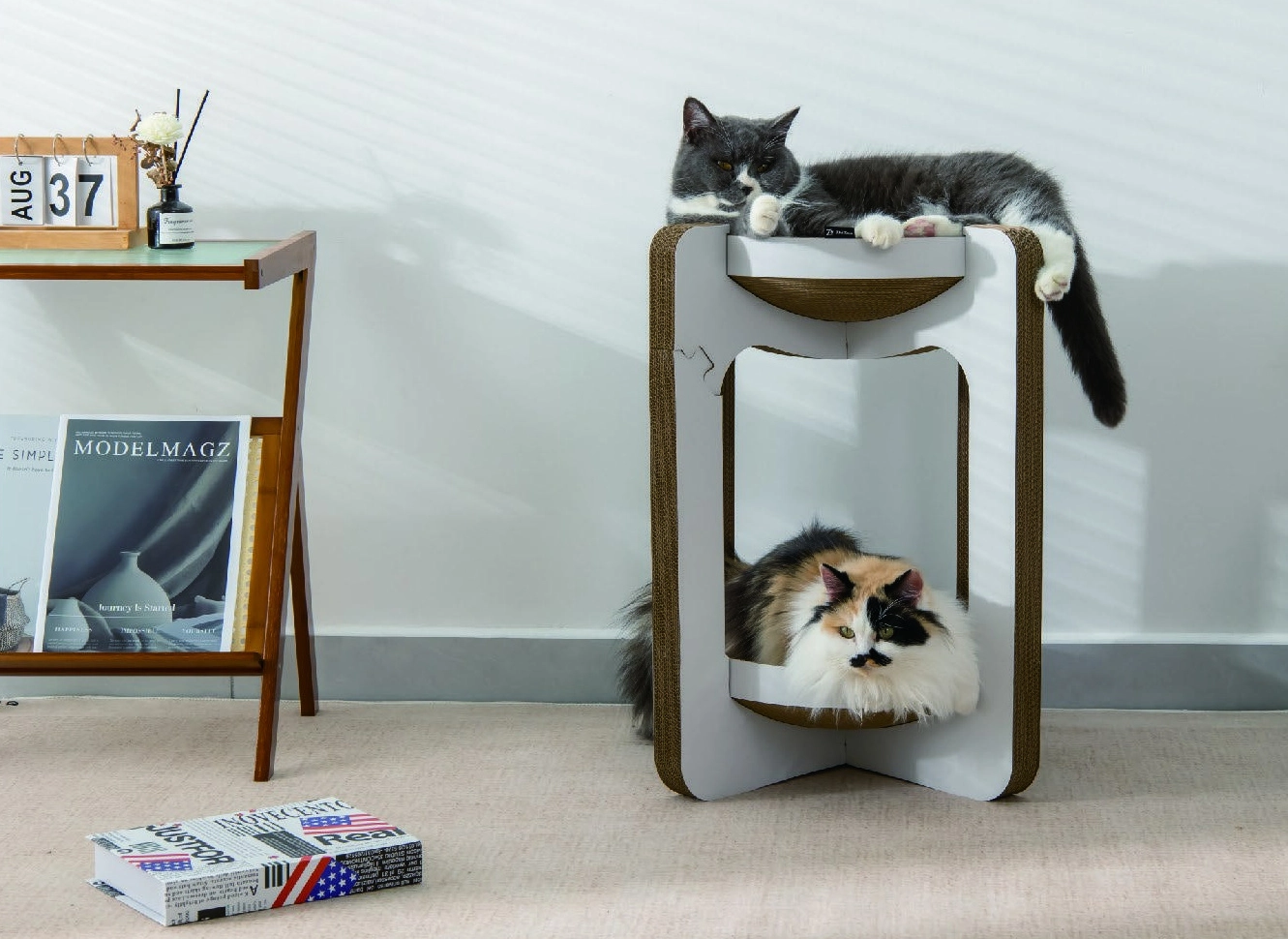
- Vertical cardboard panels or posts: Best for full-body upward stretching, provided the base is heavy and the panel is securely supported.
Placement and upkeep
Even the best cardboard scratcher will be ignored if it is hidden away. Put it near a favorite resting area, room entrance, or the furniture your cat currently targets; cats often scratch after waking, so placing one near a preferred bed can help.
Replace the cardboard once it becomes deeply shredded, uneven, or unable to provide resistance. Reversible or refillable designs are practical for large cats because they extend the life of the frame while keeping the scratching surface fresh.
Quick buying rule
For a large cat, buy big, heavy, dense, and replaceable: at least 24 inches of usable horizontal length or 30 inches of vertical scratchable height, a base that does not wobble, thick corrugated cardboard, and a structure that remains firm under your cat’s full weight.